
Selling on eBay in 2025 comes with massive opportunities — but also stricter compliance rules than ever before. One of the most important systems every seller must understand is the eBay VeRO program, a framework designed to protect intellectual property and reduce counterfeit or unauthorized listings. Whether you sell branded electronics, fashion items, beauty products, collectibles, or run a wholesale/dropshipping store, the VeRO policy can directly impact your ability to keep your account in good standing.

This guide provides a complete explanation of eBay VeRO in 2025 — what it is, how it works, how brands use it, and how sellers can protect themselves from violations. You’ll learn how the VeRO list is structured, the most common items flagged, what to do when you receive a takedown, and proven strategies to stay compliant while scaling your eBay business.

Account suspended? Don’t panic. Follow our expert advice in this blog on how to recover a suspended eBay account and get back in business.

What Is the eBay VeRO Program?

ebay vero

The eBay VeRO program (Verified Rights Owner Program) is eBay’s official system that allows intellectual property (IP) owners to monitor, report, and remove listings that infringe on their rights. These rights include trademarks, copyrights, patents, brand logos, product images, and even certain product descriptions.

In simple terms:
VeRO protects brands. Sellers must comply.

If a listing violates a brand’s IP rights, eBay removes it—sometimes instantly—and may issue a warning or account restriction. This is why every seller must understand how VeRO works before listing branded items.

Why eBay Uses the VeRO System

eBay created VeRO to reduce:

  • Counterfeit or fake products

  • Unauthorized resale of restricted brand items

  • Misuse of brand names, logos, or copyrighted materials

  • Listings using stolen stock images or product manuals

  • Misleading product titles (e.g., “style,” “inspired,” “replica”)

Brands want tight control of their reputation, and eBay supports them by enforcing IP laws through VeRO.

Who Uses the VeRO Program?

Thousands of brands actively monitor eBay through VeRO. These include:

  • Electronics manufacturers

  • Designer clothing and luxury brands

  • Toy & collectible companies

  • Beauty, skincare, and fragrance brands

  • Outdoor, sports, and automotive companies

  • Software and technology brands

Well-known brands like Apple, Nike, Sony, Disney, LEGO, Hasbro, and luxury labels are among the most active VeRO reporters.

How the VeRO Process Works

Below is the simplified version of how brands enforce rights:

Brand Monitors Listings

Brands or their legal representatives review eBay listings regularly—sometimes with automated tools.

Infringing Listing Identified

If a listing violates IP rights, the brand files a VeRO complaint through eBay.

eBay Removes the Listing

Removal often happens instantly. The seller receives a notice explaining:

  • Which listing was removed

  • Which rights were violated

  • Which brand filed the complaint

  • Steps the seller can take (if any)

Seller May Receive Account Penalties

The consequences vary based on how serious or repeated the violation is:

  • First-time or minor violations → warning or simple listing removal

  • Repeated violations → temporary selling limits or account restrictions

  • Severe or intentional violations → permanent suspension, and in some cases, legal action from the brand

Intent Does NOT Matter

This is the part that surprises many new dropshippers:

eBay does not care whether the violation was accidental or unintentional.

Examples that can still trigger a VeRO removal:

  • Using a Disney character on a mug

  • Selling “inspired by” Apple or Samsung accessories

  • Listing branded products from unverified suppliers

  • Selling Nike, Adidas, or other name-brand items without proper authorization

If the rights owner believes their IP was used without permission, eBay will treat it as a violation—no matter the seller’s intent.

Key Terms Sellers Must Know

Trademark:
Protects brand names, logos, slogans.
Examples: “Apple,” “Nike Swoosh,” “LEGO.”

Copyright:
Protects images, manuals, descriptions, artwork, and digital content.

Patent:
Protects inventions and unique product designs.

Counterfeit Policy:
Strictly bans fake or replica items—no exceptions.

Why This Matters to eBay Sellers

Understanding eBay VeRO is essential because:

  • Even unintentional violations can harm your account

  • Some brands never allow resellers

  • Using a brand name incorrectly can trigger a violation

  • Dropshippers often list restricted brand items unknowingly

  • Reselling imported goods may violate regional rights

In short:
Knowing the eBay VeRO policy helps you avoid takedowns, protect your store, and sell safely.

Need to cancel a bid? Learn exactly how to do it in our latest guide on eBay bid retraction and cancellation.

What are the Reasons for VeRO Infringements?

Violation of Trademark Rights

Trademark violations are one of the most common reasons sellers receive VeRO notices.
Trademarks protect brand identifiers—names, logos, slogans, product designs, and even packaging.
Unauthorized use can confuse customers or harm the brand’s reputation, so eBay enforces these violations strictly.

Common trademark-related infringements include:

Incorrectly Branded Products

Listing real or generic products but adding a brand name, logo, or trademarked term you don’t have permission to use.
Example: Using “Nike-style,” “Apple-like,” or adding logos to boost visibility.

Trademarked Designs on Personalized Items

Selling custom items (T-shirts, mugs, cases, stickers, etc.) that use protected trademarks without authorization.
Even a single Disney character or Marvel logo is protected IP.

Parallel Imports (Unauthorized Imports)

Selling genuine branded products purchased overseas may still be a violation if the brand has regional restrictions.

Facing negative reviews? Our actionable guide on how to remove negative feedback on eBay can help you maintain your seller rating.

Infringement of Copyright

Copyright protects creative works—art, music, designs, software, text, graphics, photos, etc.
Using someone’s original work without permission is a fast trigger for a VeRO removal.

Common copyright-related infringements:

Exact Copying of Products

Copying copyrighted artwork or patterns and printing them on products without permission.
Example: Selling shirts with Pixar characters or using anime artwork you didn’t create.

Unapproved Digital Sharing

Selling ebooks, PDFs, music files, game keys, or software that you don’t own or aren’t licensed to distribute.

Modifying Protected Works Without Approval

Modifying or redrawing copyrighted content doesn’t make it legal.
If the original is recognizable, it can still be removed under VeRO.

Wondering about eBay’s fees? Read our cost breakdown blog to understand how much it costs to sell on eBay in 2025.

Sale of Counterfeit Goods

Counterfeit products—items made to imitate real branded merchandise—are among the most aggressively targeted violations by VeRO.

Counterfeits harm:

  • Brand reputation

  • Consumer trust

  • Product safety

  • The global economy

Counterfeit-related violations include:

Providing Fake or Inauthentic Products

Replica watches, fake sneakers, imitation electronics—anything pretending to be a real brand.

Selling Imitations as Real Products

Listing knockoffs but advertising them as authentic.

Facilitating Counterfeit Trade

Even unintentionally enabling counterfeit sales can result in VeRO strikes.

Setting up an eBay account is easy! Follow these steps to create your profile, start selling, and earn money.

Misuse or Misrepresentation of Brand Names

Brand names are protected—even when used in product descriptions.
Improper or misleading use of brand names is another frequent cause for VeRO takedowns.

Examples include:

Imitating Brand Names

Using a product name intentionally close to a well-known brand.
Example: “Nkie” shoes or “Samsong” electronics.

Misleading Titles and Descriptions

Mentioning a brand name to attract more views—even if your item isn’t from that brand.
Example: Listing a generic case as:
“Compatible with iPhone 14 Pro Max – Samsung Case”
This creates false association and can be treated as a violation.

Learn how to start a profitable reselling business on eBay in 2025 and discover top trending products to flip for profit.

Improper Use of Logos

Logos are powerful brand identifiers, heavily protected under trademark law.
Unauthorized use—whether intentional or accidental—can result in immediate VeRO removal.

Examples of improper logo use:

Falsely Claiming Partnership

Using a brand’s logo to imply that you’re an official partner, distributor, or authorized seller.

Weakening Brand Logos

Using altered or slightly modified versions of a company’s logo.
Even stylized or “parody” logos can still violate trademark protection if they resemble the original.

Find out what MPN means on eBay, why it’s crucial for search visibility, and how to use it to boost sales.

How to Avoid VeRO on eBay?

Staying clear of VeRO issues isn’t just a best-practice — it’s essential for keeping your eBay account healthy. A single violation can remove listings, but repeated issues can escalate into restrictions, suspensions, or even legal involvement from rights owners. Below are some tips to help you stay compliant from the moment you source a product to the moment you publish a listing.

Check eBay’s official VeRO List

Before you upload any product, it’s essential to check whether the brand is part of eBay’s Verified Rights Owner program. This helps ensure you’re not listing restricted or protected items accidentally.

How to check the VeRO directory:

  • Go to the eBay website

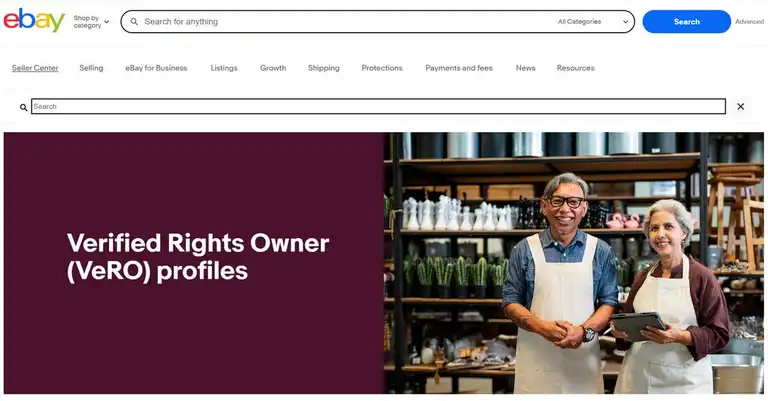
  • Open the VeRO Participant Profiles section

  • Browse the list in alphabetical order

  • Click any brand name to see its policies, resale rules, and restrictions

This quick step lets you know whether:

  • You can resell the item

  • You need authorization

  • The brand prohibits marketplace sales entirely

Avoid Counterfeit, Replica, or “Inspired” Products

One of the biggest triggers for VeRO takedowns is selling items that imitate, replicate, or mimic name-brand goods. Even unknowingly selling a counterfeit can lead to serious consequences.

To avoid issues:

  • Source from trusted, reputable suppliers only

  • Request authenticity documents such as:

    • invoices

    • receipts

    • certificates

    • authorization letters

If you see sales terms like “replica,” “dupe,” “inspired by,” or suspiciously low prices, treat the product as high-risk and avoid listing it.

Explore 200+ ready-to-use eBay feedback examples to build trust, boost ratings, and impress buyers or sellers instantly.

Research Trademarks and Copyrights

Understanding IP protections connected to your product is essential. Even if you’re allowed to sell the item, using a brand’s images, artwork, designs, or logos without permission can still violate VeRO rules.

Where to research trademark information:

  • USPTO trademark search

  • WIPO global trademark database

  • EUIPO search for European trademarks

  • Official brand websites (many list their protected logos and marks)

  • Trademark attorneys or professional search services

Where to research copyright:

  • US Copyright Office database

  • Library of Congress collections

  • Industry-specific copyright registries

  • National copyright offices if selling international items

Doing your homework early prevents accidental IP misuse later.

Discover the most profitable items to sell on eBay in 2025 and boost your online business earnings.

Build Listings That Meet Legal & IP Requirements

Your listing presentation must be compliant too — not just the product itself. Many sellers get VeRO flags simply because they used protected content in their descriptions or photos.

To create safe listings:

  • Use unique, original images (don’t copy brand or competitor photos)

  • Write your own descriptions instead of reusing copyrighted wording

  • Avoid misleading keywords or implying brand affiliation

  • Do not use logos or artwork unless you are licensed to

Also, keep a record of everything — receipts, images, supplier proof — in case a rights owner challenges your listing later.

Master eBay SEO with proven optimization strategies to increase visibility, attract more buyers, and grow your sales in 2025.

What To Do If You Get a VeRO Violation

Getting a VeRO strike is stressful — but it’s actually very common, especially for new sellers and dropshippers. What matters now is how you respond. If you act quickly and correctly, you can protect your account and prevent further damage.

Below are the key actions you should take right away:

Read eBay’s VeRO Notification Carefully

Start by opening the email eBay sent you. Don’t skim it — read every line.
The notice will clearly tell you:

  • Which listing was removed

  • Who filed the complaint

  • What type of violation occurred (trademark, copyright, logo misuse, etc.)

  • Whether your account has any penalties

This step is crucial because understanding what triggered the strike helps you avoid repeating it. Many sellers overlook this and get multiple violations simply because they didn’t analyze the first one properly.

Remove Any Related or Similar Listings Right Away

If one listing was flagged, there’s a good chance others may be at risk — especially if they come from the same brand, same supplier, or use similar images or keywords.

To protect your account:

  • Remove all listings from that particular brand

  • Take down anything that looks similar to the flagged item

  • Double-check product titles and descriptions for risky keywords

eBay’s system looks for patterns, and a quick cleanup shows you’re acting responsibly. This can help prevent further strikes and maintain your seller standing.

Think It’s a Mistake? Contact the Rights Owner

Not every VeRO takedown is accurate. Sometimes authorized resellers, wholesalers, or private-label sellers get hit by mistake.

If you’re sure your listing was compliant, you can take action:

  • Use the rights owner’s contact information included in the notice

  • Explain your situation politely and professionally

  • Provide proof such as:

    • invoices

    • authorization letters

    • supplier documentation

    • distribution agreements

If the rights owner agrees it was an error, they can contact eBay directly to reinstate the listing. eBay won’t do this on their own — the rights owner must request it.

Discover how to find sold items on eBay to analyze trends, pricing, and top-performing products.

Final Thoughts: eBay Vero

Navigating eBay’s VeRO policy may seem complicated at first, but understanding it is essential for running a safe and sustainable eBay business. The key is awareness: know which brands are protected, respect intellectual property rights, and maintain compliance in your listings.

Mistakes happen, even to experienced sellers — the important part is how you respond. Review notices carefully, act quickly to remove or correct flagged listings, and communicate professionally if a claim is in error. Proactive research, careful sourcing, and original content will go a long way in preventing VeRO violations.

By following the steps outlined in this guide, you can protect your account, minimize risk, and confidently continue selling on eBay while staying fully compliant with intellectual property rules.

FAQs – eBay Vero

What are the consequences of receiving a VeRO notice on eBay?

If eBay issues a VeRO notice, the affected listing will be removed immediately. Depending on the severity or frequency of violations, consequences can escalate to temporary selling restrictions, account suspension, or, in extreme cases, permanent account bans. Responding quickly and following the proper steps can help minimize the impact and prevent further penalties.

Before listing, check eBay’s official VeRO brand list to see if the brand is part of the program. Research the brand’s official resale or intellectual property policies, and verify product authenticity with your supplier. Using extensions can also help you identify high-risk items before they go live.

The safest suppliers are those who:

  • Offer authentic, verifiable products

  • Provide invoices, receipts, or authorization letters

  • Are transparent about resale permissions and brand authorization

Avoid gray-market, “inspired by,” or replica sellers, as they are high-risk sources for VeRO violations. Building relationships with reputable wholesalers or official distributors is the best way to stay compliant.

No. Using images from the internet, including brand websites or competitors, can violate copyright law and trigger VeRO strikes. Always use your own original photos, or obtain written permission from the rights holder before using their images. This applies to product photos, promotional graphics, and branded artwork.

Contact Us for Tailored Solutions – Stores Automation:

Ready to transform your Ebay store and achieve big wins? Contact us at Stores Automation for personalized solutions that leverage the power of automation for your business. Reach out to us at 302-204-8244 or via email at info@storesautomation.com. For more information, Sign up for Ebay Store Automation. Embark on the path to e-commerce success with Stores Automation – where small changes lead to big wins!