

💡 Key Takeaways
- Shopify dropshipping lets you run a real online store without ever touching inventory — your supplier ships directly to your customers.
- You can get a store live in under 24 hours with no coding or technical experience required.
- Niche selection and supplier vetting are the two decisions that determine whether your store succeeds or stalls.
- Apps like DSers, Zendrop, and AutoDS automate the entire order fulfilment pipeline as you scale.
- Paid ads (Facebook, TikTok) and SEO are the most reliable traffic channels for new stores in 2026.
- The average dropshipping profit margin ranges from 15–30% — higher with private-label or branded packaging.
- Shopify currently offers a 3-day free trial plus $1/month for your first three months.
📚 Table of Contents
- What Is Shopify Dropshipping?
- How Dropshipping Works on Shopify — Step by Step
- Pros and Cons of Shopify Dropshipping
- Why Shopify Beats Every Other Platform for Dropshipping in 2026
- How to Dropship on Shopify in 2026: Basic Steps For Every Beginner
- Shopify Dropshipping Costs Breakdown (2026)
- Challenges and How to Overcome Them
- Real Client Results with Stores Automation
- Frequently Asked Questions
Every year, hundreds of thousands of people search for exactly this — how to dropship on Shopify — and most of them land on guides that tell them to "pick a niche," "find a supplier," and "run ads," without ever explaining what that actually looks like in practice. This guide is different. It is the complete, step-by-step walkthrough that a genuine beginner needs: what to do, why to do it, in what order, and what to watch out for at every stage.
Shopify dropshipping is a business model where you build an online storefront, sell products to customers, and have your suppliers ship those orders directly — no warehouse, no inventory, no packing tape. Your job is to build the brand, attract the buyers, and manage the relationship. The supplier handles everything physical. It is lean, it is scalable, and when it is done right, it is genuinely profitable.
The market data backs up the opportunity. The global dropshipping market was valued at $365.7 billion in 2024 and is expected to grow at 23.4% annually through 2030. Shopify alone powers over 4.6 million active stores in 175 countries. The infrastructure is mature, the tools are powerful, and the entry barrier has never been lower. What has changed is that success now requires strategy, not luck.
This guide gives you that strategy — from opening your Shopify account to your first profitable sale and beyond.
What Is Shopify Dropshipping?
Shopify dropshipping is an e-commerce fulfilment model where you operate an online store through Shopify but never physically handle the products you sell. You list products from third-party suppliers on your store at a retail price. When a customer buys, that order is forwarded to your supplier — automatically or manually — who then packs and ships the product directly to your customer, typically under your brand name.
You keep the difference between the retail price you charged the customer and the wholesale price you paid the supplier. That margin is your profit. There is no upfront inventory investment, no storage costs, and no fulfilment operation to manage. Your focus is entirely on building a brand customers trust and driving buyers to your store.
This is what makes dropshipping so accessible for beginners: the capital risk is minimal. You only pay for a product after a customer has already paid you. There is no worst-case scenario where you have bought 500 units of a product nobody wants. You test, validate, and scale — all without tying up capital in inventory.
💡 Quick distinction: Shopify is the platform — it powers your storefront, checkout, and backend management. Dropshipping is the fulfilment model — your supplier ships directly to your customer. The two work together seamlessly through Shopify's app integrations with suppliers like DSers, Spocket, and Zendrop.
How Dropshipping Works on Shopify — Step by Step
Before you build your store, it is worth understanding the complete order flow — from the moment a customer lands on your store to the moment the package arrives at their door. Here is exactly what happens:
When you use a connected dropshipping app (like DSers or Zendrop), steps 2 and 4 are fully automated. You do not touch the order at all — the app sends it to the supplier when the payment clears and pulls the tracking number back into Shopify as soon as the supplier generates it. Your customer gets an automated shipping notification, and you simply watch your dashboard.
When there is no direct integration with your supplier, you need to forward orders manually — copying the customer's shipping details into your supplier's portal and then updating the tracking number in Shopify once available. This is manageable at low volumes but becomes unsustainable quickly. Automation is the goal from day one.
Example margin calculation: You sell a premium kitchen organiser for $54.99. Your AliExpress supplier charges $14.80. Shopify's payment processing fee is approximately $1.65. Your net profit before advertising: $38.54 per order. At 30 orders per day, that is over $1,150 in daily revenue — entirely from a single product, with no warehouse and no staff.
Pros and Cons of Shopify Dropshipping
Dropshipping is a genuinely excellent business model for the right person with the right expectations. It is also misunderstood by many beginners who expect passive income without active effort. Here is an honest breakdown of what you are signing up for:
✓ Advantages
- No inventory investment — you only pay for products after customers pay you
- Low startup cost — you can launch for under $100 in platform fees
- Location independence — manage your entire store from a laptop, anywhere
- Scalable without logistics — 1,000 orders/day requires the same infrastructure as 10
- Test products with zero risk — add or remove products freely based on what sells
- Huge product variety — access millions of products across every niche imaginable
✗ Challenges
- Lower margins than private label — buying single units means no bulk discount
- Supplier dependency — stock, quality, and shipping are outside your direct control
- Longer shipping times — especially with China-based suppliers (7–20 days)
- Competitive niches — many sellers list the same products; branding differentiates you
- Returns complexity — coordinating refunds through a supplier adds friction
- No physical product control — you cannot inspect what ships to your customers
The challenges above are all manageable with the right systems. Supplier dependency is mitigated by working with multiple vetted suppliers. Shipping times are solved by working with US/EU-based suppliers through Spocket or Zendrop. Low margins are addressed by building a real brand that commands premium pricing. Every "con" has a proven countermeasure — and this guide covers them all.
Why Shopify Beats Every Other Platform for Dropshipping in 2026
You could technically run a dropshipping store on WooCommerce, Wix, BigCommerce, or even Amazon. Most experienced dropshippers end up on Shopify — and there are specific, practical reasons for that.
| Feature | Shopify | WooCommerce | Wix | BigCommerce |
|---|---|---|---|---|
| Setup speed | Under 1 day | 2–4 days (hosting + plugins) | 1 day | 1–2 days |
| Technical knowledge needed | None | Moderate | None | Low |
| Dropshipping apps | DSers, Spocket, Zendrop, AutoDS, CJdropshipping | AliDropship only (paid plugin) | Modalyst only | Spocket, Printful |
| Hosting included | Yes — fully managed | No — self-hosted | Yes | Yes |
| App ecosystem | 8,000+ apps | 50,000+ plugins (variable quality) | ~300 apps | ~1,500 apps |
| Mobile optimisation | All themes responsive by default | Theme-dependent | Good | Good |
| 24/7 support | Yes | Community forums only | Yes | Yes |
Shopify's biggest practical advantage is that it removes every technical obstacle between you and your store being live. No hosting setup, no plugin conflicts, no database management. You focus entirely on your business — products, marketing, and customers — while Shopify handles the infrastructure. For a full overview of what Shopify's platform includes as a website builder, our Shopify website builder guide covers every tool and feature available to store owners.
How to Dropship on Shopify in 2026: Basic Steps For Every Beginner
Below are the seven steps every beginner must follow to build a profitable Shopify dropshipping business. Each step is detailed, practical, and sequenced in the order you should actually do them — not a vague checklist, but a genuine walkthrough of what to do and why.
Step 1: Set Up Your Shopify Store
Your store is your brand's home base — every customer interaction, every sale, every review happens here. Getting the setup right from the beginning saves significant rework later. Here is exactly how to do it.
1. Create Your Shopify Account
Go to shopify.com and start the free trial. Shopify currently offers a 3-day free trial followed by $1/month for your first three months — use every day of this window to build and test your store before your first billing cycle. Our dedicated breakdown of the Shopify $1 for 3 months offer explains exactly what is included and how to maximise the trial period.
During account creation, Shopify will ask a few questions about your business. Answer as accurately as you can — these responses determine the default settings Shopify applies to your account. You can change everything later, but starting with appropriate settings avoids confusion early on.
2. Choose the Right Shopify Plan
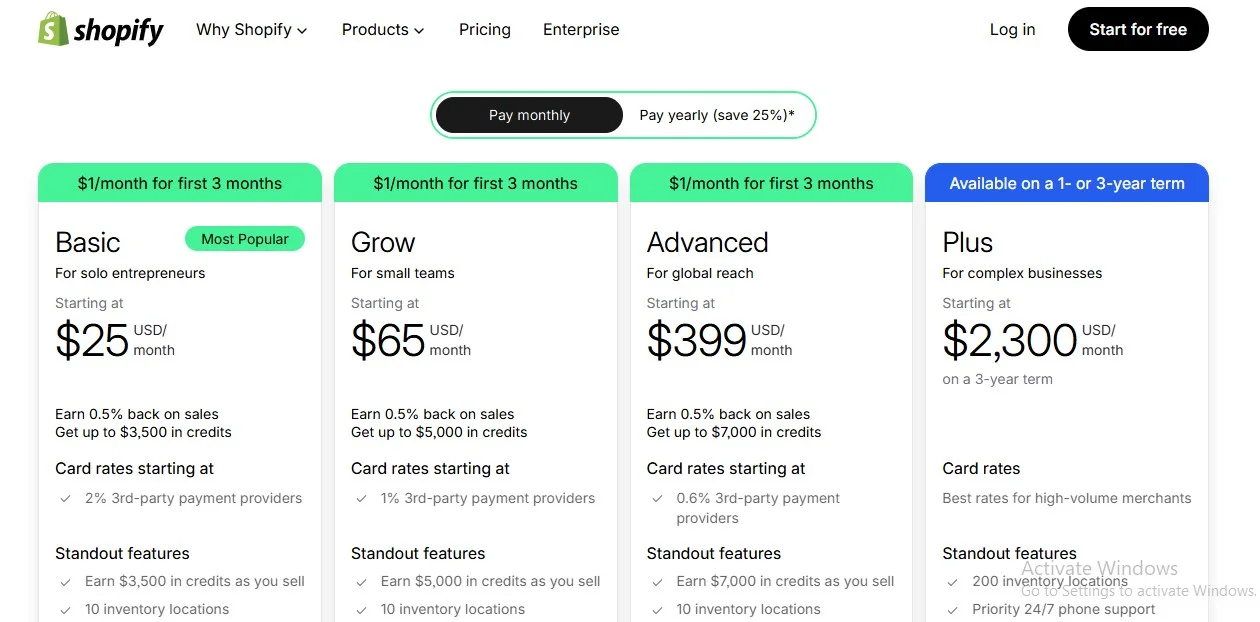
Shopify offers three core plans for growing stores:
- Basic — $29/month: All core e-commerce features, 2 staff accounts, basic reports. This is the right starting point for every new dropshipper. It has everything you need until you are generating consistent revenue.
- Shopify — $79/month: Professional reports, 5 staff accounts, lower transaction fees. Upgrade to this when your monthly revenue exceeds $5,000 and the reduced fees more than offset the higher plan cost.
- Advanced — $299/month: Advanced reporting, 15 staff accounts, the lowest transaction fees. For high-volume stores processing significant monthly volume.
Start on Basic. The upgrade to a higher plan will pay for itself in reduced transaction fees once your volume justifies it. For a detailed breakdown of what each plan costs in total — including transaction fees, app costs, and payment processing — read our Shopify fees guide.
3. Select and Customise Your Theme
Your theme is the visual foundation of your brand. Shopify's free themes — Dawn, Refresh, and Craft — are genuinely conversion-optimised and professionally designed. Do not spend money on a premium theme until you have validated your first products. Dawn is the most widely used free theme and performs excellently on both desktop and mobile.
When customising your theme, prioritise these four elements above everything else:
- Brand identity: Choose 2–3 consistent brand colours, upload a clean logo, and set your typography. Consistency here builds trust faster than any single page element.
- Homepage above the fold: The first thing visitors see must communicate what you sell and why it is worth buying. One clear headline, one compelling image, one call-to-action button.
- Navigation: Keep your menu simple — Home, Shop (by category), About, Contact. Every extra menu item is another decision for your visitor to make before buying.
- Mobile experience: Over 70% of Shopify traffic is mobile. Preview every page on mobile view before publishing. Image sizing is a common issue — our Shopify image size guide covers the exact dimensions for every page type.
4. Register Your Domain
A custom domain (yourbrand.com) is non-negotiable. Operating on yourstore.myshopify.com signals to every visitor that the store is either new or unprofessional — both destroy trust and conversion rate. Shopify offers domain registration from approximately $14/year, or you can connect a domain from GoDaddy, Namecheap, or Google Domains. Keep it short, brandable, and easy to spell. Avoid hyphens, numbers, and anything that requires explanation.
Step 2: Choose Your Niche and Research Products
This is the decision that determines whether your store succeeds or spends months floundering. Your niche shapes your entire business — your supplier relationships, your ad targeting, your content strategy, your brand voice, and your profit margins. Treat it with the seriousness it deserves.
What Makes a Profitable Dropshipping Niche?
The best dropshipping niches share five characteristics. They have consistent search demand (not just trend spikes), a passionate and identifiable audience, products with healthy margins (typically $25+ selling price), multiple related products you can cross-sell, and room for branding differentiation. Avoid niches dominated by a single major brand with massive consumer loyalty — you will not win on brand recognition, so you need a space where product quality and customer experience can make the difference.
Some of the strongest performing niches for Shopify dropshipping in 2026 include:
Pet owners spend generously and buy repeatedly. Beds, feeders, toys, and grooming tools all perform strongly year-round.
Space-saving solutions, kitchen organisers, and storage products photograph beautifully and sell consistently.
Resistance bands, massage tools, and home gym equipment have broad appeal and strong average order values.
Reusable products, eco-friendly household items, and zero-waste alternatives are growing at 15%+ annually.
Phone accessories, desk gadgets, and smart home devices offer strong margins and easy impulse buying.
Skincare tools, serums, and beauty accessories generate loyal customers who reorder consistently.
How to Validate a Product Before You Sell It
Never list a product based purely on gut instinct. Use these four validation methods before importing anything to your store:
- Google Trends: Check whether search interest is stable or trending upward. Avoid products with sharp seasonal spikes unless you plan to sell seasonally. A flat or growing trend line indicates sustainable demand.
- AliExpress Dropshipping Centre: Filter by number of orders and review score. Products with 1,000+ orders and a 4.7+ rating from multiple suppliers signal proven market demand.
- Facebook Ad Library: Search for the product name at facebook.com/ads/library. If multiple stores are actively running ads for this product, people are buying it. No ads at all means either no demand or a genuine gap — investigate further before concluding either.
- Shopify Spy Tools: Dedicated tools like Minea, AdSpy, and Koala Inspector reveal what products competing stores are selling and advertising. Our guide on Shopify spy tools breaks down how to use each effectively for product research.
For a broader look at what is selling well on Shopify right now, our guide on what to sell on Shopify covers the top-performing categories with specific product ideas in each.
Step 3: Find and Vet Your Dropshipping Supplier
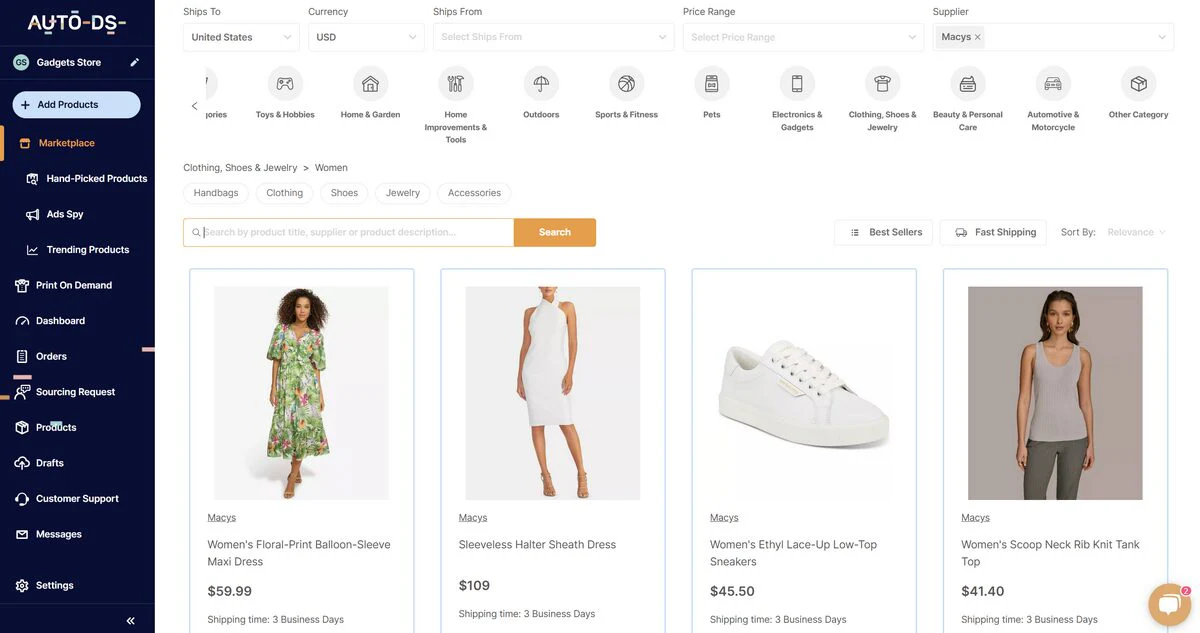
Your supplier is the most important operational relationship in your entire dropshipping business. Every complaint, every positive review, every refund request traces back to supplier performance. Choose wrong here and no amount of great marketing will save your store's reputation. Choose right and your business runs smoothly even when you are not watching it.
The Major Dropshipping Supplier Platforms for Shopify
| Supplier | Product Range | Shipping Speed | Key Strength | Best For |
|---|---|---|---|---|
| DSers / AliExpress | 100M+ products | 7–20 days (ePacket) | Widest selection, lowest prices, free plan | Beginners testing multiple niches |
| Spocket | 100,000+ products | 3–7 days (US/EU) | US & EU suppliers, branded invoices | Stores targeting US/European customers |
| Zendrop | 1M+ products | 5–8 days | Auto-fulfilment, custom branding options | Scaling stores wanting faster shipping |
| CJ Dropshipping | Wide catalogue | 7–15 days | US/EU warehouses, custom packaging | Stores moving toward private label |
| AutoDS | Multi-supplier | Varies by supplier | Price & stock monitoring automation | Multi-product, multi-supplier stores |
| Printify / Gelato | Custom print-on-demand | 5–10 days | No inventory, custom designs | Branded merchandise, apparel stores |
How to Evaluate Any Supplier Before Committing
Use this vetting process on every supplier before you list their products in your store:
- Order sample products personally. This is non-negotiable. You cannot sell what you have not seen. Assess build quality, packaging, accuracy to the listing photos, and the actual shipping time to your target market.
- Check their review history. Look for 4.8+ star ratings with a high volume of genuine reviews (not just high ratings from a handful of orders). Read negative reviews specifically — they tell you what breaks down under normal conditions.
- Confirm current stock levels and restock frequency. A supplier who regularly goes out of stock will tank your store's reputation every time a popular product disappears mid-campaign.
- Test their communication response time. Send a pre-sales enquiry and note how long it takes to get a meaningful reply. If it takes 48 hours when you are a potential new customer, it will take longer when you have a real problem.
- Understand their return and refund process. Know exactly what happens when a product arrives damaged or never arrives at all — before this happens with a real customer's order.
- Confirm Shopify app integration. Direct integration via DSers, Spocket, or their own app means orders are automated. No integration means manual forwarding — workable but not scalable.
For a comprehensive breakdown of vetted supplier platforms with detailed pros and cons for each, our Shopify dropshipping suppliers guide covers every major option. If you are specifically working with AliExpress, our complete AliExpress dropshipping on Shopify guide walks through the full setup process from supplier selection to your first automated order.
⚠️ Never list a product you have not personally received and inspected. Supplier photos are marketing material — they do not always reflect what ships. A single wave of bad product reviews can permanently damage your store's conversion rate. Order samples first, every time.
Step 4: Import and Optimise Your Product Listings

Most beginner dropshippers import products from their supplier and publish them directly — raw supplier titles, machine-translated descriptions, and stock photos. This is one of the most damaging things you can do to your store's conversion rate. Your product listings are your sales team. They need to earn the sale, not just describe the product.
Writing Titles That Rank and Convert
Your product title needs to do two jobs simultaneously: include the keywords customers search for (for SEO and search visibility) and communicate clearly what the product is (for conversion). Aim for 60–80 characters. Structure it as: Primary keyword + key differentiator + relevant modifier. For example: "Premium Bamboo Desk Organiser — 6 Compartments, Non-Slip Base" is far more effective than "Multi-function wooden desktop storage box pen holder stationery organiser."
Writing Product Descriptions That Sell
Write original descriptions for every product you sell. Never copy supplier content — it creates duplicate content that Google penalises, and it reads like marketing material translated from Mandarin, which destroys trust instantly. Structure every description around the customer's outcome, not the product's features:
- Lead with the benefit: What problem does this solve? What does the customer's life look like after buying it?
- Support with features: Material, dimensions, compatibility, special properties — but framed as "why this matters to you," not a raw spec sheet.
- Address objections: Anticipate what a sceptical buyer would ask. Answer it directly in the description before they have to ask.
- Close with confidence: A clear call to action and a reason to buy today (limited stock, satisfaction guarantee, fast dispatch).
Product Images: Your Single Biggest Conversion Lever
Images drive more purchase decisions than any other element of a product page. Use all available image slots. Lead with a clean product shot on a white or light background. Follow with lifestyle images showing the product in real-world use — these are the images that trigger purchase intent. Add dimension or scale comparison images for any product where size perception affects buying decisions. Studies consistently show that lifestyle imagery increases conversion rates by up to 40% compared to studio-only images.
Pricing for Profitability
Your price needs to cover: supplier cost + Shopify fee + payment processing (typically 2.9% + $0.30) + ad spend allocation + a real profit margin. A working starting formula is to price at 2.5–3x the supplier cost for products under $30, and 2–2.5x for products over $50. Check competitor pricing before finalising — being 10–20% above market is sustainable if your branding, imagery, and descriptions justify the premium. Being significantly cheaper than competitors signals low quality rather than good value.
Adding product reviews dramatically increases trust and conversion. New stores without reviews lose a significant percentage of visitors who check for social proof before buying. Apps like Judge.me (free), Loox ($9.99/month), and Yotpo let you display supplier reviews on your products from day one. Our guide on how to add reviews to Shopify covers the setup for each platform.
Step 5: Configure Payments, Shipping, and Legal Pages

Do not skip this step. A beautiful store with broken checkout, missing legal pages, or confusing shipping policies will not convert visitors into buyers — and it may expose you to payment disputes, chargebacks, or worse. Before you run a single ad or share your store link, these elements must be complete and correct.
Setting Up Payment Gateways
Shopify Payments is the strongest option if it is available in your country. It accepts all major credit cards, eliminates the additional 2% transaction fee that Shopify charges when using third-party gateways, and integrates natively with Shop Pay, Apple Pay, and Google Pay. Enabling Apple Pay and Google Pay alone can increase mobile conversion rates by 20–30% — they eliminate the card entry step entirely, which is the single biggest point of friction in mobile checkout.
If Shopify Payments is not available in your country, the best alternatives are PayPal, Stripe, and 2Checkout. Always offer at least two payment options — some customers do not use credit cards, and others specifically prefer PayPal for buyer protection. Our full Shopify Payments guide covers availability by country, fee structures, and setup in detail.
Configuring Shipping Rates
The single most effective conversion tactic in dropshipping is free shipping. Do not add a shipping charge at checkout — build the cost into your product price instead. A product listed at $39.99 with free shipping consistently outconverts the same product at $34.99 with a $5 shipping fee, even though the total customer cost is identical. The psychological friction of seeing a shipping charge added at checkout is one of the top causes of abandoned carts.
Set up separate shipping zones for domestic and international destinations with accurate, realistic delivery timeframes. Under-promise and over-deliver — a customer who expects 14 days and receives in 10 becomes a positive reviewer. A customer who expects 7 days and waits 16 becomes a chargeback.
Creating Essential Legal Pages
Shopify's built-in template generator creates draft versions of all four required legal pages. Customise each one to accurately reflect your real policies — do not use the templates verbatim:
- Privacy Policy: Required by law in GDPR-applicable regions and virtually every other jurisdiction. Describes what data you collect and how it is used.
- Terms of Service: Defines the contractual relationship between your business and your customers. Important for dispute resolution.
- Refund & Return Policy: Be specific. "30-day returns on all items" is a statement customers trust. "Returns subject to approval" is a statement that triggers doubt.
- Shipping Policy: States your processing time, carrier(s), estimated delivery windows for each shipping zone, and how customers can track their orders.
Link all four pages in your store footer. These pages are actively read by a significant percentage of first-time buyers before they commit to checkout — they are a genuine conversion tool, not a legal formality.
Step 6: Drive Traffic to Your Store
Your store being live does not generate revenue. Traffic does. Getting buyers to your store is where the real ongoing work of dropshipping lives, and your strategy here determines your profitability more than almost any other factor. The two channels that work best for dropshipping stores in 2026 are paid advertising and search engine optimisation — and the most successful stores use both.
Paid Advertising: Facebook & Instagram Ads
Meta's advertising platform (Facebook and Instagram) remains the gold standard for dropshipping stores. It offers granular audience targeting based on interests, behaviours, demographics, and purchase intent — allowing you to put your product in front of exactly the type of person most likely to buy it. Facebook's ad platform reaches over 2.1 billion people daily, and its visual ad formats are purpose-built for product discovery.
How to structure your Facebook ad campaigns for a new product:
- Testing phase ($10–$20/day per ad set): Run 3–5 ad sets with different interest-based audiences. Use the same creative (video or image) across all sets. Let each run for 3–4 days before making decisions. You are looking for which audience delivers the lowest cost-per-click and the highest add-to-cart rate.
- Scaling phase: Kill underperforming ad sets. Increase the daily budget on winning sets by 20–30% every 2–3 days rather than making large jumps (large budget increases reset the algorithm's learning phase). Introduce lookalike audiences built from your customer list or website visitors.
- Retargeting phase: Set up retargeting campaigns for people who visited your product page or added to cart but did not purchase. These audiences convert at 3–5x the rate of cold traffic and should never be left without an active campaign.
TikTok Ads
TikTok has emerged as one of the highest-performing paid channels for visually compelling dropshipping products, particularly for audiences aged 18–35. The platform's algorithm favours engaging creative heavily — a genuinely good product video can generate reach that would cost thousands on Facebook for a fraction of the price. TikTok's cost-per-click is also significantly lower than Meta in most niches, making it ideal for testing new products with limited budgets.
Search Engine Optimisation (SEO)
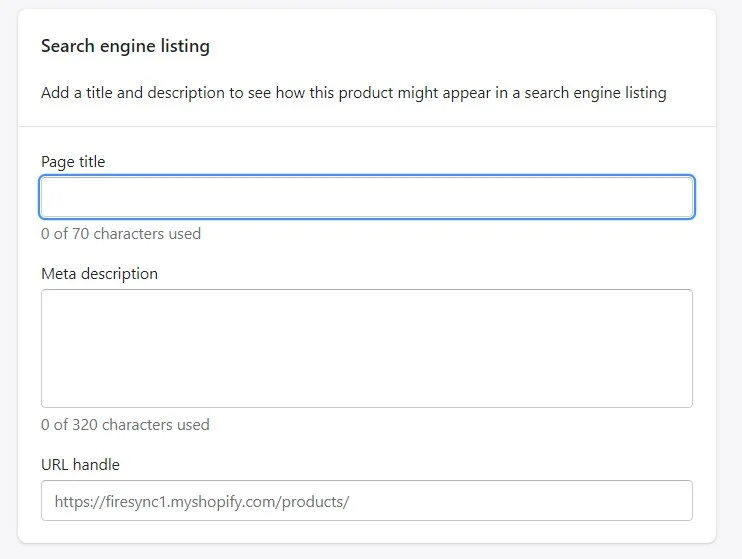
SEO takes longer to show results than paid ads — typically 3–6 months to gain meaningful organic rankings — but the traffic it generates is free, compounds over time, and converts at higher rates because visitors actively searched for what you sell. Focus your SEO efforts on three areas:
- Product page SEO: Optimise titles, descriptions, meta titles, meta descriptions, and image alt tags with the keywords your customers actually search for.
- Blog content: Articles that answer questions related to your niche (buying guides, how-tos, comparison posts) drive long-tail search traffic and build topical authority that improves your entire site's rankings.
- Technical SEO: Page speed, mobile optimisation, and clean URL structure are baseline requirements. Our Shopify speed optimisation guide covers every technique for improving Core Web Vitals scores.
Social Media and Email Marketing
Connecting your Shopify store to Instagram and Facebook shops makes your products shoppable directly from social posts — reducing the number of steps between discovery and purchase. Our Shopify Instagram integration guide covers the full setup. Email marketing, with an average return of $36–$42 for every $1 spent, is the highest-ROI channel available to any e-commerce store. Set up three automations from day one: abandoned cart recovery, post-purchase follow-up, and a welcome series for new subscribers. For a complete overview of all traffic channels and how to use them together, our guide on how to drive traffic to a Shopify store covers every strategy.
Step 7: Automate Fulfilment and Scale
Manual order processing is the ceiling that stops most dropshipping stores from scaling. When you are forwarding 10 orders a day by hand, it is manageable. At 100 orders a day, it becomes a second full-time job. At 500 orders a day, it is simply not possible without a team. Automation removes this ceiling entirely — and it is available from day one.
Order Fulfilment Automation
DSers is the official AliExpress partner app for Shopify and the most widely used automation tool for beginners. Once connected, it automatically sends new orders from your Shopify store to your AliExpress supplier and pulls tracking numbers back into Shopify as soon as they are generated. Your customer receives an automatic shipping notification without any manual input from you. The free plan handles up to 3,000 products — more than sufficient for a store getting started.
AutoDS goes further. It supports multiple suppliers (not just AliExpress), monitors supplier prices in real time and automatically adjusts your store prices when supplier costs change, sends stock alerts when products go out of availability, and processes orders automatically. For stores working across multiple suppliers or managing large catalogues, AutoDS reduces operational overhead dramatically.
Zendrop offers similar automation with faster-shipping US-based suppliers and custom packaging options — useful for stores that want to build brand recognition through branded unboxing experiences. If the Shopify Collective feature is relevant to your model (sourcing from other Shopify merchants), it also integrates cleanly into an automated fulfilment workflow.
Inventory and Pricing Automation
Supplier stock levels change constantly. An ad campaign driving 200 visitors per day to a product that just went out of stock with your supplier wastes every cent of that ad budget and generates frustrated customer emails. AutoDS and similar tools monitor supplier inventory in real time and automatically unpublish products when stock drops to zero, republishing them when stock is restored. This single automation pays for its subscription cost within days of being set up.
Customer Service Automation
As order volume grows, customer enquiries grow proportionally. The majority of support questions — "Where is my order?", "How do I return this?", "Can I change my delivery address?" — are repetitive and answerable with a template. Tools like Tidio, Gorgias, and Re:amaze handle these questions via chatbot or templated responses, freeing your time for the enquiries that genuinely require human judgment. Setting these up early prevents your inbox from becoming unmanageable as your store scales.
💡 When to scale your ad spend: A product consistently delivering 10+ orders per day at positive ROAS (return on ad spend) is your signal to scale. Increase budgets by 20–30% every 2–3 days, not in large jumps. Introduce lookalike audiences (built from customers, purchasers, or website visitors) to expand reach while maintaining targeting accuracy. Do not touch a winning campaign's targeting or creative during a scaling phase — let the algorithm work.
Shopify Dropshipping Costs Breakdown (2026)
One of the most common questions from beginners is how much they actually need to start. The honest answer: you can get a store live for under $50, but a properly resourced launch that gives you a genuine chance of profitability requires $600–$1,000 in the first month. Here is where that money goes:
| Cost Item | What It Covers | Monthly Cost |
|---|---|---|
| Shopify Basic Plan | Full store hosting, checkout, all core features | $29/month ($1 for first 3 months) |
| Custom Domain | .com domain for your brand | ~$1.20/month ($14/year) |
| Dropshipping App | DSers (free), Spocket ($39.99+), Zendrop ($49+), AutoDS ($19.90+) | $0–$49/month |
| Shopify Theme | Dawn/Refresh (free); premium themes $180–$350 one-time | $0 (free themes recommended to start) |
| Product Samples | Testing 4–6 products before listing — non-negotiable | $80–$200 one-time |
| Paid Advertising | Facebook/TikTok ads for initial product testing | $300–$800+ |
| Email Marketing App | Klaviyo or Shopify Email — free under 500 contacts | $0–$45/month |
| Review App | Judge.me (free) or Loox ($9.99/month) | $0–$10/month |
| Payment Processing | Shopify Payments charges 2.9% + $0.30 per transaction | Variable — built into pricing |
Realistic first-month total: $29 (Shopify) + $14 (domain) + $0 (DSers free) + $150 (samples) + $500 (ads) = approximately $693 to launch properly. The advertising budget is the largest variable — the more you invest in testing, the faster you identify a winning product. Under-funding your ad testing budget is one of the most common reasons stores never find traction.
Challenges and How to Overcome Them
Every business model has friction points. Dropshipping's are well-documented and, importantly, all solvable. Here is an honest look at the most common challenges and the specific approaches that address each one.
Long Shipping Times
The problem: Suppliers based in China typically deliver in 7–20 days. Customers in the US and UK are conditioned by Amazon to expect 2–3 day delivery. The gap in expectations is the most frequent source of negative reviews in dropshipping.
The solution: Source from US or EU-based suppliers through Spocket or Zendrop for your primary markets. These suppliers deliver in 3–7 days. Alternatively, be radically transparent — set clear delivery expectations in your product listings, shipping policy, and order confirmation emails. Customers who are told "7–14 business days" and receive in 10 are satisfied. Customers who assumed 3 days and waited 12 become chargebacks.
Supplier Stock Running Out
The problem: You are running a profitable ad campaign and your supplier runs out of stock. Customers order a product you cannot fulfil. Refund requests, angry emails, and negative reviews follow.
The solution: Use AutoDS or a similar inventory monitoring tool to automatically unpublish products when stock drops below a threshold. Always have a backup supplier identified for your top-selling products before you need them. Never let a single supplier be the only source for a product driving significant revenue.
Thin Profit Margins
The problem: Advertising costs reduce what looks like a healthy margin to something much thinner in practice. When ad costs rise (as they often do in competitive niches), profitability evaporates quickly.
The solution: Build a real brand that commands premium pricing. Invest in better product images, stronger descriptions, and genuine customer reviews. Stores with strong brand identity can charge 20–40% more than generic dropshipping stores selling the same product. Upsells and post-purchase offers also significantly improve margin per customer without increasing ad spend.
Returns and Customer Disputes
The problem: A customer wants to return a product. Your supplier is in China. The return shipping cost is often more than the product's value. PayPal or Stripe disputes are time-consuming and can result in your payment account being restricted if your dispute rate rises.
The solution: For low-value products, offer a refund without requiring the return — your supplier cost is low enough that the goodwill generated by an easy refund is worth more than recovering the product. Negotiate a return merchandise authorisation (RMA) policy with your top suppliers before problems arise. Keep your dispute rate below 1% — this is the threshold above which payment processors flag accounts for review.
Real Results: What Our Clients Are Earning
Since 2019, Stores Automation has helped hundreds of entrepreneurs build and grow profitable Shopify dropshipping businesses through our done-for-you model. Our team handles product research, supplier vetting, store setup, listing optimisation, and ongoing management — clients own the store and collect the revenue while our operators run the day-to-day.
Here is a look at real Shopify store performance data from two of our actively managed client accounts:

Client Store A — Managed Shopify Dropshipping
This store, fully set up and managed by our team, shows steady month-over-month revenue growth driven by a curated product mix, optimised listings, and active ad campaign management. The client has a full-time career and no e-commerce background — our team runs every operational element while they track performance through a transparent reporting dashboard.

Client Store B — Shopify Automation Service
A second actively managed client account showing the kind of scalable, sustainable growth that becomes possible when product selection, supplier management, and advertising are handled simultaneously by an experienced team. This store moved from initial setup to consistent profitability within its first 90 days of operation.
These outcomes reflect a consistent pattern across our client portfolio — not exceptional outliers. When a Shopify dropshipping store is built on solid product research, stocked with tested winning products, and backed by experienced operational management, the path to profitability is predictable rather than accidental. Our Shopify automation services are built to replicate this outcome for every client, regardless of their prior e-commerce experience.
📬 Get in Touch with Stores Automation
Ready to launch your Shopify store — or want our experienced team to build and manage it for you? We are available Monday to Friday, 9 am to 5 pm EST.
Wilmington, DE 19801, USA
Frequently Asked Questions: How to Dropship on Shopify
Final Thoughts: Is Shopify Dropshipping Worth It in 2026?
Yes — with one important caveat. Shopify dropshipping is worth it for people who approach it as a real business: with a validated niche, tested products, a professional brand, and a realistic marketing budget. It is not worth it for people who expect passive income from a generic store with copied supplier content and a $50 ad budget.
The opportunity is substantial and growing. The tools are better than they have ever been — from DSers' one-click order automation to Shopify's AI-powered features through Shopify Magic that generate product descriptions, email content, and ad copy automatically. The barrier to entry is low. What separates the stores that scale from the ones that stall is the quality of the strategy behind them.
Follow the seven steps in this guide with genuine attention to each one. Choose a niche based on data, not enthusiasm. Source from suppliers you have personally tested. Write product listings that earn the sale. Invest in traffic channels that generate real feedback. And automate everything that does not require human judgment so you can focus your time on the decisions that actually move the needle.
If you want to shortcut the learning curve, our Shopify dropshipping automation service gives you a fully built, stocked, and managed store without needing to navigate any of the above alone.