
If you’re researching Walmart DSV, you’re likely exploring how to sell directly on Walmart.com without holding inventory inside Walmart warehouses. The Walmart DSV (Drop Ship Vendor) program allows approved suppliers to fulfill customer orders directly from their own facility while partnering with Walmart as a first-party vendor.
Unlike Walmart Marketplace sellers, a Walmart dropship vendor operates within Walmart’s vendor system, following strict compliance, EDI integration, and shipping standards. This model is ideal for manufacturers, distributors, and established brands looking to scale through Walmart’s massive online traffic without managing retail storefronts.
In this guide, you’ll learn what Walmart DSV means, how it works, the requirements in 2026, and how to become an approved drop ship vendor step-by-step.
Stay ahead of important selling dates in 2026 with our guide on Walmart Seller Key Event Dates.
What Is a Walmart DSV?
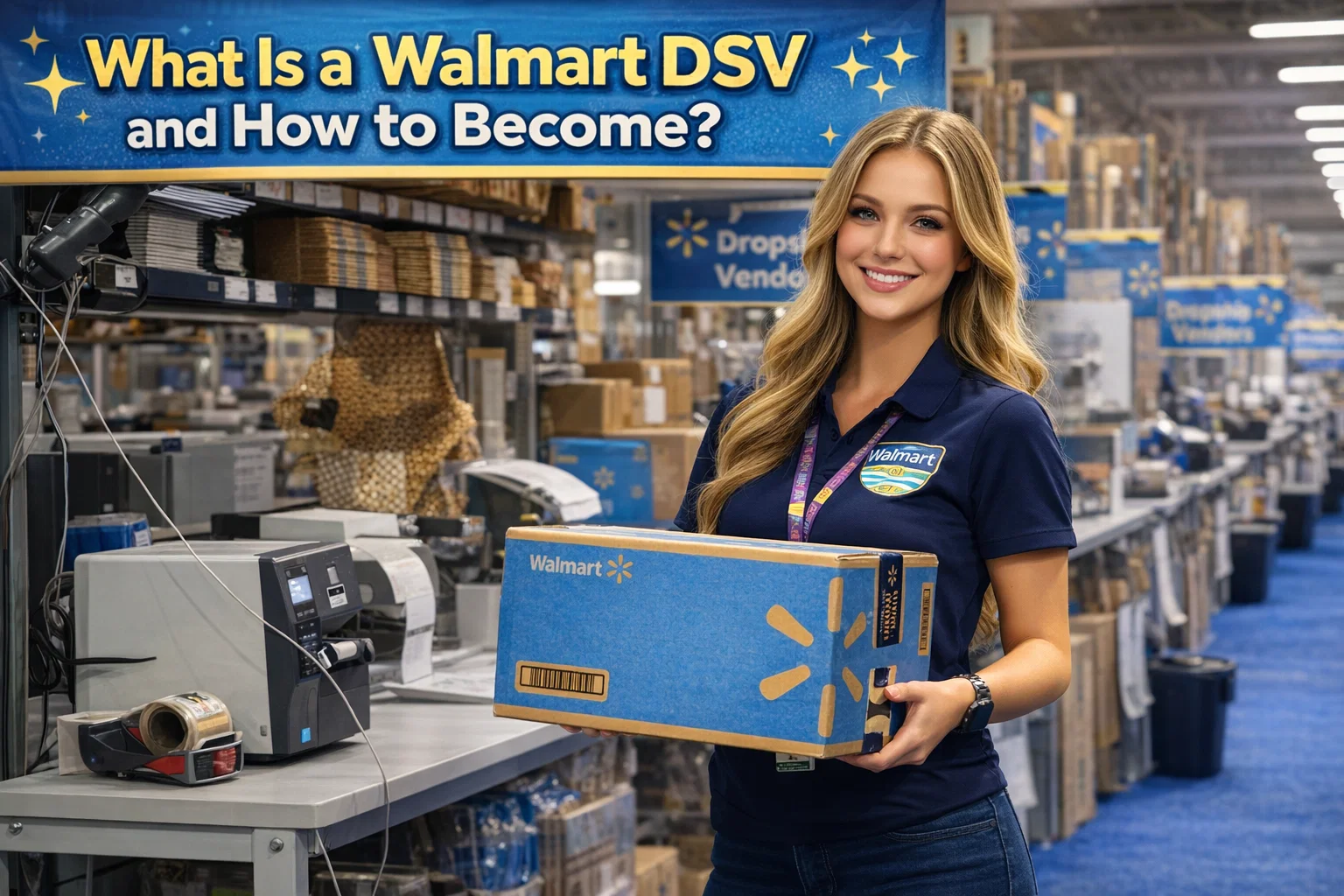
A Walmart DSV (Drop Ship Vendor) is a supplier model within Walmart where approved vendors list their products on Walmart.com while shipping orders directly to customers on Walmart’s behalf. In this arrangement, Walmart purchases products from the vendor at a pre-negotiated wholesale price and then resells them to customers at a retail price it controls.
Unlike third-party marketplace sellers, DSV vendors do not own the customer relationship, set retail pricing, or manage on-site merchandising. Instead, Walmart handles the customer transaction, payment processing, and front-end experience, while the vendor is responsible for inventory availability, order fulfillment, and shipping within agreed service-level standards.
How the Walmart DSV Model Works
The Walmart DSV (Drop Ship Vendor) model is a structured retail fulfillment arrangement between Walmart and its approved suppliers that allows vendors to sell products on Walmart.com without storing inventory at Walmart’s distribution centers. Instead, vendors fulfill orders directly from their own warehouses or fulfillment facilities, while Walmart handles customer transactions, marketing, and delivery expectations.
This setup positions a DSV supplier as a true partner in Walmart’s ecommerce ecosystem — and it requires precise coordination of order flow, inventory, shipping, and data exchange. Here’s a detailed breakdown of how this model operates in practice:
Customer Places an Order on Walmart.com
The process begins when a shopper places an order on Walmart.com for a product listed under a Walmart DSV supplier. Walmart’s platform directs the purchase through its order management system, authorizing the customer’s payment and preparing the order for vendor fulfillment.
Unlike typical marketplace listings, Walmart presents DSV products just like its own merchandise, with consistent pricing and shipping expectations, which helps maintain a uniform customer experience.
Walmart Sends Purchase Order to the DSV
Once the order is captured, Walmart electronically transmits a purchase order (PO) to the approved DSV. This communication typically happens via Electronic Data Interchange (EDI) — a standardized data format that allows systems to exchange order, inventory, and tracking information seamlessly.
The EDI workflow includes:
PO (850) – order details
Inventory updates (846) – stock levels
Ship notices (856) – shipment information
Invoices (810) – billing details to Walmart
Because each order is treated as a separate transaction, DSV vendors often generate a high volume of EDI messages tied to individual customer orders.
Vendor Acknowledges the Order
Upon receiving the order notification, the DSV system must acknowledge it within a designated timeframe (often just a few hours). This acknowledgment confirms the vendor has received the order and will fulfill it, which also informs Walmart’s order management system that fulfillment is underway.
Failure to acknowledge can lead to performance issues or chargebacks under Walmart’s vendor standards.
Picking, Packing, and Shipping
The DSV then picks the item from its own warehouse, packs it according to Walmart’s packaging and labeling requirements (including Walmart-assigned carrier methods), and prepares it for shipment directly to the customer.
Walmart may also require vendors to provide a branded shipping label or packing slip, and in some cases, support options such as pick-up in store if the consumer chooses that fulfillment method.
Walmart often subsidizes or applies its negotiated rates with carriers (for example UPS) for drop shipped orders, which can reduce shipping expense for vendors as part of the DSV program.
Shipment Confirmation and Tracking Updates
Once the order ships, the DSV sends shipment and tracking details back to Walmart via the appropriate EDI messages or API integration. Walmart then updates the customer with tracking information, allowing them to monitor the delivery progress until it arrives at their doorstep.
This real-time communication is essential: Walmart’s performance metrics include on-time delivery rates, and any delays or errors can result in vendor chargebacks or penalties if not properly managed
Walmart Pays the Vendor
After the order is fulfilled and shipment confirmed, Walmart invoices the vendor based on the pre-agreed wholesale pricing and terms. Payment is processed through Walmart’s accounts payable system. Essentially, Walmart acts as the intermediary — facilitating the sale, collecting the customer payment, and then remitting the vendor’s share based on the agreed contract.
Inventory & Data Synchronization
Throughout the entire process, maintaining accurate and timely inventory information is critical. Vendors must continuously update Walmart with inventory levels, often multiple times a day, to prevent overselling or backorders.
Because every customer order can generate unique EDI messages and status updates, vendors need reliable systems (often integrating OMS or EDI software) to manage this data flow without manual errors.
Learn how to profit from Walmart liquidation pallets with our step-by-step guide to reselling in 2026.
Walmart DSV vs Walmart Marketplace (3P Seller)
There are three primary fulfillment models available to businesses selling on Walmart.com. The specific method a supplier operates under is assigned and approved by Walmart based on the company’s structure, capabilities, and agreement terms.
Walmart Warehouse Supplier Program
Suppliers participating in the Walmart Warehouse program operate similarly to traditional retail vendors. Instead of shipping orders directly to customers, they send bulk inventory to Walmart fulfillment centers. The products are stored within Walmart’s distribution network until a customer places an online order. Once purchased, Walmart handles the picking, packing, and shipping process directly from its fulfillment centers to the customer’s address. In this model, Walmart maintains full control over storage and order fulfillment operations.
Walmart Marketplace (Third-Party Sellers)
Under the Walmart Marketplace model, independent third-party sellers list their products on Walmart.com and sell directly to customers. These sellers are responsible for storing their own inventory, processing orders, shipping products, and managing associated shipping expenses. While sellers gain access to Walmart’s online traffic and infrastructure, they retain operational responsibility for fulfillment and customer handling unless enrolled in Walmart Fulfillment Services (WFS).
Drop Ship Vendor (DSV) Program
The Drop Ship Vendor model combines elements of both structures. Like Marketplace sellers, DSV suppliers store and ship inventory from their own facilities. However, orders are processed as Walmart transactions and include Walmart-branded packing slips. A key distinction is that Walmart typically assumes responsibility for shipping costs under the DSV agreement.
Learn how to quickly create and set up your Walmart Seller Center account with this step-by-step guide.
Advantages To Being a Walmart Dropship Vendor
Becoming a Walmart DSV offers several strategic advantages — especially for established brands and suppliers who can meet Walmart’s operational and performance requirements. This model gives vendors access to Walmart’s massive online audience and retail infrastructure while maintaining fulfillment control.
Leverage Walmart’s Brand Authority
As a DSV, your products are listed as “Sold & Shipped by Walmart” on Walmart.com. This instantly increases consumer trust and conversion rates compared to independent marketplace listings because customers feel confident purchasing from a major retail brand rather than a lesser-known third-party seller.
Free Shipping Coverage
Walmart covers the cost of shipping for orders fulfilled through the DSV program, which means vendors don’t pay shipping costs directly. This allows DSV suppliers to offer competitive pricing and fast delivery options — important factors for customer satisfaction and repeat purchases.
Increased Visibility & Buy Box Priority
Products sold by DSV vendors often receive priority placement in search results and are more likely to win Walmart’s Buy Box compared to third-party sellers. Better visibility leads to increased organic sales without heavy reliance on advertising.
Expanded Customer Experience Options
Walmart’s DSV program supports features like Ship to Store (Buy Online, Pick Up In Store) — a popular omnichannel fulfillment option that provides convenience for customers and can boost sales, especially for big or bulky items.
Broader Product Catalog Representation
Because Walmart doesn’t hold inventory for DSV products, vendors can offer a larger range of SKUs and niche items without worrying about warehouse space. This flexibility expands product assortments on Walmart.com.
No Commission Fees Same as Marketplace
While Walmart Marketplace sellers pay referral fees on every sale, DSV vendors operate under wholesale terms with Walmart purchasing inventory as needed. This structure can provide more predictable cost modeling for vendors who manage margins carefully.
Discover how influencers can partner with Walmart to promote products and earn through the Walmart Creator Program.
Disadvantages to Being a DropShip Vendor
Despite significant advantages, the Walmart DSV model is not without drawbacks. Many of these relate to operational control, costs, and strict compliance requirements imposed by Walmart.
Application Process
Getting approved for the DSV program can be time-consuming. Walmart conducts a rigorous verification process for each vendor, ensuring they meet the company’s operational and quality standards. Even after acceptance, suppliers must consistently meet high performance expectations to remain in the program.
Chargebacks on Returns
As a DSV supplier, your products are sold under the Walmart brand. Customers may return damaged or unwanted items to local Walmart stores, and these returns are typically liquidated. Suppliers can face chargebacks for refunds without receiving the returned merchandise, which can lead to unexpected costs.
Warehousing Responsibilities
Under the DSV model, suppliers are responsible for storing and shipping their own inventory as orders are placed. Walmart does not stock DSV products in its distribution centers, nor does it purchase items in bulk. This shifts the costs and risks associated with inventory management entirely to the supplier.
Walmart’s Control Over Your Products
Selling under the Walmart brand means that Walmart has significant control over how your items are displayed and sold. The company determines product listings, page layouts, and fulfillment methods, requiring all orders to be shipped via approved carriers like FedEx. Retail pricing is another critical area under Walmart’s control; suppliers must carefully monitor prices to prevent conflicts with other sales channels. In some cases, pricing decisions on Walmart can affect buy-box eligibility on platforms like Amazon.
Understanding these challenges is essential for any supplier considering the DSV program. While the model provides access to Walmart’s vast customer base, it also requires careful planning, operational discipline, and clear alignment with Walmart’s policies.
Not sure what to list? Discover this year’s hottest Walmart best sellers and learn how to choose high-demand, profitable products for your store.
How to Apply for the Walmart DSV Program
As discussed earlier, Walmart maintains a rigorous application and approval process for the Drop Ship Vendor (DSV) program. Suppliers should allow ample time for this process and be fully prepared to provide detailed information about their business.
Step 1: Gather Required Documentation
Before starting your application, ensure you have all the necessary documentation. Walmart provides a supplier checklist that outlines the key requirements for doing business with them. Common items you’ll need include:
Tax ID information
DUNS number
Banking and payment details
Product specifications and descriptions
Proof of insurance
Global Location Number (GLN)
Having all of these items ready will help streamline your application and avoid delays.
Step 2: Create an Account With Walmart
Once your documentation is prepared, you can create a supplier account with Walmart. During account creation, you will enter all the information from your checklist. Walmart will provide instructions for completing the application and submitting any additional required details.
Step 3: Wait For Approval
After submitting your application, you enter the waiting phase. Walmart does not have a fixed timeline for approving or rejecting DSV applications, so patience is essential. Keep an eye on your email for updates from Walmart’s merchant team regarding your application status.
Successfully navigating these steps is the first milestone toward becoming a Walmart DSV supplier, unlocking the opportunity to sell directly to millions of online customers under Walmart’s trusted brand.
Explore how the Walmart Brand Portal streamlines brand management and boosts your Walmart marketplace success.
Final Thoughts!
Becoming a Walmart DSV is not a beginner-level ecommerce move — it’s a strategic partnership with one of the world’s largest retailers. The Walmart Drop Ship Vendor model is designed for structured businesses that can meet operational standards, integrate technology systems, and maintain consistent fulfillment performance.
For businesses that are ready, the Walmart DSV model offers scalability, structured wholesale-style revenue, and long-term ecommerce positioning. For those still building foundational operations, starting with Walmart Marketplace may be a better stepping stone.
Ultimately, the decision comes down to infrastructure, operational maturity, and growth goals. If your business is prepared to meet Walmart’s compliance standards, the DSV program can become a powerful expansion channel in 2026 and beyond.
Interested in launching your own brand? Our guide to Walmart’s Private Label program explains the process and benefits of building a unique product line.
How Stores Automation Helps You Earn Passive Income from Walmart
Running a Walmart store can be complex and time-consuming — managing inventory, orders, and sales across multiple channels is a full-time job. That’s where Stores Automation comes in.
We provide “done-for-you” Walmart store automation services, so you don’t have to lift a finger. From inventory management to order fulfillment and pricing optimization, our system handles everything automatically.
With Stores Automation, you can:
Run a fully automated Walmart store with minimal effort.
Earn passive income while our technology and experts manage your operations.
Optimize profits with automated pricing, promotions, and inventory control.
Stop worrying about day-to-day store management — let Stores Automation do the work, and watch your Walmart business generate income effortlessly.