

If you have been searching for a clear, no-fluff guide on how to start Amazon FBA, you are in exactly the right place. Amazon FBA — Fulfillment by Amazon — is one of the most accessible and proven paths into e-commerce today. It gives any entrepreneur, regardless of prior experience, a direct route to selling products to hundreds of millions of shoppers worldwide, while Amazon takes care of the heavy operational lifting.
The timing has never been better. Amazon’s marketplace surpassed $700 billion in projected gross merchandise volume in 2026, and third-party sellers now account for 69% of total GMV on the platform. Whether you are looking to build a side income or a full-scale e-commerce business, Amazon FBA for beginners remains one of the most rewarding places to start.
This Amazon FBA step-by-step guide walks you through every stage — from understanding how the programme works to launching your first product and scaling profitably. Let’s get into it.
What Is Amazon FBA and How Does It Work?
Amazon FBA stands for Fulfillment by Amazon. When you enrol in the programme, you send your products to one of Amazon’s 200+ fulfilment centres around the world. From that point forward, Amazon picks, packs, ships, handles customer returns, and provides customer service — all on your behalf.
Here is how Amazon FBA works in simple terms:
- You source products from a manufacturer or supplier.
- You ship those products to an Amazon fulfilment centre.
- A customer places an order for your product on Amazon.
- Amazon picks the product from its warehouse, packs it, and ships it — often with Prime-speed delivery.
- Amazon handles any returns or customer service queries.
- Amazon deposits your profits (after deducting its fees) into your seller account every two weeks.
💡 Why does this matter for beginners? Traditional retail and e-commerce require you to warehouse stock, pack boxes, and deal with shipping couriers every single day. FBA eliminates all of that. Want to compare FBA against self-fulfilment? Read our full Amazon FBM guide to see both models side by side.
Your products also become Prime-eligible the moment they are stored at an Amazon fulfilment centre. This alone is a massive commercial advantage: over 200 million Amazon Prime members worldwide actively filter their searches to show only Prime products, meaning non-Prime listings often miss the majority of buyers.
Why Amazon FBA Is Still Worth It in 2026
It is a fair question. With increased competition and rising fees, is Amazon FBA still a worthwhile venture in 2026? The data says yes — emphatically.
The competition paradox is real: fewer sellers joined in 2025 than in any of the previous 10 years, yet the number of million-dollar sellers doubled since 2021. That means the bar has risen, but so has the reward for sellers who approach the business strategically.
The sellers winning on Amazon today invest in quality product research, professional branding, and — increasingly — best amazon fba automation services to streamline operations and scale faster than manual management allows.
Step 1 — Choose Your FBA Business Model
Before you spend a single dollar, you need to choose the right business model. Each approach has different capital requirements, risk profiles, and profit potential. Here is a breakdown of the four main models for Amazon FBA for beginners:
| Model | How It Works | Startup Cost | Profit Margin | Best For |
|---|---|---|---|---|
| Private Label | Source a generic product, brand it as your own | $2,000–$5,000+ | 30–50% | Long-term brand builders |
| Wholesale | Buy brand-name products in bulk, resell on Amazon | $1,000–$3,000 | 8–25% | Stable, lower-risk income |
| Online Arbitrage | Buy discounted products online, flip on Amazon | $500–$1,500 | 10–30% | Beginners with low capital |
| Retail Arbitrage | Source clearance items in stores, resell on Amazon | $200–$800 | 15–35% | Testing the waters |
Which model should a beginner choose? If you have $1,000–$3,000 and want a scalable business with less brand-building risk, wholesale FBA is the most beginner-friendly path. It is also the model used in most done for you amazon store arrangements, because the economics are predictable and scalable.
Interested in private label? Our guide on Amazon FBA Private Label covers sourcing to brand building in full detail. Prefer to start without holding any stock? Read our post on how to sell on Amazon without inventory. For the retail arbitrage path, our Amazon retail arbitrage guide is a great starting point.
Step 2 — Set Up Your Amazon Seller Account
Creating Your Seller Central Account
Head to sellercentral.amazon.com and register. You will need to choose between two account types:
- Individual Plan ($0/month): $0.99 per item sold. Best if you plan to sell fewer than 40 items per month.
- Professional Plan ($39.99/month): Unlimited listings, advertising tools, Buy Box eligibility, and restricted category access. Recommended for any serious seller.
The Buy Box accounts for over 80% of all Amazon sales — without Professional plan eligibility, you are not competitive. Once verified (24–72 hours), enrol in FBA under Manage FBA in Seller Central. If you plan to build a brand presence, our guide on how to create an Amazon storefront covers the full setup process.
Documents and information you will need:
- Government-issued ID (passport or driver’s licence)
- Business or personal bank account details
- Credit card for fee payments
- Business registration documents (if applicable)
- Phone number for two-factor authentication
- Tax information (EIN for US businesses, or SSN for individuals)
Step 3 — Conduct Product Research
Product research is the single most important step in your entire FBA journey. Choosing the wrong product is the number-one reason beginners fail. For a complete methodology, read our dedicated guide on Amazon product research — it covers tools, filtering criteria, and niche validation in full depth.
Product Research Criteria for 2026
- Monthly sales volume: Target products generating at least 300 units/month across the top 10 listings in the niche.
- Price range: Products priced between $20–$70 hit the sweet spot — high enough for meaningful margins, low enough for impulse purchases.
- Low seasonality: Aim for products that sell consistently throughout the year, not only during holidays.
- Review count: Look for niches where top competitors have fewer than 500 reviews — easier to break into.
- Weight and size: Small, lightweight products mean lower FBA fulfilment fees. Avoid oversized items as a beginner.
- Improvement potential: Read competitor reviews. If customers complain about packaging quality, material, or missing features, that is your opportunity.
Best Product Research Tools in 2026
| Tool | Key Features | Price/Month | Best For |
|---|---|---|---|
| Helium 10 | Black Box, Cerebro, Magnet keyword research | From $39 | All-in-one beginners |
| Jungle Scout | Opportunity Finder, product tracker | From $49 | Private label research |
| AMZScout | Pro Extension, stock stats | From $16.49 | Budget-conscious starters |
| Keepa | Price history, rank tracking | €19 | Wholesale & arbitrage |
💡 Pro tip: Start on Amazon’s own Movers and Shakers and Best Sellers pages. Then validate with a tool like Helium 10’s Black Box before committing any capital.
Step 4 — Find a Reliable Supplier
For Private Label Sellers
Alibaba remains the gold standard for finding manufacturers in China, India, and Southeast Asia. Use Trade Assurance, always order samples first, and negotiate MOQ down for your initial run. Aim for 200–500 units to test demand before scaling.
For Wholesale Sellers
Source from authorised brand distributors or directly from brand owners via directories like Wholesale Central or trade shows. Our comparison of Amazon 1P vs 3P selling helps you understand where wholesale sits in the broader Amazon ecosystem.
For Arbitrage Sellers
Source from retail clearance platforms including Walmart, Target, and Overstock. Tools like Tactical Arbitrage automate price comparison against Amazon’s current buy prices in real time.
Supplier Qualification Checklist
- Request and verify business licences and product certifications (CE, RoHS, FDA where applicable)
- Order product samples — test quality personally before buying inventory
- Clarify lead times, packaging requirements, and labelling capabilities
- Confirm compliance with Amazon FBA packaging requirements
- Use a freight forwarder for international shipments to handle customs clearance
Step 5 — Create an Optimised Product Listing
Your product listing is your digital storefront. In 2026, Amazon’s AI shopping assistant Rufus handles over 274 million daily queries — listings optimised for natural language consistently outperform keyword-stuffed ones. For a full breakdown of Amazon’s ranking factors, our Amazon SEO guide covers every signal you need to know.
Product Title
150–200 characters. Structure: Brand + Product Type + Key Feature + Size/Colour + Use Case. Avoid keyword stuffing — Amazon’s algorithm penalises it. Your main image is the biggest driver of click-through, so review Amazon’s image requirements carefully.
Bullet Points
Use all five. Lead each bullet with a bold benefit headline, followed by a supporting feature and use case. Benefit first, feature second. Once your listing is live, our guide on how to boost Amazon listings covers A/B testing and ongoing optimisation.
A+ Content and Brand Registry
If brand registered, use A+ Content for comparison charts, lifestyle imagery, and detailed feature breakdowns. Listings with A+ Content see a 5–10% average conversion lift. See our complete Amazon Brand Registry guide for the full list of unlocks and exact application steps.
Product Images
Use all nine image slots. Main image on pure white background. Supplementary images should show the product in use, include feature infographics, and display size comparisons. Full specifications in our Amazon image requirements guide.
Backend Search Terms
Amazon gives you 250 bytes of hidden keyword space. Include long-tail variations, common misspellings, and related phrases that did not fit naturally into your visible listing. Our Amazon SEO guide explains how to use this space most effectively.
Step 6 — Ship Inventory to Amazon Fulfilment Centres
From January 2026, Amazon requires all FBA inventory to be fully prepared and labelled before arrival. Amazon no longer provides prep or labelling services in the US.
- Create an FBA shipment plan in Seller Central under Manage Inventory → Send/Replenish Inventory.
- Label your products: FNSKU labels are now mandatory for all non-brand-owner sellers as of March 2026.
- Prep your items: Review our guide on Amazon FBA packaging requirements before preparing your first shipment — poly-bagging, bubble wrap, and bundling rules must be met exactly.
- Book a freight carrier: Use Amazon Partnered Carrier rates for domestic US shipments (30–40% cheaper than independent booking). Use a freight forwarder for international shipments.
- Use a 3PL prep centre: Third-party logistics providers receive your goods, apply FNSKU labels, prep to Amazon’s standards, and forward directly to fulfilment centres.
💡 Important 2026 update: Amazon eliminated its own prep and labelling services from January 2026. All sellers must now use certified third-party prep centres or self-prep. Build this cost into your margin calculations from the start.
Step 7 — Launch and Market Your Product
A strong launch drives early sales velocity, which signals to Amazon’s algorithm that your product deserves higher organic rankings.
Amazon PPC Advertising
Successful sellers allocate 20–25% of product revenue to advertising during launch, optimising toward target ACoS. Our full Amazon PPC guide covers campaign structure, bid strategy, and optimisation step by step. Start with:
- Sponsored Products — Auto Campaign: Let Amazon discover relevant keywords. Run for 2 weeks, then mine the search term report.
- Sponsored Products — Manual Exact Campaign: Bid on your top 10–15 high-intent keywords.
- Sponsored Brand Campaign (Brand Registry required): Appear at the top of search results. See our overview of Amazon Marketing Services for the full range of ad types.
Early Review Strategy
Use Amazon’s Vine Programme to get your first 30 verified reviews. Use the Request a Review button in Seller Central after every order. For a full legitimate review-building playbook, read our guide on how to get reviews on Amazon. Never incentivise reviews outside Amazon’s guidelines.
Pricing and Repricing
Competitive pricing is critical to consistently winning the Buy Box. Explore the best Amazon repricer tools for automated price adjustments, and read our Amazon pricing strategy guide for the frameworks behind sustainable, margin-protective decisions.
External Traffic and Attribution
Drive traffic from Facebook Ads, TikTok, influencer partnerships, and email lists. Amazon’s algorithm rewards external traffic with improved organic ranking, and Amazon offers sellers a 10% bonus on sales generated through tracked external sources. Learn the full implementation in our Amazon Attribution guide.
Understanding Amazon FBA Fees and Costs
Amazon’s effective take rate can exceed 50% of product revenue when all costs are combined. Here is a complete breakdown:
| Fee Type | What It Is | Typical Amount |
|---|---|---|
| Referral Fee | Amazon’s commission on each sale | 6–15% of sale price (avg. ~15%) |
| FBA Fulfilment Fee | Per-unit picking, packing & shipping | $3.22–$6.10 for standard items |
| Monthly Storage Fee | Per cubic foot/month | $0.78/cu ft (Jan–Sep), $2.40/cu ft (Oct–Dec) |
| Aged Inventory Surcharge | Items stored 181+ days | $1.50–$6.90/unit |
| Professional Seller Plan | Monthly account fee | $39.99/month |
| Advertising (PPC) | Sponsored ads spend | 20–30% of revenue (launch phase) |
| 3PL Prep Centre | Labelling, prep & forwarding | $0.25–$1.50/unit |
Use Amazon’s FBA Revenue Calculator to model exact margins before purchasing inventory. Target a minimum 25–30% net profit margin after all fees.
Pro Tips to Grow Your FBA Business Faster
1. Enrol in Amazon Brand Registry
Brand Registry unlocks A+ Content, Sponsored Brand Ads, Brand Analytics, and IP protection tools. Read our complete Amazon Brand Registry guide to understand every benefit and the exact application steps.
2. Manage Inventory Levels Obsessively
Running out of stock resets your sales rank and can undo months of ranking progress in days. Most sellers maintain 45–60 days of coverage and reorder at the 30-day mark, accounting for supplier lead times and transit.
3. Leverage Amazon’s AI Tools in Seller Central
Amazon’s AI suite expanded significantly in 2025, including AI listing generators, demand forecasting, and inventory placement recommendations. Use these tools — they are free and they work.
4. Diversify Across Multiple Products
One-product sellers are vulnerable. Build a catalogue of 3–5 products within your niche to reduce risk, improve cross-selling opportunities, and increase the overall value of your Amazon business.
5. Track Your Account Health Weekly
Monitor Order Defect Rate (below 1%), Late Shipment Rate (below 4%), and Pre-Fulfilment Cancellation Rate (below 2.5%). Falling outside these thresholds can result in selling privileges being suspended.
6. Use Subscribe & Save
If your product is a consumable — supplements, household goods, personal care — enrol in Subscribe & Save. It generates predictable recurring revenue and dramatically improves customer lifetime value.
Common Pitfalls to Avoid for New Sellers
Even motivated, well-researched sellers make avoidable mistakes that cost them time, money, and ranking momentum. Understanding what trips up most beginners is just as valuable as knowing what to do right. Here are the most common pitfalls — and how to sidestep them entirely.
⚠️ Choosing a Product Based on Personal Interest, Not Data
Passion for a product is not a business strategy. The market does not care what you find interesting — it cares about demand, competition, and margins. Always validate with research tools before committing capital. A product you love but that attracts no search volume will sit in a warehouse collecting storage fees.
⚠️ Underestimating Total Costs
Many new sellers calculate margins using only the product cost and Amazon’s referral fee — then get blindsided by fulfilment fees, storage, PPC spend, prep centre costs, and returns. Use Amazon’s FBA Revenue Calculator and model every fee line before placing your first inventory order. A 40% gross margin can collapse to 5% net if costs are not mapped correctly.
⚠️ Launching Without Enough Inventory
Going out of stock during your launch window is one of the most damaging things you can do. Amazon’s algorithm treats stockouts as a signal of unreliability and drops your ranking accordingly — sometimes permanently. Order conservatively, but always ensure you have enough runway to cover your supplier’s reorder lead time plus transit.
⚠️ Ignoring Listing Optimisation After Launch
Your listing is not a one-time task. Sellers who set it and forget it lose ground steadily to competitors who A/B test titles, update images, and refine backend keywords. Revisit your listing every 60–90 days and analyse search term reports to find gaps and opportunities.
⚠️ Skipping Amazon’s Terms of Service
Review manipulation, unapproved product claims, counterfeit goods, and listing policy violations are among the fastest routes to account suspension. Amazon enforces its policies strictly and appeals can take weeks. Read the Seller Central policy documentation carefully — ignorance is not accepted as a defence.
The sellers who scale past their first year share one trait: they treat their Amazon business as a real business, not a passive side project. Avoiding these common mistakes early gives you a decisive head start over the majority of new entrants.
Skip the Grind — Done-for-You Amazon Store By Stores Automation
Building a successful Amazon FBA business from scratch takes time, capital, and a steep learning curve. Product research, supplier negotiations, listing creation, PPC management, inventory planning, and customer service — managing all of these simultaneously is genuinely demanding, especially if you have a full-time job or other commitments.
That is why more and more entrepreneurs are turning to best amazon fba automation services to handle the entire operation on their behalf. Instead of spending months learning the platform, you partner with an expert team that has already cracked the code.
Real Client Results with Stores Automation
Since 2019, Stores Automation has helped hundreds of clients build and scale profitable Amazon FBA wholesale businesses. Our team manages every aspect of their stores — from product selection and supplier relationships to PPC campaigns and inventory management. Here is what our clients are experiencing:
“I was sceptical at first, but Stores Automation completely transformed my approach to Amazon. Within 8 months my store was generating consistent monthly revenue I could rely on. The team knows the platform inside out.”
“I have a demanding 9-to-5 and no time to manage a business manually. Stores Automation handles everything. I check my dashboard once a week. It is genuinely passive income.”
“The team identified products I would never have found on my own. My profit margins are healthier than I expected and the reporting is completely transparent. I know exactly where every dollar goes.”
Our clients’ Amazon Seller Central dashboards speak for themselves. The snapshot below shows real performance data from one of our actively managed FBA accounts — over $209,000 in ordered product sales, 10,201 units ordered, and 9,077 total order items within a single reporting window.
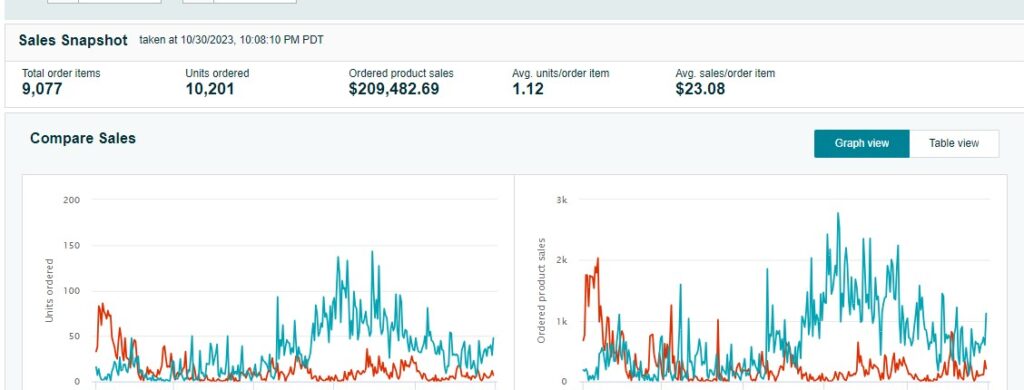
This level of performance is not an outlier. It reflects what happens when experienced Amazon operators run your store with the right product mix, pricing strategy, and advertising structure — consistently, month after month. Our Amazon FBA automation service is built to deliver measurable, repeatable results regardless of your prior e-commerce experience.
📬 Get in Touch with Stores Automation
Ready to start your Amazon FBA journey — or want to hand it over to experts? Our team is available Monday to Friday, 9 am to 5 pm EST.
Wilmington, DE 19801, USA
Frequently Asked Questions
Final Thoughts
Starting Amazon FBA in 2026 is as viable as it has ever been — but success now belongs to sellers who approach it strategically. The days of listing any product and watching sales roll in are gone. Today’s winning sellers choose their business model deliberately, research products rigorously, optimise every element of their listing, and manage their numbers obsessively.
Follow the steps in this Amazon FBA step-by-step guide — choose your model, set up your account, research your product, find a reliable supplier, build a compelling listing, ship your inventory correctly, and launch with a structured advertising plan. Do each step well and you will have built the foundation of a genuinely profitable e-commerce business.
And if you want to shortcut the learning curve entirely, explore Stores Automation’s done for you amazon store service. Our team brings the expertise, established supplier relationships, and proven systems that let you participate in Amazon’s extraordinary growth — without spending years building from scratch.