
💡 Key Takeaways
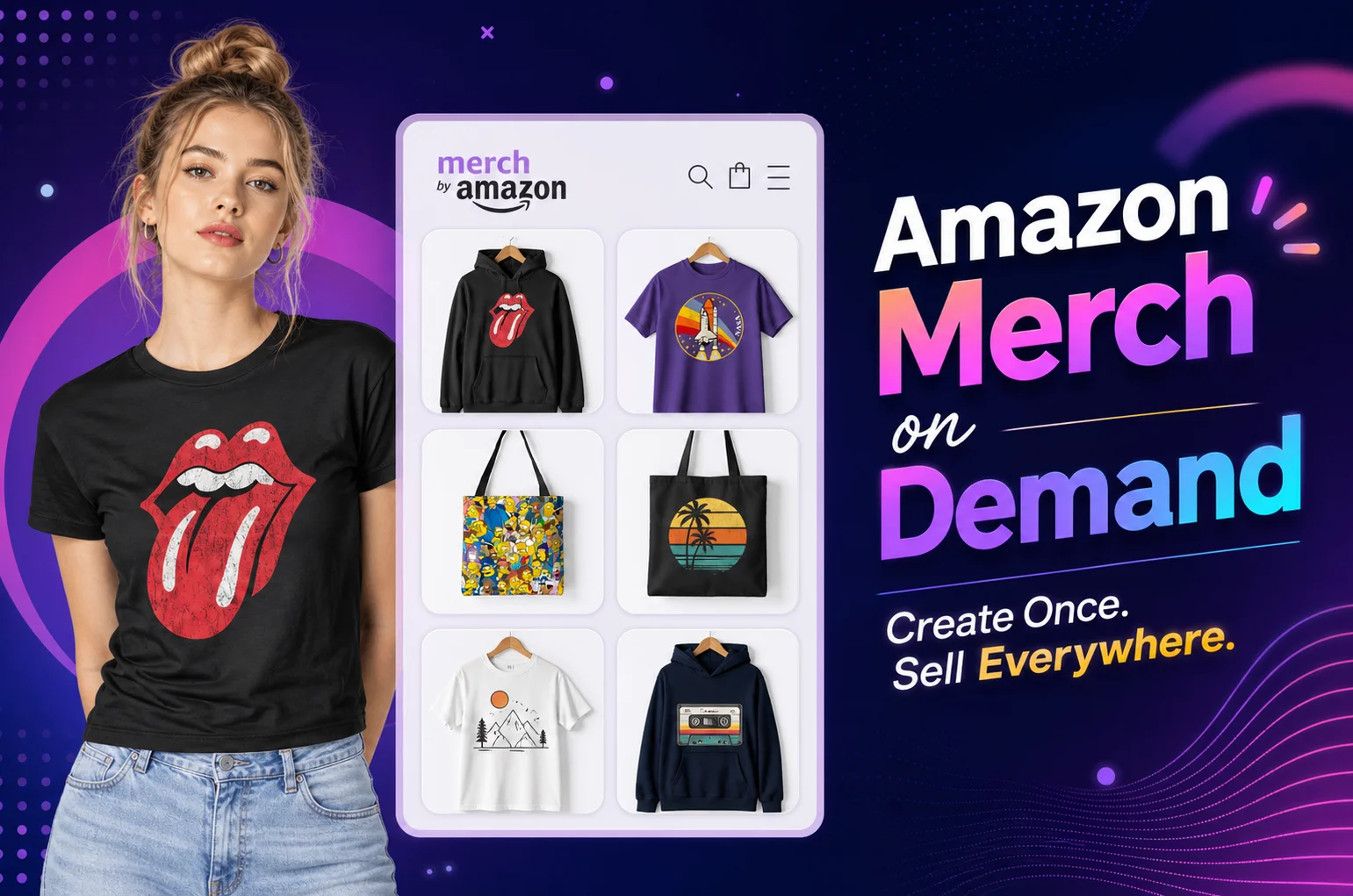
- Amazon Merch on Demand is a free, zero-inventory print-on-demand programme — you upload designs, Amazon prints, ships, and handles all customer service.
- In June 2026, Amazon introduced a three-tier royalty model: Creator (base), Plus (2x for 15%+ external traffic), and Premium (2.16x for 35%+ external traffic).
- Tiers now reset based on trailing 12-month performance — accounts with zero sales for 12 consecutive months may be downgraded.
- Listings with no sales in their first 18 months are now automatically deleted by Amazon to keep the catalogue lean.
- Video mockups now receive a "Motion Rank" boost in Amazon's A9 algorithm — 15-second lifestyle videos convert 22% better than static images.
- AI-generated designs face stricter scrutiny in 2026 — Amazon's review team checks for "low-effort AI artifacts" and requires portfolio proof of creative intent.
- Japan and Australia price floors increased ~8% in early 2026; EU and UK royalties are now calculated on post-tax list price.
📚 Table of Contents
- What Is Amazon Merch on Demand?
- How It Works: The Full Workflow
- Merch on Demand vs Traditional FBA: When to Use Which
- 2026 Royalty Structure: The Three-Tier Model Explained
- Production Costs and Royalty Calculator
- The Tier System — 2026 Updates
- Products Available on Merch on Demand
- How to Create Designs That Actually Sell
- Listing Optimisation: Where Most Sellers Lose Rankings
- Niche and Keyword Research in 2026
- The 2026 Video Mockup Advantage
- AI Design Policy: What Changed in 2026
- Global Market Changes in 2026
- Rules, Restrictions, and What Gets You Removed
- Pro Tips for Growing Your Merch Store
- Frequently Asked Questions
Let me start with what actually deserves to be said upfront: Amazon Merch on Demand is still one of the simplest, lowest-risk ways to turn creative work into real income on Amazon in 2026 — but the platform has changed more this year than it has in any of the previous three years combined. A guide written in 2024 or even early 2025 will leave you operating with outdated royalty numbers, wrong tier progression logic, and a completely wrong understanding of how Amazon now ranks Merch listings.
This guide covers all of it. The new three-tier royalty structure that launched in June 2026. The 18-month listing deletion policy. The video mockup ranking boost. The stricter AI design standards. The global price floor changes in Japan and Australia. All of it, in the kind of practical detail that actually helps you make better decisions.
If you have already read about Amazon Merch on Demand and you are wondering why your earnings feel lower than they should or why your listings have disappeared — this is the guide that explains why, and what to do about it. And if you are brand new to the programme, this is where you start.
What Is Amazon Merch on Demand?
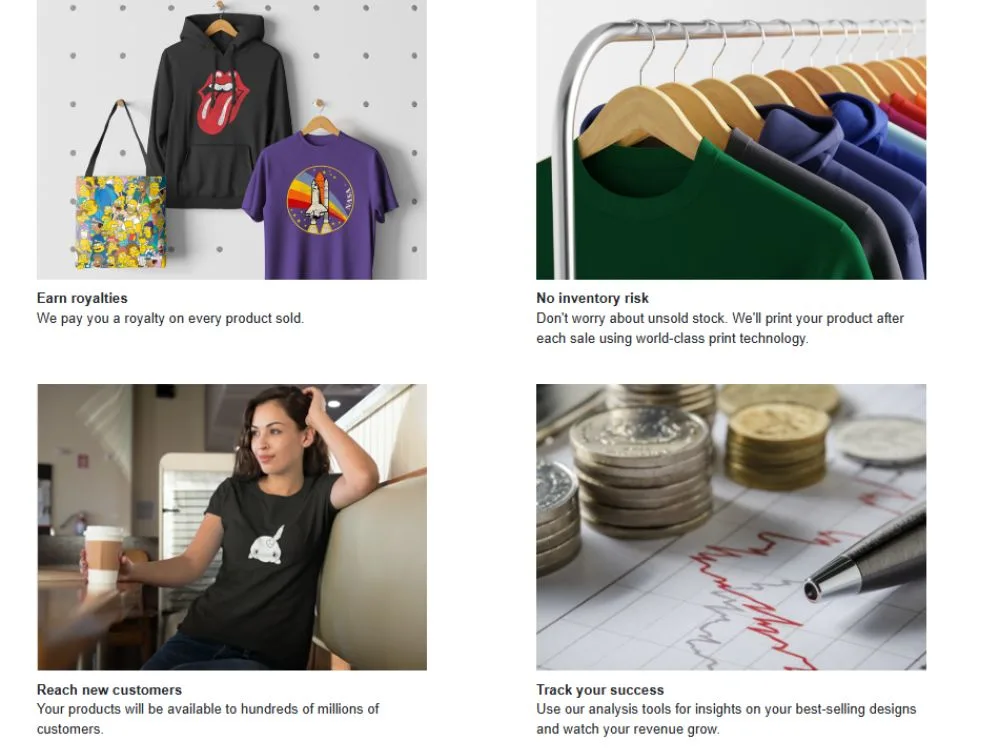
Amazon Merch on Demand is Amazon's own print-on-demand service. You upload artwork, apply it to products, and Amazon handles everything physical — printing each unit only after a customer orders, then packing, shipping, and managing all customer communication and returns. You receive a royalty on every sale. You never hold inventory, never pay upfront for production, and never deal with returns directly.
The fundamental appeal is straightforward: you are putting designs in front of hundreds of millions of Amazon shoppers without building your own store, running your own ads, or managing any logistics. Amazon's existing buyer trust, Prime delivery infrastructure, and search engine do the heavy lifting of getting products in front of people who are already looking to buy.
The business model serves three distinct use cases in practice. First, product testing: brands and sellers use Merch to validate design demand before committing capital to bulk inventory. Second, low-MOQ expansion: apparel businesses without warehouse infrastructure use it to launch new lines without minimum order quantities. Third, supplemental passive income: individual creators and designers generate royalty income from existing brand assets or original artwork without running a fulfilment operation.
Here is what makes the model genuinely compelling as a starting point — and also what limits it at scale. What you control: design artwork, product selection, listing content, pricing within Amazon's allowed range, and which marketplaces to publish in. What Amazon controls: production quality, fulfilment speed, the customer relationship post-purchase, your upload capacity through the tier system, and your listing's search visibility through its own algorithm.
You trade margin and control for zero fulfilment overhead. Understanding exactly what that trade-off is worth — in 2026 specifically — is what the rest of this guide is about.
How It Works: The Full Workflow
Step 1: Account Approval (2–8 Weeks)
Merch on Demand is invite-based. Submit your application at merch.amazon.com with your business details, tax ID (EIN preferred over SSN), and bank account information. Amazon reviews manually — typical wait time is 2–8 weeks, with no status updates during review. If declined, wait 60 days before reapplying. In 2026, approval rates have tightened to approximately 30–40% of all applications following a surge of AI-generated spam accounts. More on what improves your odds is covered in the AI Design Policy section below.

Step 2: Design Upload
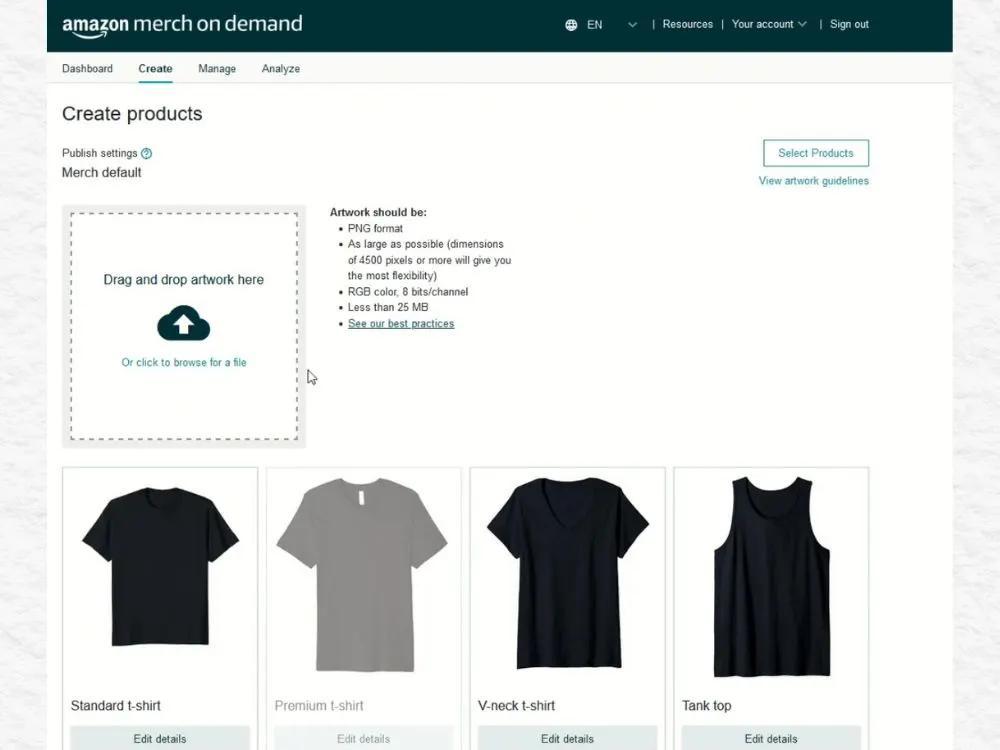
Create PNG files at the required dimensions — 4500 × 5400 pixels at 300 DPI for standard t-shirts, with a transparent background in sRGB colour profile. Amazon provides downloadable product templates. Upload to the Merch dashboard, select product types and colours, and Amazon generates mockups automatically. Do not treat this step as "drag and drop." Your designs are your entire product inventory here — the same rigour you would apply to sourcing physical products through solid Amazon product research should apply to every design you decide to upload.
Step 3: Listing Optimisation
Write your product title (60–80 characters, keyword-focused), bullet points (three maximum, each under 256 characters), and product description. Add backend search terms. Amazon indexes the listing within 24–72 hours of design approval. This step has more impact on whether your product sells than almost anything else after design quality — and we cover it in dedicated depth later. If you already understand how Amazon's search ranking system works for physical products, the same keyword principles apply directly to Merch listings.

Step 4: Pricing and Publication
Set your list price. Amazon shows your royalty per sale in real time — list price minus production cost minus referral fee minus applicable taxes. Approved designs typically go live within 1–3 business days. Rejected designs require correction and resubmission. Once live, your listing is discoverable through organic Amazon search, category browsing, and Amazon's recommendation engine.
Step 5: Sales and Payouts
When a customer purchases your design, Amazon prints and ships the item via Prime. Royalties are calculated at the end of each month and paid out on a 60-day cycle — April sales pay out at the end of June. Amazon's 2026 payment thresholds: Direct Deposit / EFT has a $0 minimum — you are paid in full each month regardless of amount. Wire Transfer or Check requires $100 minimum per marketplace, with earnings rolling over until that threshold is reached. Always choose Direct Deposit to ensure monthly payment without needing high sales volume.
Want to Sell Physical Products on Amazon Without the Complexity?
Merch on Demand is a great zero-risk starting point. When you are ready to scale into physical product FBA — higher margins, full brand control, real inventory strategy — our team handles the entire operation.
Merch on Demand vs Traditional FBA: When to Use Which
Most guides treat this as a simple comparison. It is not. The decision depends entirely on where you are in your product lifecycle and what your goals are. Here is the honest framework.
Use Merch on Demand when you are testing new designs with zero financial risk, launching limited-edition drops without minimum order quantity commitments, expanding into apparel without warehouse infrastructure, or generating supplemental income from existing brand IP. The zero-risk validation is genuinely powerful — a design that fails costs you nothing. A design that succeeds gives you data to justify bulk inventory investment.
Use traditional FBA when you have proven bestsellers that sell more than 100 units per month per SKU, need custom packaging or branded inserts, or have a bulk production cost under $5 per unit. If you want to understand what that full FBA model looks like from the beginning, our Amazon FBA guide for beginners walks through every step from first product to scaled operation.
The hybrid approach that works best: start with Merch to validate designs with zero risk. Graduate winners to bulk inventory through FBA for significantly higher margins. Keep slow-sellers on Merch to avoid dead stock. Here is the margin maths that makes the decision concrete: a shirt selling 10 units per month on Merch at a $5 royalty earns $50 per month. The same shirt produced in bulk at $4.50 each and fulfilled through FBA earns $12 margin per unit — $120 per month. Break-even on the bulk inventory investment happens in roughly four months, and every month after that is $70 more profit from the same number of sales.
If managing that FBA transition feels complex, the best amazon fba automation services handle the full FBA operational layer — effectively acting as a done for you Amazon store operation — while you focus on design and creative strategy.
2026 Royalty Structure: The Three-Tier Model Explained
This is the biggest structural change to Amazon Merch on Demand in 2026. As of June 2026, the US marketplace has moved to a performance-based, three-tier royalty model. Your earnings per sale are no longer fixed — they depend on where your traffic comes from.
Creator Tier — The Base Level
This is the default for all organic sales — traffic that comes purely through Amazon search, category browsing, and Amazon's own recommendation engine. A standard t-shirt priced at $19.99 now earns a $2.44 royalty at the Creator Tier. This is lower than many sellers expected based on older guides, and it is why pricing strategy has become more critical than ever in 2026.
Plus Tier — 2x Royalty for External Traffic
Sellers who drive at least 15% of their monthly sales from non-organic sources — social media, external blogs, email lists, or Amazon Ads — earn twice the base royalty. On the same $19.99 t-shirt, that doubles your royalty from $2.44 to $4.88 per sale. Connecting your social presence and content to your Merch listings through Amazon Attribution links is no longer optional for sellers who want competitive royalties. Our Amazon Attribution guide covers exactly how to set up tracked external traffic links that count toward your Plus Tier qualification.
Premium Tier — 2.16x Royalty for Heavy External Traffic
Sellers driving over 35% of their sales from external sources earn 2.16x the base royalty — that is $5.27 per sale on a $19.99 t-shirt. Premium Tier sellers are building a cross-channel audience — social media followers, email subscribers, or blog readers — that they redirect to their Amazon listings.
💡 What this means practically: If you have been treating Merch as a passive, upload-and-forget model, the 2026 royalty structure is a direct signal that passive sellers get the base royalty and active sellers who drive external traffic earn more than double that. Building even a modest social media presence around your niche designs — and using Amazon's attribution tracking — now has a direct, measurable financial payoff.
Production Costs and Royalty Calculator (2026)
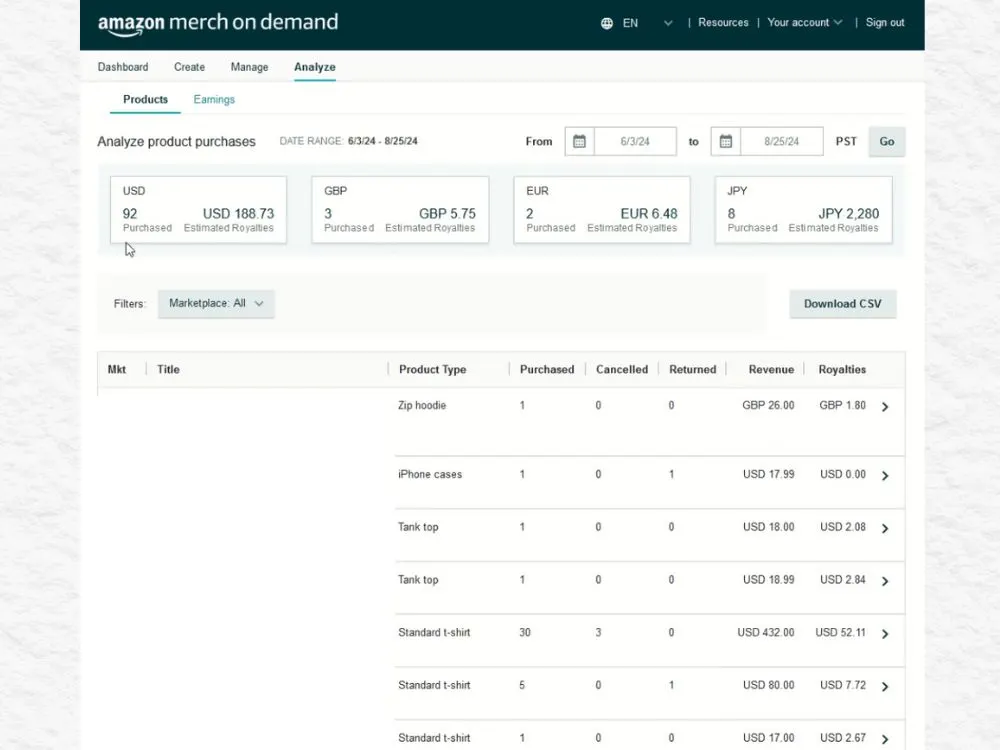
Amazon's royalty formula: Royalty = List Price − Production Cost − Referral Fee (15%) − Applicable Taxes. Production costs are updated periodically. Here are the current 2026 US figures with Creator and Plus Tier royalties at recommended price points:
| Product | Production Cost | Recommended Price | Creator Tier Royalty | Plus Tier Royalty |
|---|---|---|---|---|
| Standard T-Shirt | $8.21 | $17.99–$19.99 | $2.44–$4.18 | $4.88–$8.36 |
| Premium T-Shirt | $10.73 | $21.99–$24.99 | $4.83–$7.13 | $9.66–$14.26 |
| Pullover Hoodie | $17.59 | $32.99–$39.99 | $8.40–$13.20 | $16.80–$26.40 |
| Sweatshirt | $15.47 | $28.99–$32.99 | $7.59–$10.49 | $15.18–$20.98 |
| Long Sleeve | $11.37 | $22.99–$25.99 | $5.96–$8.36 | $11.92–$16.72 |
| Tank Top | $7.73 | $17.99–$19.99 | $4.66–$6.26 | $9.32–$12.52 |
| PopSocket | $5.14 | $12.99–$14.99 | $2.91–$4.21 | $5.82–$8.42 |
| Phone Case | $8.47 | $17.99–$21.99 | $4.18–$7.18 | $8.36–$14.36 |
The pricing strategy that works in 2026 depends on where you are in your tier progression. At Tier 10–25, price at the lower recommended range to maximise conversion rate — your goal is earning the sales needed to advance tiers, not per-unit royalty optimisation. At Tier 500 and above, test pricing in $2 increments and optimise for total royalty revenue. During Q4, increase prices 10–15% — demand during the holiday season consistently outpaces supply for well-designed products.
Want to Sell Physical Products on Amazon Without the Complexity?
Merch on Demand is a great zero-risk starting point. When you are ready to scale into physical product FBA — higher margins, full brand control, real inventory strategy — our team handles the entire operation.
The Tier System — 2026 Updates
The tier system controls how many design slots your account has. Every account starts at Tier 10. To unlock more slots, you need to make sales. In 2026, Amazon made several significant changes to how tiers work — changes that affect both new and established accounts.
| Tier | Design Slots | Sales Required to Advance | Avg. Time to Reach |
|---|---|---|---|
| Tier 10 | 10 | Starting tier | Day 1 |
| Tier 25 | 25 | 10 sales | 2–6 months |
| Tier 100 | 100 | 25 sales | 4–12 months |
| Tier 500 | 500 | 100 sales | 8–18 months |
| Tier 1,000 | 1,000 | 500 sales | 12–24 months |
| Tier 2,000+ | 2,000+ | Performance-based | 18+ months |
Trailing 12-Month Performance
Amazon now calculates your tier status based on your trailing 12-month performance rather than total lifetime sales. Established accounts with recent inactivity may see their tier no longer reflect their current performance standing.
Active Maintenance Requirement
To prevent "tier-squatting," accounts that show zero sales activity for any consecutive 12-month period may be subject to a tier downgrade. This is a meaningful policy for part-time sellers who go extended periods without monitoring their catalogue.
The 18-Month Listing Deletion Policy
Amazon now automatically deletes any product listing that has not recorded a single sale within its first 18 months. This keeps the catalogue lean — but it also means slow-burn listings you expected to eventually find their audience will be removed if they have not converted. Monitor your listings' traffic and conversion data, and invest in optimising or advertising underperforming listings before the 18-month window closes. Understanding your Amazon Best Sellers Rank for each listing is the fastest way to identify which products need attention.
Slot Utilisation Rate for Tier Advancement
Moving from Tier 10 to Tier 25 or higher now requires a minimum slot utilisation rate of 80%. You must fill at least 80% of your current design slots with active listings before the system reviews you for an upgrade. At Tier 10, this means you need at least 8 active listings before advancing.
⚠️ Tier progression is not automatic. Amazon also reviews account health, return rates, and trademark strike history before upgrading tiers. A clean account tiers faster than one with content violation flags. Q4 holiday periods often result in bulk tier upgrades for accounts that spike in sales during that window.
Products Available on Merch on Demand
Most new sellers start with standard t-shirts because the search volume is highest and the template is most familiar. That is reasonable — but experienced Merch sellers diversify into higher-royalty products as their tier grows. A single hoodie sale at a $13 Creator Tier royalty contributes as much as five t-shirt sales at $2.44 each. Here is the full current product catalogue and the strategic context for each:
- Standard T-Shirt: The most competitive category. Highest search volume, most existing listings, lowest royalty per unit. Best for niche testing at early tiers.
- Premium T-Shirt: Softer fabric, higher perceived value. Commands a higher price point and earns a meaningfully better royalty without much more competition.
- Pullover Hoodie: The highest royalty potential in the catalogue. Q4 is peak season. Less saturated than t-shirts in most niches. A priority product once you advance to Tier 25 and above.
- Zip Hoodie: Similar royalty potential to the pullover but lower competition. Worth adding for any design that performs well as a pullover.
- Sweatshirt: Strong Q4 product. Less saturated than standard tees.
- Long Sleeve T-Shirt: Performs well in autumn and winter. Significantly less competitive than short-sleeve tees in most niches.
- Tank Top: Seasonal. Fitness, beach, and summer niches.
- PopSockets: High impulse purchase, lower production cost. Performs well in phone-related, fandom, and gift niches.
- Phone Cases: Model-specific listings. Design once, list across multiple phone models.
- Tote Bags: Strong in lifestyle, gift, and eco-conscious niches. Less competitive than apparel in most categories.
How to Create Designs That Actually Sell
Your design is your entire product. A mediocre design with perfect listing optimisation will not convert. A great design with a weak listing will not get found. But a genuinely good design with a well-optimised listing — that is where consistent royalties happen.
Design Types That Consistently Perform
The designs generating steady Merch income in 2026 fall into three reliable categories. Niche identity designs speak directly to a specific community — occupation-based (nurses, teachers, firefighters), hobby-based (kayaking, vinyl records, crossword puzzles), or location-based. These convert because the buyer sees themselves in the design — the same psychology that makes Amazon FBA private label brands built around specific communities outperform generic alternatives. Trending phrase designs capture a cultural moment or phrase with staying power — but require rapid creation and careful trademark checking. Evergreen humour designs work in niches with persistent, stable demand. Specific insider humour understood by a niche community is a competitive advantage that generic designs cannot replicate.
Technical Specifications
- PNG format with transparent background — no white borders, no solid backgrounds
- 4500 × 5400 pixels at 300 DPI for standard t-shirts (check Amazon's template for each product type)
- Under 25MB file size
- sRGB colour profile (CMYK files will not render correctly in print)
Tools Worth Using
Adobe Illustrator and Photoshop remain the professional standard. Canva Pro is a practical alternative for sellers who want speed over maximum design control — the PNG export with transparent background meets Merch's specifications. Affinity Designer is a strong one-time-purchase alternative to Illustrator. Procreate on iPad creates hand-drawn and illustrated styles that stand out in text-heavy niches where everyone uses the same font combinations.
Ready to Build a Serious Amazon Income?
Merch on Demand is an excellent zero-risk entry point into Amazon's ecosystem. When you are ready to scale into physical product FBA with expert support, Stores Automation is here.
Listing Optimisation: Where Most Sellers Lose Rankings
Your listing is how Amazon's algorithm understands what your product is and which buyer searches to surface it in. Getting this wrong means your design appears for almost nothing — and at Tier 10 with 10 precious slots, that waste is significant.
Writing Titles That Rank
Your title is the most heavily weighted field in Amazon's search algorithm. Structure it as: Product Type + Target Audience + Key Phrase/Design Description + Use Case. A strong example: "Funny Nurse T-Shirt — I'm Not Just a Nurse, I'm a Caffeinated Miracle Worker — Gift for RNs". Keep titles to 60–80 characters and include your primary keyword naturally in the first 40 characters. The same principles that apply to optimising physical product listings — covered in our guide on how to boost Amazon listings — apply directly to Merch titles.
Bullet Points
Use all three available bullet points. Lead each one with a specific benefit or product detail phrased from the buyer's perspective, and include secondary keywords naturally. Think about who is buying this as a gift, what occasion it suits, and what the buyer's specific identity or role is — those angles build both keyword coverage and conversion appeal simultaneously.
Backend Search Terms
Amazon gives you backend keyword space that buyers never see but the algorithm reads. Use it entirely. Include variations of your primary keywords, common misspellings, related phrases, and synonyms that did not fit naturally into your visible listing. Do not repeat words already in your title — use this space for additional coverage.
Niche and Keyword Research in 2026
The instinct for new Merch sellers is to design something they find interesting and see if it sells. Flip that instinct completely. Find a niche with demonstrable demand first — then design something specific to that niche. The difference in outcomes between these two approaches is not marginal.
Finding Niches with Real Demand
Browse Amazon's novelty t-shirt and apparel categories while sorting by bestseller rank. The top 100 designs tell you what is actually converting right now. Look for patterns — which occupations appear repeatedly, which hobbies, which types of phrases — then find adjacent niches where demand clearly exists but current design options are weak. This is the same niche-identification logic that drives profitable Amazon retail arbitrage sourcing decisions — you are looking for demand not yet well-served by existing supply.
Keyword Research for Merch
Type your niche ideas into Amazon's search bar and pay close attention to autocomplete suggestions. If "nurse shirt" autocompletes to "nurse shirt funny," "nurse shirt vintage," and "nurse shirt gift for daughter," those are three distinct keyword angles with proven buyer intent. Use each as a separate listing with its own title focus. The tools covered in our guide on best product research tools for Amazon work for Merch keyword research just as effectively as for physical product research.
Going Narrow Instead of Broad
The niches most beginners target are saturated: generic coffee lovers, wine enthusiasts, dog mums. The better strategy is to go deeper within a broad niche. Instead of "nurse shirt," think "NICU nurse shirt." Instead of "fishing shirt," think "bass fishing in the rain shirt." The buyer pool is smaller — but your relevance to that buyer is higher, your competition is lower, and your conversion rate reflects that specificity.
The 2026 Video Mockup Advantage
Amazon's A9 search algorithm now prioritises listings that include video content through what the platform calls a "Motion Rank" boost. Listings featuring a 15-second video mockup are currently ranking higher in mobile search results than static-only listings in the same category and keyword space.
The conversion data backs this up significantly. Internal 2026 Amazon data shows that apparel listings with lifestyle video mockups convert at a 22% higher rate than those without. For a product with meaningful organic traffic, a 22% conversion improvement translates directly to a 22% revenue increase with no additional advertising spend.
Creating a 15-second video mockup does not require professional video production. Stock video combined with a product mockup overlay achieves the needed effect. Tools like Placeit and Renderforest generate video mockups from static designs for modest subscription fees. Given the conversion uplift, the investment pays back quickly on any listing generating regular traffic.
📊 Priority note: Prioritise adding video mockups to your top-performing existing listings before creating new designs. Your highest-traffic listings are where the 22% conversion uplift has the largest absolute revenue impact.
AI Design Policy: What Changed in 2026
Following what Amazon describes as the "AI Spam" surge of 2025 — a period when AI-generated designs grew so rapidly that catalogue quality deteriorated — Amazon tightened both its application standards and its ongoing content review process significantly in 2026.
The Application Process in 2026
Amazon's manual review team now explicitly checks for "low-effort AI artifacts" during application review. Applicants are encouraged — and in practice effectively required — to provide links to social media profiles or design portfolios (Behance, Instagram, Dribbble, Etsy) that demonstrate authentic creative intent. A portfolio of AI-generated images submitted as proof of design ability is the fastest route to rejection.
The Prompt-Copyright Problem
Amazon's automated IP filters have been upgraded to flag designs that are "substantially similar" to existing copyrighted works — even when the AI prompt was entirely original. Treat any AI-generated design as a starting point requiring significant human refinement, not a finished product.
What AI Assistance Is Still Acceptable
AI tools are not banned. Using AI for text layout, colour palette suggestions, or as a conceptual starting point is fine. What changed is the tolerance for low-effort, mass-produced AI output that looks indistinguishable from thousands of similar designs already on the platform.
Scale Beyond Merch — Build a Real Amazon FBA Business
From design validation to full FBA operations — product research, supplier sourcing, listing creation, PPC management — our team handles everything so you collect the profits.
Global Market Changes in 2026
If you sell across multiple Amazon marketplaces — or plan to — the 2026 international changes to Merch on Demand pricing and royalty calculations are important to understand before you set your prices.
Japan and Australia Price Floors
Due to shifts in manufacturing costs in early 2026, the minimum list price for standard shirts in the Japan and Australia marketplaces has increased by approximately 8%. Sellers who had listings at or near the previous minimum price in these markets now need to adjust their prices upward to avoid zero-royalty or negative-royalty sales. If you have not reviewed your Japan and Australia pricing since the start of 2026, check those listings as a priority.
EU and UK Royalty Calculation Changes
In the EU and UK marketplaces, royalties are now calculated more transparently based on the "post-tax" list price rather than the gross list price. In practice, this means your effective royalty is slightly lower for the same headline price — because VAT is now deducted from the base before the royalty formula is applied. Review your EU and UK pricing, model the actual royalty at your current prices using the updated formula, and adjust prices upward where the royalty no longer meets your minimum threshold.
Rules, Restrictions, and What Gets You Removed
Amazon enforces its content policies for Merch on Demand strictly, and violations compound — multiple strikes escalate from design removal to account suspension to permanent removal. Understanding the rules before you upload protects everything you have invested in building.
Trademark Infringement — The Most Common Removal Cause
Amazon runs automated trademark checks on every design and listing title and processes takedown requests from trademark holders. Using a brand name, sports team name, TV show reference, song lyric, or trademarked phrase results in immediate design removal and a content violation. Before uploading any design containing a phrase or reference that could be trademarked, check it in the USPTO trademark database. Viral phrases get trademarked extremely quickly — designs uploaded before a trademark registers are not automatically protected from future takedown.
Prohibited Content
Amazon prohibits designs containing offensive language or imagery, hate speech, symbols associated with hate groups, sexually explicit content, content promoting violence or illegal activity, misleading product claims, and content depicting real people without authorisation. These standards are applied strictly — when in doubt, choose a different approach.
Quality and Technical Standards
Designs with visible pixelation, poor contrast that will not print clearly, or alignment errors are rejected at upload. Always preview your design across all available colour options in the Merch dashboard before submitting. A dark design on a black shirt is invisible. Check every colour variant before you publish.
Pro Tips for Growing Your Merch Store in 2026
Research Before You Design — Every Single Time
The difference between sellers who advance through the tier system quickly and those who stall at Tier 10 for months is almost always this: the fast advancers research niche demand before they open a design tool. Find a niche with demonstrable Amazon search demand first. Design something specific to that niche second.
Build External Traffic to Hit Plus Tier
Given the new three-tier royalty structure, getting 15% of your monthly sales from external sources is the single most financially impactful optimisation available to active Merch sellers. Even a modest social media presence — a Pinterest board, an Instagram account showcasing products in lifestyle settings — can generate the external traffic percentage needed for Plus Tier status. The royalty doubles when you hit that threshold. This also connects naturally to understanding your Amazon Marketing Services options — paid traffic from Amazon Ads counts toward your external traffic threshold alongside organic external sources.
Add Video Mockups to Your Top 20% of Listings
Do not try to add video to every listing simultaneously. Identify the 20% of your listings that are generating the most impressions and traffic — these are the ones where a 22% conversion improvement has the largest revenue impact. Use tools like Placeit for quick lifestyle video mockups if you do not have access to live-action filming.
Prune Non-Performing Listings Before the 18-Month Window
With the new automatic deletion policy, proactively review your listings at the 12-month mark. If a listing has received impressions but not converted, investigate whether listing optimisation is the problem — title, keywords, pricing — or whether the design simply does not match market demand.
Treat Q4 as a Revenue Event
October through December drives a disproportionate share of annual Merch royalties. Have your Q4-relevant designs uploaded and past content review by early October at the latest. Plan with the same forward intention you would apply to any Amazon pricing strategy decision for physical inventory — anticipate the demand window and be positioned before it opens, not during it.
Frequently Asked Questions
What is Amazon Merch on Demand and how does it work?
Amazon Merch on Demand is Amazon's print-on-demand programme where sellers upload design artwork and Amazon handles all production, fulfilment, and customer service. When a customer orders, Amazon prints a fresh unit, ships it via Prime, and manages all post-purchase communication. You receive a royalty — the list price minus Amazon's production cost, referral fee, and applicable taxes — paid monthly 60 days after the sale month ends. There is no upfront cost, no inventory to hold, and no logistics to manage.
How much do you earn with Amazon Merch on Demand in 2026?
In 2026, royalties depend on which tier of Amazon's new three-tier royalty model you qualify for. At the base Creator Tier (organic sales only), a standard t-shirt priced at $19.99 earns $2.44. At the Plus Tier (15%+ of monthly sales from external sources), the same shirt earns $4.88. At the Premium Tier (35%+ external traffic), it earns $5.27. Hoodies and sweatshirts earn significantly more — Creator Tier royalties on a $39.99 hoodie are approximately $13.20. Sellers with large catalogues and external traffic strategies can generate several thousand dollars per month in royalties.
What are the 2026 tier system changes for Amazon Merch on Demand?
Amazon made three significant changes to the tier system in 2026. First, tiers are now calculated based on trailing 12-month performance rather than total lifetime sales. Second, accounts with zero sales for 12 consecutive months may be subject to a tier downgrade. Third, moving from Tier 10 to Tier 25 or higher now requires a minimum 80% slot utilisation rate. Additionally, listings that have recorded no sales in their first 18 months are now automatically deleted.
Can you use AI-generated designs on Amazon Merch on Demand in 2026?
Amazon permits AI-assisted designs but has significantly tightened its standards in 2026. The application review team now checks for "low-effort AI artifacts" and applicants are encouraged to provide portfolio links proving authentic creative intent. Designs that are "substantially similar" to existing copyrighted works — even when generated from an original prompt — are being flagged more aggressively by automated IP filters. Using AI as a creative starting point with significant human refinement is acceptable. Uploading unmodified AI-generated images at volume risks design removal and account violation flags.
Is Amazon Merch on Demand free to join?
Yes — joining Merch on Demand is completely free. There are no subscription fees, no per-design charges, and no costs for publishing listings. Amazon earns money by taking its production cost and referral fee from each sale before paying your royalty. The financial risk is zero — a design that does not sell costs you nothing because you never paid for it to exist on the platform.
What is the difference between Amazon Merch on Demand and Amazon FBA?
Amazon Merch on Demand is a print-on-demand model — you upload designs, Amazon prints units after purchase with no inventory required. Amazon FBA is a fulfilment service for physical products you source yourself — you buy inventory, ship it to Amazon's warehouses, and Amazon ships to customers from there. Merch has zero financial risk but lower per-unit royalties (typically $2–$18) and is limited to apparel and accessories. FBA requires inventory investment but offers higher margins (20–50% net on well-researched products), full brand control, unlimited product categories, and significantly higher earning potential at scale.
Start Selling on Amazon the Smart Way in 2026
Whether you are starting with Merch on Demand or scaling into full FBA, Stores Automation is here to help you build a profitable Amazon business.
Final Thoughts: Is Amazon Merch on Demand Worth It in 2026?
Yes — with a clear-eyed understanding of what it is and what it demands. Amazon Merch on Demand in 2026 is not the same platform it was in 2023. The three-tier royalty structure means passive, organic-only sellers earn roughly half the royalty that active sellers driving external traffic earn. The 18-month deletion policy means uploading and forgetting is no longer a viable strategy. The video mockup ranking boost means static listings are losing ground to sellers who invest in short lifestyle clips. And the stricter AI design standards mean low-effort, mass-produced content faces removal rather than just low rankings.
All of those changes are manageable — but only if you know about them and plan around them. The sellers who earn consistently from Merch in 2026 research niches before designing, drive at least some external traffic to qualify for Plus Tier royalties, add video mockups to their highest-traffic listings, monitor the 18-month window on all active listings, and treat Q4 as a deliberately planned revenue event.
The barrier to entry is still zero financial risk. The platform still gives you access to hundreds of millions of Amazon buyers. The opportunity is real — it just requires more intention in 2026 than it did in previous years. When you are ready to scale beyond Merch into physical product FBA — where the margins are higher, the brand control is greater, and the earning ceiling is significantly raised — our done for you Amazon store service handles product research, supplier sourcing, listing creation, and full store management — so you can scale without running every operational detail yourself.