

Table of Contents

If you have shelves full of books collecting dust, you might be sitting on a small but valuable opportunity. Instead of letting those titles take up space, you can turn them into cash by selling them online. One of the best platforms for doing this is Amazon — the world’s largest online marketplace and one of the biggest book retailers globally.

The scale of Amazon’s book market is enormous. The platform sells over 300 million printed books every year and generates roughly $28 billion annually from book sales alone. Additionally, Amazon dominates the online book industry, accounting for about 41% of U.S. physical book sales and more than 60% of eBook sales.

This massive demand means there is a steady stream of buyers looking for affordable second-hand books. For individuals looking to declutter their homes, selling used books on Amazon can be a simple way to earn extra money while giving books a second life.

In this step-by-step guide, you’ll learn how to sell used books on Amazon in 2026, from creating a seller account to listing, pricing, and shipping your books effectively. Whether you want to sell a few books from your personal collection or start a small side hustle, this guide will walk you through everything you need to know.

Learn everything about Amazon PPC advertising in 2026 and how it can boost your book or product sales efficiently.

Why Selling Used Books on Amazon Is Worth It?

Before learning how to sell used books on Amazon, it’s important to understand why this marketplace remains one of the best platforms for book reselling. Amazon has built an ecosystem that makes listing, discovering, and purchasing books remarkably efficient.

Where Amazon Excels

Massive built-in demand

Amazon is the world’s largest online bookstore, with millions of buyers actively searching for used titles every day. Because books are cataloged by ISBN, sellers can easily match their inventory to existing product listings instead of creating pages from scratch.

One listing per edition

Amazon’s catalog structure simplifies the process. Each book edition—paperback, hardcover, or specific publication year—has a single product page. Sellers simply attach their offer to that listing, making it faster to start selling.

High-conversion checkout experience

Amazon’s trusted checkout system removes friction for buyers. Features like saved payment methods, one-click purchasing, and customer reviews significantly improve conversion rates.

Prime visibility through FBA

Using Fulfillment by Amazon (FBA) can give used books the Prime badge, which increases visibility and boosts buyer trust. Many sellers see higher sales velocity because Prime members prefer fast, reliable delivery.

Where It Can Be Challenging

Aggressive price competition

Popular titles—especially mass-market fiction and older business books—often attract many sellers. This can lead to rapid price drops as sellers compete for the Buy Box.

Strict condition guidelines

Amazon enforces clear condition standards (Used – Like New, Very Good, Good, Acceptable). Incorrect grading can lead to returns, negative feedback, or even account warnings.

Fees impact low-priced inventory

Referral fees and fulfillment costs can quickly reduce margins on books with a very low average selling price (ASP). Strategic sourcing becomes critical to maintain profitability.

When Other Platforms Might Be Better

While Amazon works well for most used books, certain situations may favor alternative marketplaces:

  • Rare or collectible books that appeal to niche collectors

  • Signed first editions or antiquarian books that require specialized buyers

  • Extremely low-value paperbacks where fees eliminate profit

In these cases, local marketplaces, specialty book sites, or bundled book lots may produce better results.

Discover how Amazon Merch on Demand in 2026 empowers creators to monetize designs without upfront inventory costs.

Types of Used Books That Sell Best on Amazon!

When learning how to sell used books on Amazon, one of the most important strategies is knowing which types of books actually sell fast and generate profit. Not every book has resale value. Many titles sell for only a few dollars, while others—especially specialized or high-demand books—can sell quickly and at strong prices.

Successful Amazon sellers typically focus on specific categories that consistently attract buyers. Below are the most profitable types of used books that perform well on Amazon, along with insights on why they sell.

College Textbooks

College textbooks are widely considered the most profitable type of used book to sell on Amazon. Students constantly look for affordable alternatives to expensive new textbooks, which creates steady demand throughout the year.

Why textbooks sell well

  • High original retail prices (often $80–$200)

  • Strong seasonal demand during back-to-school periods

  • Students prefer cheaper used copies

Even textbooks in “Acceptable” condition can sell if the content is intact. Highlighted pages, notes, or minor wear are usually acceptable to buyers who want to save money.

Best types of textbooks to resell

  • Medical and nursing textbooks

  • Law and legal studies books

  • Engineering and technology textbooks

  • Finance, accounting, and economics textbooks

  • Test prep books (GMAT, LSAT, MCAT, SAT)

Pro tip: Always check whether the book requires an online access code, because used copies without codes can be harder to sell.

Niche Non-Fiction Books

While fiction titles are plentiful and highly competitive, non-fiction books tend to hold their value better and often sell faster on Amazon.

These books typically address specific topics, making them valuable for professionals, students, or hobbyists who need the information.

Examples of profitable non-fiction niches

  • Business and entrepreneurship

  • Personal development and productivity

  • Technology and programming

  • Health, diet, and fitness

  • Psychology and self-improvement

Books that teach a specific skill or expertise often retain demand for years, making them excellent candidates for resale.

Out-of-Print Books

One of the hidden opportunities in the used book market is out-of-print titles. These are books that publishers no longer produce, which means the used market becomes the primary source for buyers.

Because supply is limited, prices can increase significantly when readers, researchers, or collectors want those titles.

Examples of valuable out-of-print books

  • Old academic books

  • Specialized hobby guides

  • Vintage sci-fi or fantasy editions

  • Older technical manuals

These books can sometimes sell for far more than their original retail price due to scarcity.

Collectible and Rare Books

Collectors represent another important segment of the used book market. Certain books become valuable because of their rarity, historical significance, or unique features.

Examples include:

  • First editions

  • Signed copies by the author

  • Limited print runs

  • Vintage hardcover editions with original dust jackets

These books often appeal to collectors and enthusiasts, which means they can command higher prices than typical used books.

However, accurate condition descriptions and clear photos are essential when selling collectible books.

Comic Books and Graphic Novels

Comic books and graphic novels have a dedicated fan base and strong resale market. Many collectors actively search for older issues, special editions, or complete series.

Popular selling categories include:

  • Marvel and DC comics

  • Manga collections

  • Graphic novels

  • Limited edition comic issues

Rare or vintage comic books can sell for substantial amounts, especially if they are well preserved.

Niche Academic and University Press Books

Another category many beginners overlook is university press publications. These books often focus on specialized subjects such as history, anthropology, or philosophy.

Because the topics are highly specialized, fewer copies are printed and competition among sellers can be low.

Examples include:

  • Academic research books

  • Cultural studies

  • Regional history

  • Scientific publications

These books may look ordinary, but their niche audience can make them surprisingly valuable in the resale market.

Hardcover Editions

Hardcover books typically hold value better than paperbacks. They are more durable, often produced in smaller quantities, and are preferred by collectors.

Benefits of selling hardcover books include:

  • Higher average selling prices

  • Better long-term durability

  • Greater appeal to collectors

For example, hardcover editions of popular non-fiction titles often resell for significantly more than paperback versions.

Popular Book Series

Another profitable category is complete book series or multi-volume collections.

Examples include:

  • Fantasy and sci-fi series

  • Children’s book series

  • Educational book sets

  • Historical book collections

Selling books as a complete set can increase their value and attract buyers who want the entire collection rather than individual volumes.

Complete guide to selling on Amazon Handmade, including account setup, product listing tips, and growing artisan sales.

Where to Find Used Books to Sell on Amazon

One of the biggest advantages of starting a used book business is that inventory is widely available and often extremely cheap. The key to making consistent profits when learning how to sell used books on Amazon is sourcing books at a very low cost while targeting titles with good demand.

Successful Amazon book sellers rarely rely on a single sourcing method. Instead, they combine multiple channels to build a steady flow of inventory. Below are some of the most reliable places to find used books that can be resold on Amazon.

Thrift Stores and Charity Shops

Thrift stores are one of the most popular sourcing locations for beginner book resellers. Many thrift stores price books between $0.50 and $2 per copy, regardless of their actual market value.

This creates an opportunity to find books that may sell on Amazon for $15, $30, or even more.

Some tips for sourcing books from thrift stores:

  • Visit stores regularly because inventory changes frequently

  • Check non-fiction, textbooks, and reference sections first

  • Look for books in excellent condition

  • Visit stores in different neighborhoods to discover new inventory

Many experienced sellers also track restocking schedules, since newly stocked shelves often contain the most valuable books.

Library Book Sales

Public libraries frequently hold book sales to clear out donated or older inventory. These sales are among the best places to buy books in bulk at extremely low prices.

At many library sales, books are priced between $0.25 and $1, and some events offer “fill-a-bag” deals where you can purchase dozens of books for a flat fee.

Library sales are particularly good for finding:

  • Academic and research books

  • Out-of-print titles

  • Older reference books

  • Niche non-fiction

Since these events are popular among resellers, arriving early can help you secure the best inventory.

Garage Sales and Estate Sales

Garage sales, yard sales, and estate sales are another excellent source of inexpensive books. People often sell entire book collections during these events simply to clear space in their homes.

Many sellers price books extremely low—sometimes $1 or less per book—especially when they want to sell items quickly.

Estate sales can be particularly valuable because they often include:

  • Academic collections

  • Vintage or collectible books

  • Large multi-volume sets

  • Specialty non-fiction titles

These collections may contain books that are difficult to find elsewhere and can command higher prices on Amazon.

Used Bookstores

Independent used bookstores can also be great sourcing locations. Some stores price books between $1 and $2 each, allowing resellers to purchase inventory at a low cost and resell it online for a profit.

In addition to browsing the shelves, many sellers build relationships with store owners who may:

  • Offer discounts on bulk purchases

  • Notify you when new inventory arrives

  • Allow you to buy unsorted book lots

This approach can provide a steady and reliable supply of books for your Amazon store.

Online Marketplaces

Online platforms can also be used to source books without leaving your home. Many sellers list books at very low prices simply because they want to declutter.

Popular marketplaces include:

  • Facebook Marketplace

  • Craigslist

  • Online classifieds

  • Local resale groups

You can often find book bundles or entire collections being sold at heavily discounted prices. This method is known as online arbitrage, where sellers purchase undervalued items online and resell them for profit on Amazon.

Setting alerts for specific titles or categories can help you find deals before other resellers.

College Campuses and Student Sales

Textbooks are one of the most profitable categories in used book reselling, and college campuses are a great place to source them.

Students frequently sell textbooks at the end of each semester because they no longer need them. Many are willing to sell quickly to recover some of their expenses.

You can find these books through:

  • Student bulletin boards

  • Campus resale groups

  • Facebook student communities

  • Local buy-and-sell listings

Since textbooks often cost hundreds of dollars when new, even used copies can sell for a strong price on Amazon.

Bulk Book Lots

Another effective sourcing strategy is buying books in large bundles or liquidation lots. Sellers sometimes list boxes of books at very low prices because they want to sell everything at once.

Bulk lots can be found through:

  • Estate sale auctions

  • Online marketplaces

  • Storage unit auctions

  • Local classified listings

While not every book will be profitable, a single valuable title in the lot can sometimes cover the cost of the entire purchase.

Donations and Personal Networks

Many successful book sellers also build sourcing networks through friends, family, and community connections.

People who are decluttering often prefer to give away books rather than throw them away. Letting people know that you resell books can lead to a steady stream of free inventory.

You might receive books from:

  • Friends and family

  • Office cleanouts

  • School libraries

  • Community groups

Even if only a small percentage of donated books are valuable, the zero acquisition cost makes them highly profitable.

Step-by-step guide to building a professional Amazon storefront, improving brand visibility, and increasing customer engagement.

Evaluating What Will Sell

So you’ve gathered a stack of books. The next step is deciding which ones are actually worth listing on Amazon. The key is researching each title before committing to it. Experienced booksellers develop a habit of quickly scanning, checking market data, and selecting only the books that have a strong chance of selling at a profit. Here are a few practical ways to evaluate a book before listing it.

Start by scanning every book

One of the easiest ways to check a book’s potential value is to scan its barcode or enter the ISBN using the Amazon Seller app. The app shows current listings, used and new prices, sales rank, and an estimate of what you might earn after fees. This gives you a quick snapshot of whether the book is worth further consideration.

For example, imagine scanning a second-hand college chemistry textbook. If the app shows copies selling for $45–$60 with a solid sales rank, that could be a promising find. On the other hand, if dozens of sellers are offering copies for $3–$5, it’s probably not worth your time.

Check the Sales Rank

Amazon’s Best Sellers Rank (BSR) indicates how quickly an item tends to sell compared with others in the same category. Lower numbers generally mean faster sales.

For instance, a popular exam prep guide with a BSR around 80,000 in Books might sell relatively quickly, while a niche title with a BSR above 3,000,000 may sit in inventory for months or even years.

Many sellers aim for books that fall roughly within the top portion of the category, while occasionally taking a chance on a slower title if the potential profit is high.

Look at pricing and competition

Even if a book sells often, heavy competition can make it unprofitable. Check how many sellers are offering the same edition and what price they’re listing at.

For example, suppose you find a recent business strategy hardcover priced around $25. If only three sellers are competing, that might leave room for profit. But if thirty sellers are offering copies for under $6, the margins could disappear once fees and shipping are considered.

It helps to set a personal profit minimum—many sellers choose a target like $8–$12 net per book—so they avoid spending time on very low-value items.

Verify the edition and condition

Different editions of the same title can have very different values. Always make sure the ISBN matches exactly and check for details like hardcover vs. paperback or updated editions.

For example, a fourth edition programming guide might sell for $40, while the third edition of the same book sells for $7. Condition also matters. Books with missing supplements, heavy highlighting, or damaged covers may need to be priced significantly lower—or skipped altogether.

Be selective about what you keep

Not every book is worth listing. A smaller collection of profitable titles is usually better than a large inventory of low-value books that take up time and storage space.

Consider two different outcomes:

  • A specialized architecture reference book that sells for $70 with little competition could generate a solid profit.

  • A mass-market thriller novel with hundreds of listings for a few dollars is unlikely to produce meaningful returns.

Focusing on books with clear demand and reasonable profit margins keeps your inventory manageable and increases the likelihood of steady sales.

Over time, this process becomes faster and more intuitive. At first, you may need to check every book individually. With experience, patterns start to emerge—certain subjects, publishers, or types of books tend to perform better than others.

When you’re unsure about a title, a simple decision process can help:

Scan the book → check the sales rank → estimate the profit after fees → confirm the edition and condition → review the competition.

If the numbers and demand look good, it may be worth listing. If not, it’s usually better to move on and focus on books with stronger potential.

Step-by-Step Guide — How to Sell Used Books on Amazon

Selling used books on Amazon is one of the easiest ways to start an online reselling business. Amazon’s marketplace already contains millions of book listings organized by ISBN and ASIN, which means you usually don’t need to create a product page from scratch—you simply attach your offer to an existing listing.

Below is a detailed step-by-step process that beginners can follow to start selling used books successfully.

Create an Amazon Seller Account
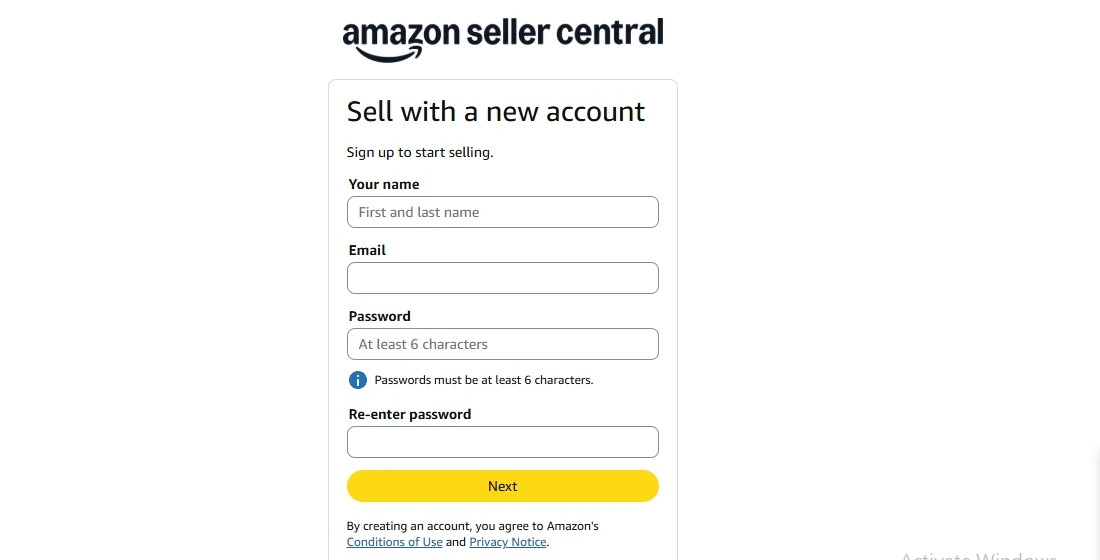
image showing amazon seller central account registration page

The first step is registering for an Amazon Seller Central account, which is the dashboard used to manage listings, pricing, inventory, and orders.

Amazon provides two selling plans:

Individual Plan

  • No monthly subscription fee

  • $0.99 fee per item sold

  • Best for people selling fewer than 40 books per month

Professional Plan

  • Around $39.99 per month

  • No per-item fee

  • Ideal for larger sellers or those scaling a book business

Most beginners start with the Individual plan, especially when they’re simply selling books from their personal collection.

During registration, Amazon will require:

  • Your name and address

  • Phone number and email

  • Bank account for payments

  • Credit card for billing

  • Tax information

Once your account is verified, you’ll gain access to Seller Central, where you can begin listing books.

Identify the Book Using ISBN or ASIN
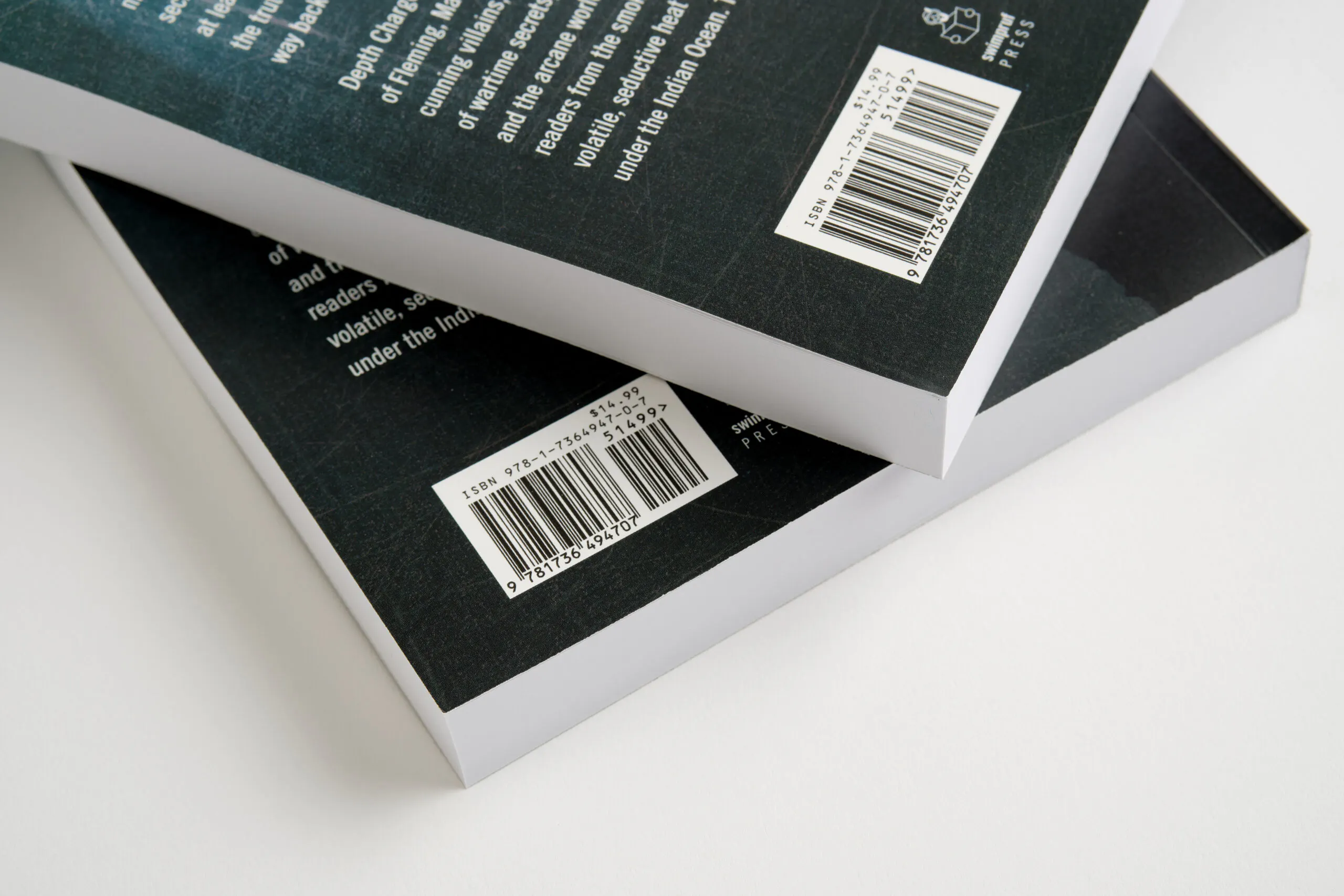
image showing ISBN of a book

Every book sold on Amazon is identified by a unique product code.

For physical books, this is usually the ISBN (International Standard Book Number) printed near the barcode on the back cover.

Amazon then assigns an ASIN (Amazon Standard Identification Number) to each product listing, which acts as the internal product ID in Amazon’s catalog.

To locate your book:

  1. Log into Seller Central

  2. Navigate to Inventory → Add a Product

  3. Enter the ISBN, title, or author

  4. Choose the correct edition (hardcover, paperback, etc.)

  5. Click “Sell Yours”

Because Amazon already has an extensive catalog of books, sellers typically add their copy to an existing listing instead of creating a new one.

Select the Correct Edition

This step is often overlooked by beginners but is extremely important.

Different editions of the same book have different product pages. For example:

  • Paperback edition

  • Hardcover edition

  • International edition

  • Revised edition

If you list the wrong edition, customers may receive a book different from what they expected, which can lead to returns or negative feedback.

Always confirm:

  • Publication year

  • ISBN number

  • Cover design

  • Publisher

Matching the correct edition ensures a smooth transaction.

Determine the Book’s Condition
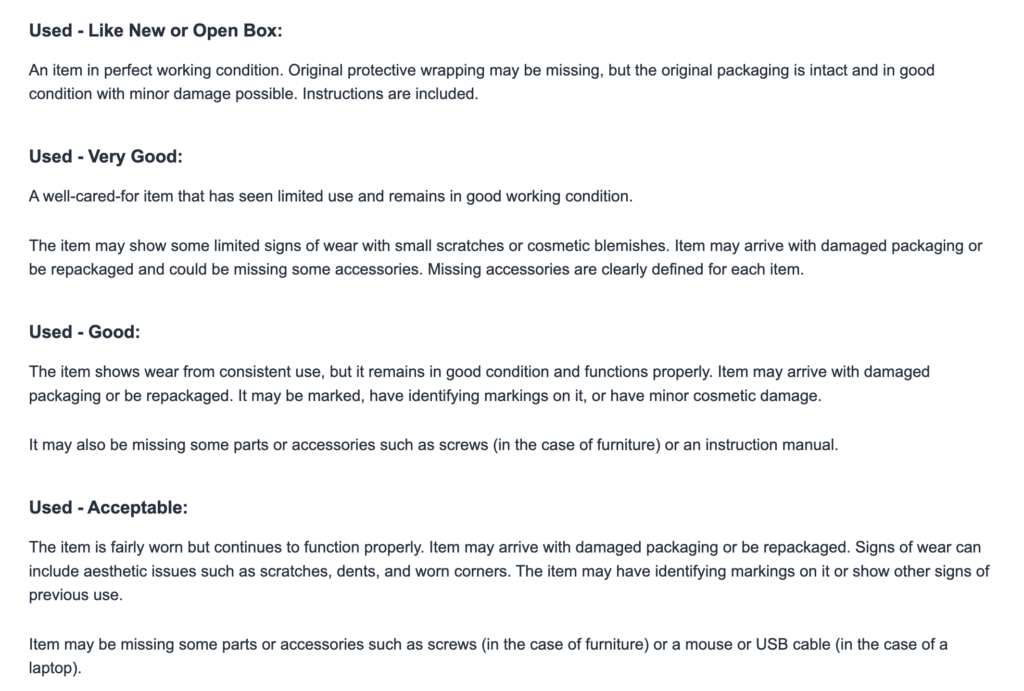
amazon used condition subcategories

Amazon requires sellers to accurately describe the condition of used books.

The platform provides four primary categories:

Used – Like New
Almost perfect condition with minimal wear and no markings.

Used – Very Good
Minor wear on the cover or edges, but pages remain clean.

Used – Good
Noticeable wear with possible highlighting or small markings.

Used – Acceptable
Heavy wear but still readable with intact pages.

Being honest about the book’s condition is critical. Over-grading books can lead to customer complaints, returns, and even account penalties.

Add a Detailed Condition Description

In addition to selecting a condition category, sellers should write a short condition note describing the book.

This helps buyers understand exactly what they’re purchasing.

For example:

  • “Minor shelf wear on cover, clean pages with no writing.”

  • “Light highlighting on a few pages, otherwise in very good condition.”

  • “Ex-library copy with stamp on first page.”

Including accurate descriptions reduces misunderstandings and improves buyer trust.

Set a Competitive Price

Pricing is one of the most important factors when selling used books.

Before listing your book, check:

  • The lowest price currently listed

  • Number of competing sellers

  • Condition of competing copies

  • The book’s Best Sellers Rank (BSR)

BSR indicates how well a product sells relative to other books in the same category. Books with lower BSR numbers generally sell faster.

Many sellers price slightly below competitors with similar conditions to increase their chances of winning the sale.

Understand Amazon Fees
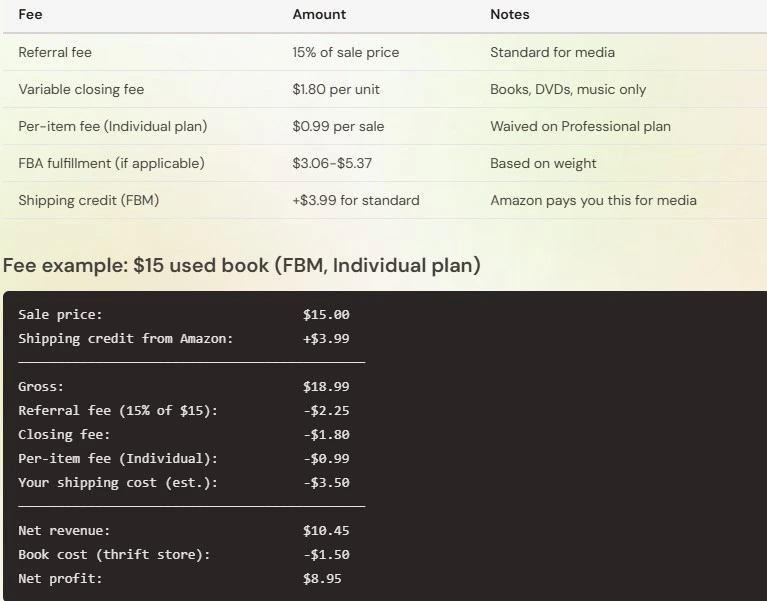
amazon fees on books

Before finalizing your listing, you must understand Amazon’s fee structure.

Typical fees include:

Referral Fee

  • Around 15% of the sale price

Closing Fee

  • Approximately $1.80 per book

FBA Fulfillment Fees (optional)

  • Additional fees depending on size and weight.

For example, if a book sells for $15, Amazon may deduct referral, closing, and fulfillment fees before paying the seller.

Understanding these costs helps ensure your book is profitable before listing it.

Choose Your Fulfillment Method
Choose Your Fulfillment Method

When selling books on Amazon, you must decide how orders will be shipped.

Fulfillment by Merchant (FBM)

With FBM:

  • You store the books yourself

  • You pack and ship orders directly to customers

  • You handle returns and customer service

This method is common among beginner sellers because it avoids warehouse storage fees.

Many sellers ship books using Media Mail, which is a low-cost shipping method for books.

Fulfillment by Amazon (FBA)

With FBA, you send books to Amazon’s fulfillment centers.

Amazon then handles:

  • Storage

  • Packaging

  • Shipping

  • Customer service

  • Returns

Books shipped through FBA may qualify for Prime delivery, which often increases sales.

FBA works best for:

  • Higher-value books

  • Fast-selling textbooks

  • Sellers with large inventory.

Publish the Listing

After completing all the details, submit your listing.

Your product offer will include:

  • Price

  • Condition

  • Quantity

  • Fulfillment method

  • Shipping time

Once published, your book will appear on the Amazon product page alongside offers from other sellers.

If demand is high and your price is competitive, your book may sell within hours or days.

Package and Ship the Book

When a buyer places an order, it’s essential to package the book securely.

Recommended packaging methods include:

  • Padded mailers

  • Corrugated cardboard book wraps

  • Bubble wrap protection

Proper packaging prevents damage during shipping and reduces the risk of returns.

After shipping, update the tracking number in Seller Central so the customer can monitor the delivery.

Maintain Good Seller Metrics

Amazon monitors seller performance to ensure customer satisfaction.

Key metrics include:

  • Order defect rate

  • Late shipment rate

  • Cancellation rate

  • Customer feedback score

Maintaining strong performance metrics helps protect your account and improves your chances of winning the Buy Box, which is the default purchase option for buyers.

Scale Your Used Book Business

Once you understand how to sell used books on Amazon, the next step is scaling.

Successful sellers often expand by:

  • Sourcing books from thrift stores or library sales

  • Buying books in bulk from estate sales

  • Using scanning apps to evaluate books quickly

  • Sending high-value books to FBA

Many sellers begin by selling just a few books from home but eventually build a profitable online reselling business.

Learn how Amazon Marketing Services helps sellers boost visibility, run targeted ads, and increase conversions with effective advertising tools.

Listing Optimization: SEO & Conversion Boosts

Simply listing your book on Amazon is not enough to generate consistent sales. To succeed in selling books on Amazon, your listing needs to be optimized for both Amazon’s search algorithm and buyer behavior. Listing optimization helps your book appear in more search results while also persuading visitors to purchase.

Amazon’s ranking system evaluates factors such as keyword relevance, sales performance, and conversion rates to determine where a product appears in search results. A well-optimized listing increases visibility, drives more clicks, and improves conversions.

Below are the most effective strategies to optimize your book listing for SEO and higher sales.

Perform Keyword Research for Amazon SEO

Keyword research is the foundation of listing optimization. These are the search terms customers use when looking for books on Amazon.

Instead of using only broad keywords like “business book” or “history book,” focus on long-tail keywords that match buyer intent, such as:

  • “college biology textbook 3rd edition”

  • “used nursing exam prep book”

  • “vintage philosophy hardcover”

Long-tail keywords often have lower competition but higher conversion rates, making them extremely valuable for book listings.

To find keywords, you can:

  • Analyze top-ranking book listings

  • Use Amazon’s autocomplete suggestions

  • Study competitor titles and descriptions

  • Use keyword tools like Helium 10 or Jungle Scout

Once you identify your keywords, integrate them naturally into your listing.

Optimize the Book Title for Search Visibility

Your book title plays a major role in Amazon SEO because it’s one of the first elements indexed by the algorithm.

A well-optimized title should include:

  • The book title

  • Author name (if applicable)

  • Key search terms such as edition or subject

For example:

Poor title:
“Biology Textbook”

Optimized title:
“Campbell Biology – 11th Edition | College Biology Textbook | Hardcover”

Clear, descriptive titles improve both search visibility and click-through rates, helping buyers immediately understand what they’re purchasing.

Write a Persuasive Book Description

Your description acts as the sales pitch for your book. Once a buyer clicks on your listing, this section must convince them to make the purchase.

A strong description should:

  • Clearly explain what the book is about

  • Highlight the value readers will gain

  • Mention edition, condition, or special features

  • Include relevant keywords naturally

Good descriptions reduce buyer uncertainty and can also help lower return rates because customers know exactly what they are purchasing.

Structure your description with short paragraphs or bullet points so it remains easy to read.

Use High-Quality Images

Images are one of the most powerful conversion tools on Amazon. Since buyers cannot physically examine the book, visuals help build trust and clarify the condition.

Include images such as:

  • Front cover

  • Back cover

  • Spine of the book

  • Close-ups of pages or illustrations

  • Any visible wear or markings

High-quality images significantly improve click-through rate and buyer confidence, both of which influence sales performance.

Amazon also recommends using images that are at least 1000 pixels so customers can zoom in and inspect details.

Utilize Backend Keywords

Amazon allows sellers to add hidden search terms in the backend of their listing. These keywords are not visible to customers but help the product appear in more searches.

Best practices for backend keywords include:

  • Adding synonyms and alternate spellings

  • Including plural and singular variations

  • Avoiding repetition of keywords already in the title

  • Using all available character space wisely

These hidden keywords expand your product’s visibility without cluttering the visible listing content.

Encourage Reviews and Ratings

Customer reviews are a powerful trust signal. Listings with more positive reviews tend to rank higher and convert better because buyers rely heavily on social proof.

To increase reviews:

  • Provide accurate descriptions

  • Ship books promptly

  • Package books securely to avoid damage

  • Deliver exactly what the buyer expects

Consistently positive feedback improves both conversion rates and long-term ranking performance.

Use A+ Content (If Eligible)

If you have a registered brand on Amazon, you can enhance your listing using A+ Content.

This feature allows sellers to add:

  • Enhanced images

  • Comparison charts

  • Rich text sections

  • Brand storytelling modules

Listings with A+ Content often see 3–10% higher sales conversions, making it a valuable tool for improving performance.

Although A+ Content may not directly affect keyword indexing, it improves the overall shopping experience and encourages more purchases.

Pricing Strategy for Used Books

Pricing used books on Amazon is part art, part strategy. Listings often show a wide range—some absurdly low, some unrealistically high. The goal is to find the sweet spot that attracts buyers while keeping profits healthy.

Competitive pricing without killing margins: Check the lowest comparable-condition listings. If five “Good” copies are $10, listing yours at $18 won’t move it. You can price slightly higher if your copy is better or if you’re okay waiting longer for a sale, but beware of undercutting wars that chip away at profits.

Factor in fees and shipping: Amazon takes ~15% referral plus $1.80 closing; FBA adds fulfillment fees. FBM covers shipping, but costs vary by weight. A $5 book with $3.99 shipping might leave nearly zero profit. Smart sellers price strategically—sometimes it’s better to wait for a sale than chase pennies.

Understand key differences between Amazon 1P and 3P selling models to choose the best approach for profitability and business control.

Tips to Sell Used Books Faster on Amazon + Common Mistakes to Avoid

If you want to sell used books on Amazon more quickly and consistently, it helps to think like both a market analyst and a customer. Successful sellers optimize every aspect of their listings and operations to align with Amazon’s search algorithm and buyer expectations. At the same time, they avoid common mistakes that can kill sales or lead to returns.

Here’s a combined overview of practical tips to accelerate sales and the frequent pitfalls many new sellers fall into:

Tips to Sell Used Books Faster on Amazon

Prioritize Books with Strong Demand

Look at a book’s Best Seller Rank (BSR) before sourcing or listing. Titles with a lower BSR typically sell faster because they have proven demand. A book ranked under 100,000 often moves more quickly than one ranked in the millions.

Use High‑Quality Listings

Clear photos — including front, back, spine, and close‑ups of any wear — help buyers judge the condition confidently. Combine this with accurate, descriptive condition notes.

Price Competitively with Strategy

Books priced competitively against similar condition offers win sales more often. Check current pricing and adjust based on condition and fees. Sellers who balance competitive pricing with realistic profit margins tend to see quicker conversions.

Optimize Listings with Relevant Keywords

Including relevant keywords (genre, edition, subject, author name) in titles and descriptions helps Amazon’s search algorithm match your book to buyer queries. Relevant placement improves visibility and organic traffic.

Utilize Seasonal and Category Trends

Seasonality affects book demand — for example, textbooks spike before new semesters, and holiday themed books gain interest in winter months. Timing inventory to these trends helps reduce holding time and improves sell‑through rates.

Choose the Right Fulfillment Method

Books fulfilled through Amazon (FBA) often sell faster due to Prime eligibility, but balance this with fees. For lower‑priced books, merchant fulfillment (FBM) with Media Mail can preserve margins.

Common Mistakes That Slow Sales or Hurt Profits

Misrepresenting Book Condition

One of the top pitfalls is inaccurate condition grading, such as labeling a book “Very Good” when it has highlighting, dog‑eared pages, or visible wear. Mislabeling leads to returns, negative feedback, and lower seller credibility.

Ignoring Fees and Profitability

Many sellers fail to account for Amazon’s referral fees, closing fees, and fulfillment costs. Ignoring these can turn a seemingly profitable book into a loss after fees. Always calculate net profit before listing.

Listing the Wrong Edition

Especially with textbooks, edition accuracy is critical. A paperback and hardcover of the same title are different ASINs, and even small edition differences can affect demand. Listing under the wrong edition results in mismatches, returns, and poor conversion.

Poor Packaging and Shipping Practices

Damage during shipping due to inadequate packaging generates returns and negative feedback. Use rigid mailers or protective padding appropriate for book size and type to protect condition.

Underestimating Seasonal Demand Fluctuations

Failing to align inventory with demand cycles — such as selling textbooks outside peak academic seasons — can lead to slow turnover and storage costs, especially for FBA sellers.

Engaging in a Price War Without Strategy

Undercutting competitors by pennies may win the Buy Box momentarily but can lead to razor‑thin margins or losses if fees aren’t considered. Sometimes maintaining a stable, fair price waiting for demand to catch up is more profitable than constant price chipping.

Bringing It Together

To sell used books faster on Amazon, focus on demand, accurate listings, pricing intelligently, and choosing the right fulfillment method for your books. At the same time, steer clear of common mistakes like misgrading conditions, overlooking fees, or mismatching editions — these issues not only slow sales but can impact your long‑term seller performance. With thoughtful strategies and attention to detail, you can turn idle books into steady cash flow and build momentum as an Amazon reseller.

Understand Amazon ACoS, how to calculate it accurately, and strategies to optimize ad spend for higher profitability.

Conclusion: How to Sell Used Books on Amazon

Selling used books on Amazon is an accessible and scalable way to turn unwanted titles into extra income. With millions of buyers already on the platform, the opportunity is vast, but success requires strategic sourcing, accurate listings, competitive pricing, and attention to detail. By optimizing your listings, understanding fees, and choosing the right fulfillment method, even beginners can generate consistent sales. While it may start as a side hustle, many sellers grow it into a profitable small business. The key is patience, research, and leveraging Amazon’s tools to maximize visibility and conversions.

FAQs: How to Sell Used Books on Amazon

1. How much money can you make selling used books on Amazon?
Earnings vary widely depending on book type, demand, and sourcing cost. Many casual sellers make $100–$500/month, while experienced resellers can earn $1,000–$5,000/month or more with a well-managed inventory of high-demand titles.

2. How to sell used books on Amazon for beginners?
Start by creating a Seller Central account, sourcing books from thrift stores or library sales, listing them under the correct ISBN, setting accurate conditions, and pricing competitively. Begin with a few books, then scale gradually.

3. Is selling books on Amazon worth it?
Yes, especially for decluttering and turning unused books into profit. The market is large, and with proper strategy, it can become a steady income stream.

4. Can I sell ex-library books?
Yes, but note that Amazon requires you to accurately describe markings or stamps, as buyers must know about any library-origin damage or labels.

5. Does FBA always sell faster?
FBA often sells faster due to Prime eligibility and faster shipping. However, sales speed also depends on book demand, pricing, and condition.

6. Which books sell best?
Textbooks, niche non-fiction (technical, medical, law), out-of-print titles, multi-volume sets, and collectible hardcovers tend to sell faster and at higher margins.

7. How much does it cost to sell a book on Amazon?
Fees include ~15% referral, $1.80 closing fee per book, and optional FBA fees for storage and fulfillment. FBM sellers cover shipping costs, which vary by weight and method.

8. Do I need a Professional seller account to sell books?
No, beginners can start with an Individual plan. Professional accounts are beneficial for larger volumes or scaling your business, as they remove per-item fees.

9. What condition should I list my books in?
Use Amazon’s condition categories: Like New, Very Good, Good, or Acceptable. Always describe your book accurately to avoid returns or negative feedback.

10. Can I sell books on Amazon without FBA?
Yes, FBM (Fulfilled by Merchant) allows you to ship books directly to buyers. While FBA offers Prime advantages, FBM is cost-effective, especially for low-priced books or heavier items.

Power Your Brand. Automate Your Growth. Win on Amazon — with Stores Automation

At Stores Automation, we specialize in automating every aspect of your Amazon store, from inventory management to marketing strategies, so you can focus on scaling your business. Our best amazon fba automation services takes the guesswork out of e-commerce by providing expert solutions tailored to your store’s needs.

Whether you’re a seasoned seller or just getting started, we provide personalized done for you store automation that works for you — driving sales and freeing up your time.

Call us at 302-204-8244
Email: info@storesautomation.com
Sign Up to get started.

Let’s turn your Amazon store into a sales powerhouse. Book your free consultation today — and unlock your brand’s full potential with Stores Automation.


    Amazon FBA AutomationeBay DropshippingWalmart DropshippingShopify Dropshipping