

Amazon Search Engine Optimization (Amazon SEO) is the process of optimizing product listings to improve their visibility and ranking within Amazon’s search results. The goal of amazon search engine optimization is simple but powerful: help your products appear in front of the right shoppers at the exact moment they are ready to buy. When done correctly, Amazon SEO drives consistent organic traffic and increases sales without relying solely on paid advertising.
Unlike traditional SEO for Google, SEO for Amazon is entirely purchase-focused. Amazon’s algorithm is designed to show products that are most relevant and most likely to convert into sales. This means that keyword relevance alone is not enough. Performance metrics such as click-through rate, conversion rate, sales velocity, pricing, availability, and customer satisfaction all play a major role in how products rank.
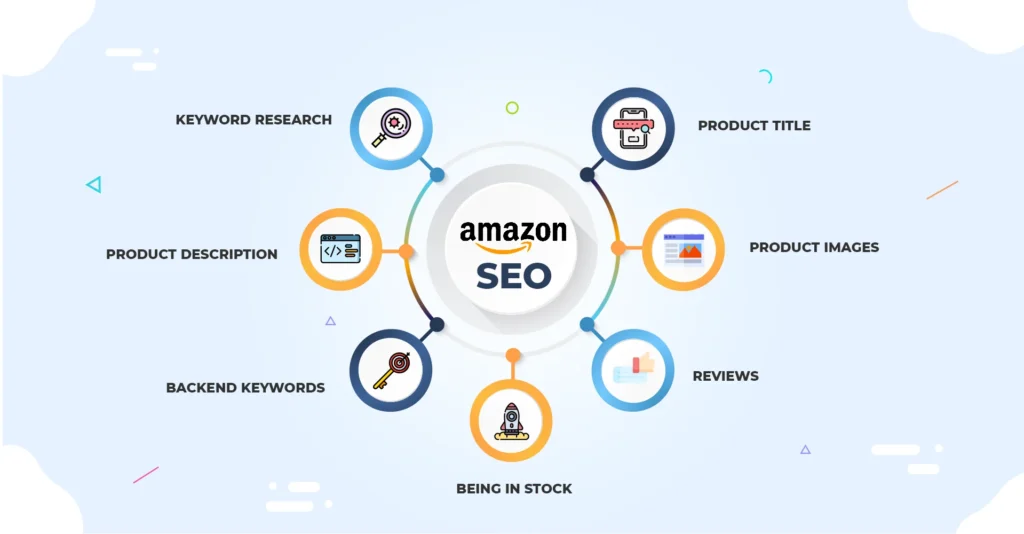
At its core, Amazon listing SEO involves optimizing every element of a product page so Amazon’s algorithm can clearly understand what the product is, who it’s for, and how well it performs. This includes keyword-optimized titles, bullet points, descriptions, backend search terms, high-quality images, competitive pricing, strong reviews, and reliable fulfillment.
Another key distinction is that Amazon SEO is dynamic. Rankings change frequently based on performance data, inventory health, and customer behavior. A well-optimized listing that converts well can climb the rankings quickly, while poor performance or stockouts can cause rankings to drop just as fast.
In simple terms, Amazon SEO is the foundation of organic success on the platform. It determines whether your product is buried on page five or positioned at the top of search results where the majority of sales happen. For sellers looking to scale profitably, mastering amazon search engine optimization is essential for long-term growth and sustainable sales on Amazon.
Which Factors Have the Biggest Impact on Amazon Rankings?
Amazon has been clear about what drives visibility in search results. If you want your product listings to rank higher and attract more shoppers, these are the areas that matter most:
Keyword-optimized titles
Use relevant, high-intent search terms in your product titles so Amazon clearly understands what you’re selling and when to show your listing.
High-quality product images
Strong visuals are critical—especially your main image. Clear, professional photos help capture attention, build trust, and improve click-through rates.
Detailed and helpful descriptions
Well-written bullet points and descriptions that explain features, benefits, and use cases give shoppers the information they need to buy and signal relevance to Amazon’s algorithm.
Authentic customer reviews
Positive, genuine reviews—earned naturally and without incentives—play a major role in building credibility and influencing both rankings and conversions.
At the end of the day, Amazon SEO revolves around your product listing. When you create a clear, informative, and keyword-focused listing, you’re not just improving your rankings—you’re also setting yourself up to convert more traffic into sales.
Does PPC Influence Organic Rankings and Amazon SEO?
Pay-per-click (PPC) advertising can play a meaningful role in supporting your organic rankings on Amazon. While Amazon doesn’t publicly disclose how its algorithm works, it’s widely understood that performance signals—such as sales volume, conversion rate, reviews, and ratings—have a direct impact on ranking.
PPC helps drive additional traffic and sales, which can lead to more reviews and higher engagement. This creates a positive momentum effect. Importantly, Amazon does not separate paid sales from organic ones—sales are sales. As long as customers are responding positively, increased activity can translate into stronger organic visibility.
This makes PPC especially valuable during product launches, when listings need an initial boost to gain traction. That said, paid and organic strategies should be carefully balanced. For instance, if a product already ranks at the top organically for a specific keyword, aggressive advertising on that same term could potentially cannibalize organic sales.
Even so, completely turning off ads isn’t usually recommended. Doing so can leave room for competitors to dominate sponsored placements and pull traffic away from your listing. Strategic PPC can also push competitor listings further down the page, making them harder for shoppers to discover.
Do Reviews Impact Amazon SEO?
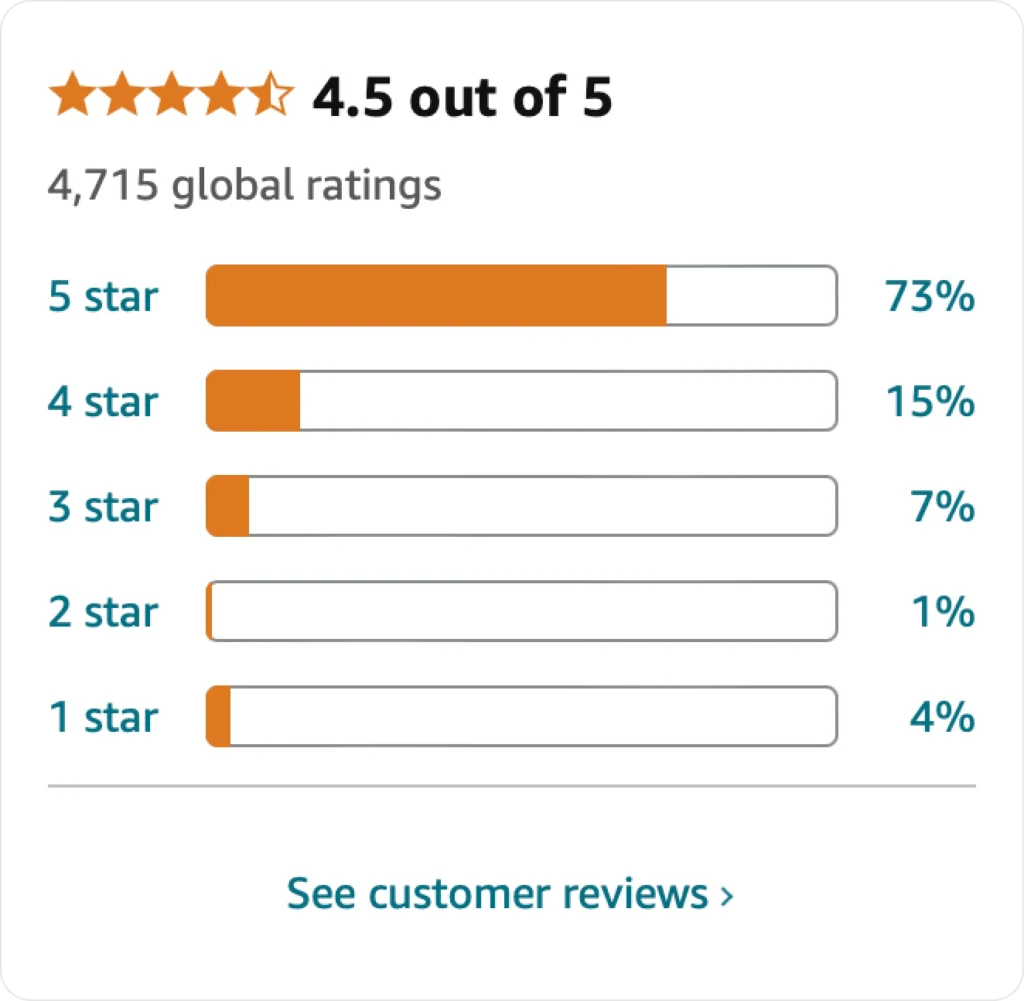
Yes—reviews have a significant influence on Amazon SEO. Customer feedback affects how shoppers perceive your product, whether they decide to buy, and how well your listing performs overall. A steady flow of positive reviews and strong ratings signals to Amazon that your product is trustworthy and valuable, increasing the likelihood of higher visibility in search results.
Positive reviews act as powerful social proof, encouraging more purchases and improving conversion rates. On the flip side, a high volume of negative reviews can drag down your rating and reduce your product’s exposure in search.
Research consistently shows the power of reviews: even a single review can dramatically increase the likelihood of purchase, and shoppers are far more likely to choose a product with at least one review over one with none.
Because of this, actively managing reviews is essential. Encourage feedback from happy customers, respond to negative reviews quickly and professionally, and use insights from customer comments to improve your products and customer experience. Over time, this approach strengthens both your brand reputation and your performance in Amazon’s search algorithm.
Why Amazon SEO Really Matters
Amazon SEO is essential because the vast majority of purchases happen on the first page of search results. If your product isn’t showing up near the top, most shoppers will never see it—making visibility a make-or-break factor for success. That’s why Amazon SEO isn’t a “nice to have”; it’s a necessity.
When done right, Amazon SEO goes far beyond driving clicks. It boosts sales momentum, helps generate more reviews, and builds long-term credibility within your category. Simply put, a strong Amazon SEO strategy gives you the leverage to outperform competitors and grow sustainably in the world’s largest online marketplace.
Understanding how Amazon’s ranking algorithm functions is essential for effective amazon search engine optimization because it determines which products show up—and in what order—when buyers search on the platform. Over time this algorithm has evolved, but its core objective remains the same: deliver the most relevant and high-performing products to shoppers to maximize conversions and customer satisfaction.
At a high level, Amazon uses a complex algorithm often referred to as A9/A10 to assess and rank products based on a mix of relevance and performance signals. While Amazon hasn’t disclosed the exact formula, research and seller experience highlight the key ranking factors that influence search placement.
Relevance: Matching Search Queries to Listings
The first step the algorithm takes is determining how well a product listing matches a customer’s search query. This relevance is calculated by analyzing keywords in critical listing elements, such as:
-
Product Title
-
Bullet Points
-
Product Description
-
Backend Search Terms
Optimizing these elements with relevant, well-researched keywords helps Amazon’s system understand what your product is and which searches it should appear for.
Performance Metrics: Showing Buyer Interest
Once relevance is established, the algorithm evaluates how well a listing performs in the marketplace. Performance metrics tell Amazon whether customers like and purchase the product. The most influential performance signals include:
-
Conversion Rate: The percentage of people who buy after viewing your listing—strong conversion signals a good buyer experience and can boost rankings.
-
Sales Velocity & History: Consistent and steady sales show demand, helping a product rank higher and stay visible over time.
-
Click-Through Rate (CTR): If many shoppers click your listing from search results, Amazon interprets that as relevance and interest.
-
Customer Engagement: More recent versions of the algorithm place increasing emphasis on engagement signals such as time spent on the listing page and interactions with reviews.
These metrics work together: a listing that attracts clicks and converts them into purchases is more likely to climb the search results than one that doesn’t.
Seller Authority & Customer Experience
Under modern versions of Amazon’s ranking system (often called A10), seller authority and customer experience have grown in importance. Factors that influence this include:
-
Seller feedback ratings and reviews
-
Return and defect rates
-
Fulfillment performance and shipping speed
-
External traffic pointing to your listing (from social media, blogs, email campaigns)
Amazon rewards sellers who consistently deliver positive experiences because satisfied customers are more likely to make repeat purchases—a key long-term driver of marketplace success.
Inventory Health & Fulfillment Factors
Listings that are regularly out of stock or suffer from slow fulfillment are less likely to maintain strong search visibility. Amazon prioritizes products that are available and ready to ship—especially when offered through FBA, which provides fast delivery and reliable customer experience.
Why Algorithm Updates Matter (and How to Keep Up)
Amazon is constantly adjusting its algorithm to improve the shopping experience, reward trustworthy content, and keep the marketplace running efficiently. Recent changes—focused on shopper experience, authentic reviews, and listings that convert—underscore Amazon’s strong focus on quality and relevance.
So how can sellers stay ahead when the algorithm keeps evolving? Here are practical ways to keep your listings competitive and optimized:
Stay current with Amazon policies
Make it a habit to check the Seller Central News section. Amazon shares policy updates and algorithm-related changes there, many of which directly affect visibility and rankings.
Watch your performance metrics
Track key indicators like conversion rate, unit session percentage, and return rates in Business Reports. Sudden movement in these metrics can signal changes in how Amazon evaluates listings.
Continuously A/B test your listings
Use Amazon’s Manage Your Experiments (MYE) tool to test different titles, images, bullets, and pricing. Ongoing testing helps you quickly identify what aligns best with Amazon’s latest ranking priorities.
Actively engage with customers
Respond to reviews and customer questions in a timely, thoughtful way. Genuine interaction reinforces trust, shows customer-first intent, and can positively influence your listing performance.
Use competitive intelligence tools
Platforms like Helium 10, Jungle Scout, and SmartScout offer real-time insights into competitor behavior and ranking shifts, helping you refine your SEO and stay ahead of market changes.
By taking a proactive approach, you won’t just protect your listings from algorithm updates—you’ll turn those changes into opportunities to strengthen your competitive position and drive more sales.
To optimize for Amazon SEO effectively, you first need to understand how shoppers experience a product listing. Much like a website or a newspaper page, an Amazon listing is split into two main sections: above the fold and below the fold.
Above the fold includes everything a shopper sees immediately after landing on your product page. These elements get the most attention and have the strongest influence on click-through rates, conversions, and overall buying decisions.
Below the fold contains the supporting details that deepen a shopper’s understanding of the product. While these sections aren’t always seen right away, they play a major role in building trust, answering questions, and reinforcing Amazon’s algorithm signals.
A strong Amazon SEO strategy requires optimizing both areas. Before diving into optimization tactics, it’s important to clearly understand what each component does and why it matters.
Above-the-Fold Components
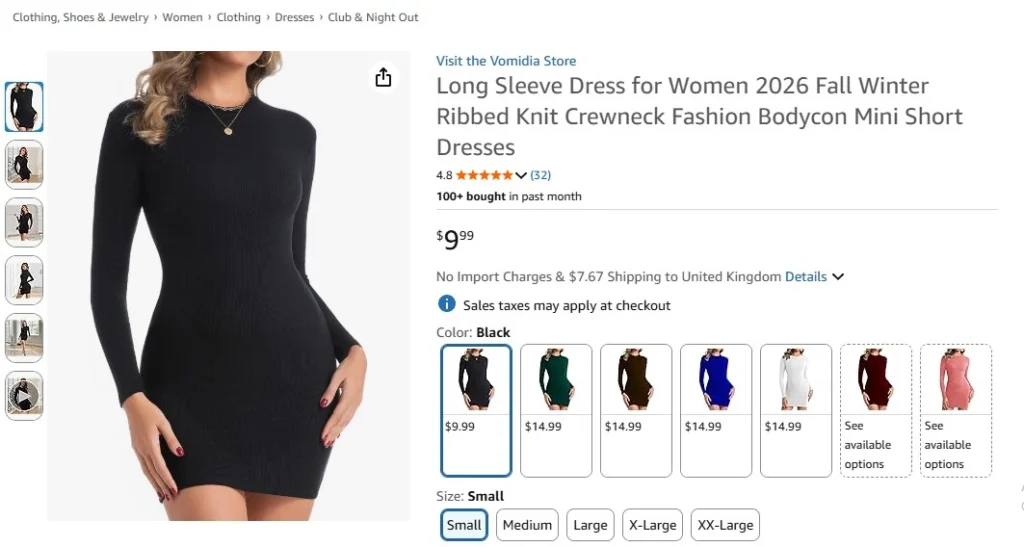
Product Title
One of the most important SEO elements. Amazon’s algorithm heavily analyzes the title to understand relevance, making it a core ranking factor.
Product Images
Shoppers browse visually first. High-quality, clear images increase clicks and conversions, which directly improves ranking performance.
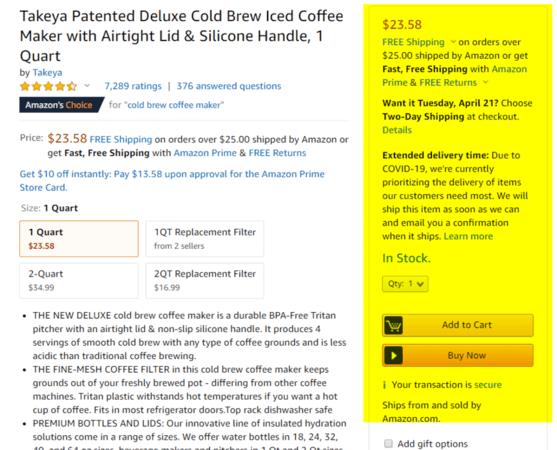
Amazon Badges (Best Seller, Amazon’s Choice)
These badges increase buyer confidence and signal authority. Strong sales and engagement metrics tied to badges can significantly boost visibility.
Star Rating & Review Count
Stars catch the eye immediately. While not keyword-based, strong ratings drive conversions—and conversions fuel rankings.
Buy Box
Winning the Buy Box increases sales velocity, which Amazon views as a key indicator of listing quality and relevance.
Variants (size, color, etc.)
Offering options improves user experience and keeps shoppers engaged, which Amazon rewards with better organic visibility.
Bullet Points
Designed for quick scanning, bullet points highlight key benefits, overcome objections, and naturally support keyword relevance to improve conversions.
Below-the-Fold Components
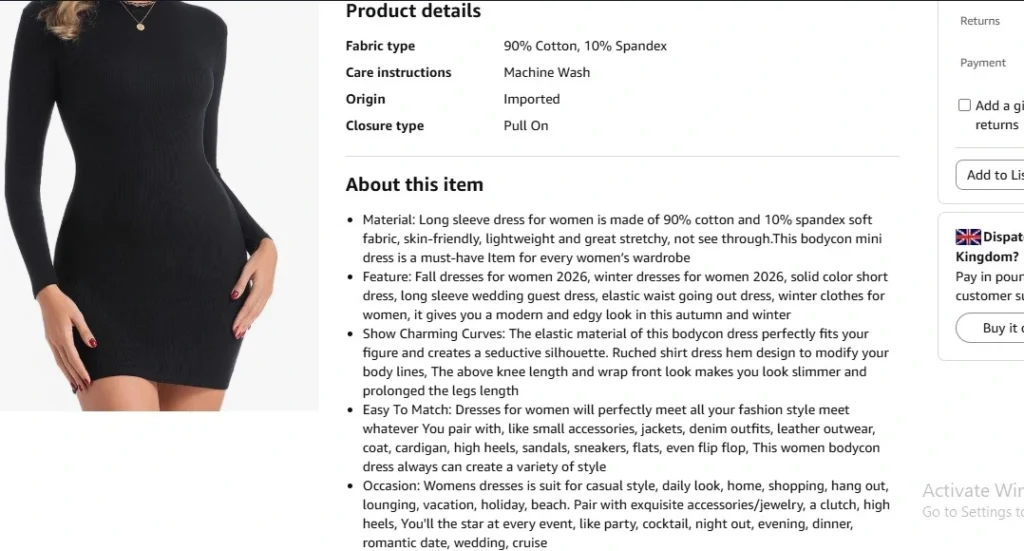
Product Description / A+ Content
This is where your brand story lives. Rich content builds trust, increases time on page, and allows you to target long-tail keywords that support SEO.
Customer Reviews
Although sellers can’t control them, reviews heavily influence trust and purchasing behavior, indirectly strengthening SEO performance.
Q&A Section
A powerful but often overlooked area. It helps answer objections, improve conversions, and naturally incorporate relevant keywords.
Backend & Strategic Elements
Backend Search Terms
Invisible to shoppers but read by Amazon’s algorithm. Use this space for secondary keywords, variations, and common misspellings to expand discoverability.
Pricing & Promotions
Competitive pricing helps secure the Buy Box, while deals and coupons encourage faster purchasing—both driving better ranking signals.
Fulfillment Method (FBA vs. FBM)
FBA listings benefit from Prime eligibility and higher conversion rates. Amazon often favors FBA in search results, giving it a subtle yet powerful SEO advantage.
Improving your product rankings on Amazon requires a strategic approach to amazon search engine optimization that blends keyword relevance, listing quality, conversion signals, and ongoing optimization. Here’s a detailed breakdown of the most effective Amazon SEO strategies sellers use to boost visibility and drive more organic sales:
Keyword Research — The Foundation of Amazon SEO
Keyword research is the single most important step in amazon search engine optimization — it determines which terms your product can be found for and helps Amazon understand when to show your listing. Without the right keywords, no amount of optimization elsewhere can generate consistent organic traffic.
Start with Amazon Autocomplete — Real Buyer Search Queries

Amazon’s search bar is one of the most powerful free keyword research tools available because the suggestions come from real customer search behavior. When you start typing a product name or category, Amazon dynamically shows popular search phrases that begin with your input — essentially crowdsourced keyword ideas straight from real shoppers.
How to use it:
-
Type your main product term into the search bar (e.g., “wireless earbuds”).
-
Record each suggestion that appears, such as “wireless earbuds with mic,” “wireless earbuds for running,” etc. This gives you insights into buyer intent and popular phrases.
-
Try variations (adding or removing words) and use wildcard techniques like “wireless earbuds a,” “wireless earbuds b,” etc., to surface even more keyword combinations.
This method gives you a broad set of relevant keywords to work with before moving on to tools.
Analyze Competitors to Discover Hidden Keyword Opportunities
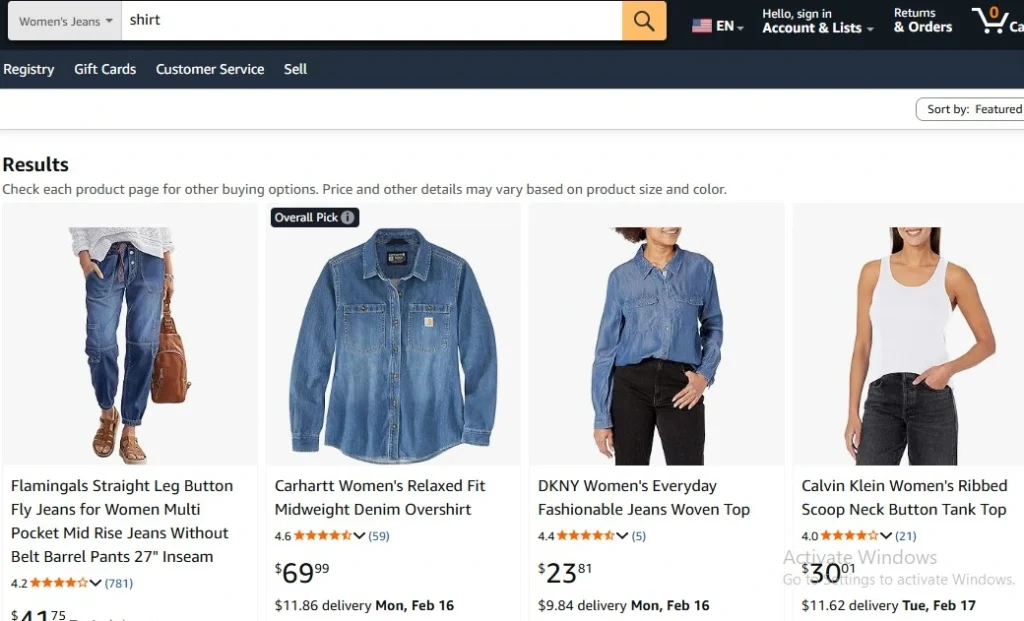
Top-ranking listings for your target product are a goldmine of keyword clues. Amazon sellers who rank well tend to optimize effectively for relevant search terms — so reverse-engineering their listings helps you find what’s working in your niche.
What to look for:
-
Keywords used in titles, bullet points, and descriptions
-
Common phrases repeated across multiple competitors
-
Long-tail phrases that seem specific to buyer needs
For example, if several top “coffee grinder” listings include phrases like “adjustable grind settings” or “compact design for home kitchen,” these could be strong keywords worth targeting.
Leverage Paid and Free Keyword Tools for Data-Driven Insights
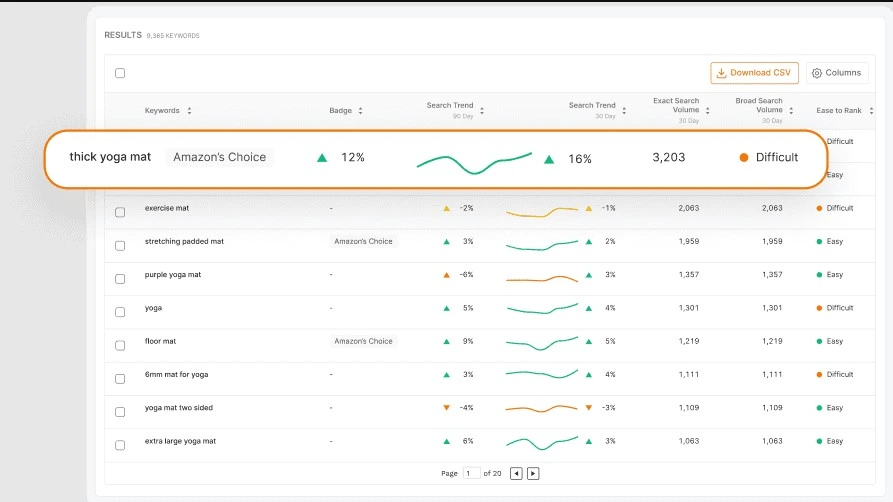
While Amazon’s autocomplete and competitor analysis provide raw ideas, keyword research tools add quantitative data like search volume and relevance — helping you prioritize high-impact keywords. Some widely-used tools include:
-
Helium 10: Generates long lists of keyword ideas based on Amazon search data and allows reverse ASIN lookups (see what keywords competitors rank for).
-
Jungle Scout Keyword Scout: Provides estimated search volume and competition levels, helping you choose keywords with strong organic potential.
-
Keywordtool.io / Sonar by Sellics: Keywordtool.io is great for generating long-tail keyword suggestions from Amazon suggestions.
-
Amazon Brand Analytics (for brand registered sellers): Shows search frequency, top search terms, and shopper behavior directly from Amazon.
For example, Jungle Scout may return a list of thousands of related keywords for a seed term like “winter gloves”, including long-tail phrases that convert better despite lower volumes — such as “thermal winter gloves for women.”
Build a Structured Keyword List — Categorize for Strategic Placement
Once you’ve gathered keywords, organize them by type and priority. A well-structured list helps you use them effectively in different parts of your Amazon product detail page:
-
Primary Keywords: High-volume main terms used in the product title
-
Long-Tail Keywords: More specific phrases used in bullet points and descriptions
-
Attribute Keywords: Descriptive terms (size, material, color, occasion)
-
Related Synonyms & Misspellings: Useful for backend search terms
-
Seasonal/Regional Variations: Terms like “summer beach towel” or “winter scarf” for relevant timing
For example, a keyword framework for “yoga mat” may include:
-
Primary: “yoga mat”
-
Long-Tail: “extra thick yoga mat for hot yoga”
-
Attributes: “eco-friendly yoga mat,” “non-slip 6mm yoga mat”
-
Backend: “exercise mat,” “fitness mat for workouts”
This layered approach ensures your listing captures a broad range of relevant searches without stuffing.
Validate and Refine Keywords for Relevance and Conversion Potential
After assembling your keyword list, validation is crucial. Not all search terms will drive meaningful traffic or conversions. Filter the list by:
-
Search volume estimates (higher generally means more potential visibility)
-
Relevance to your specific product (avoid irrelevant terms that won’t convert)
-
Competition level (high volume with low competition can be a sweet spot)
For instance, Amazon SEO experts recommend filtering out keywords that are too broad (“coffee”) or not directly describing your product (“gifts for coffee lovers”) if they won’t align with buyer intent.
Track Performance and Iterate
Keyword research isn’t a one-time task. Market trends, seasons, and customer preferences shift over time. Monitor how your optimized listings perform for target keywords — and revisit research periodically. Tools with historical data help you spot rising search trends that can boost visibility when incorporated early.
Example: Amazon Keyword Research in Practice
If you sell “insulated water bottles”, your keyword research might look like:
-
Seed Terms from Autocomplete:
-
“insulated water bottles with straw”
-
“insulated water bottles 32 oz”
-
“insulated water bottles for hiking”
-
-
Tool-Generated Keywords (Helium 10 / Jungle Scout):
-
“double wall stainless steel water bottle”
-
“vacuum sealed water bottle leak proof”
-
-
Competitor Insights:
-
Many top listings include “BPA free” and “dishwasher safe” — indicating opportunity for related keywords
-
-
Prioritization:
-
Title: “Insulated Water Bottle 32 oz Stainless Steel – Leak Proof, Vacuum Sealed”
-
Bullets: Include long-tail keywords like “for hiking” and feature terms like “BPA free”
-
Backend: Synonyms and attributes like “sports bottle,” “cold hot water bottle”
-
By using this structured, data-driven keyword research, your listing has higher chances of appearing for ranked searches and converting more shoppers.
Optimizing your product listing is one of the most impactful aspects of amazon search engine optimization (Amazon SEO). A well-optimized listing not only helps Amazon’s algorithm understand what your product is and when to show it, but it also improves key performance signals like click-through rates and conversion rates — both of which are essential for climbing search rankings. Here’s a detailed breakdown of the most important listing optimization strategies used by successful sellers:
Organize and optimize your product listing categories
Before refining your product titles, descriptions, and bullet points, it’s essential to make sure your product is placed in the correct category. Product categories act as powerful filters that help shoppers narrow down their search results. When shopping online, most customers rely on these filters to quickly find items that match their needs.
Even if your product ranks highly for a specific keyword, it can still be filtered out if it’s listed under the wrong category. For instance, imagine you sell a wireless noise-canceling headset but list it under “General Electronics” instead of “Noise-Canceling Headphones.” A shopper searching for noise-canceling headphones on Amazon may apply that specific filter to simplify their search. As soon as they do, your product no longer appears—costing you a valuable sales opportunity.
To avoid this issue, ensure your products are accurately classified using Amazon’s Product Classifier tool. This tool helps identify the most relevant categories and subcategories for each item you sell. Once you’ve selected the correct classifications, upload the updated information to your Amazon account to improve visibility and reach the right customers.
Create a Keyword-Rich, Clear Product Title
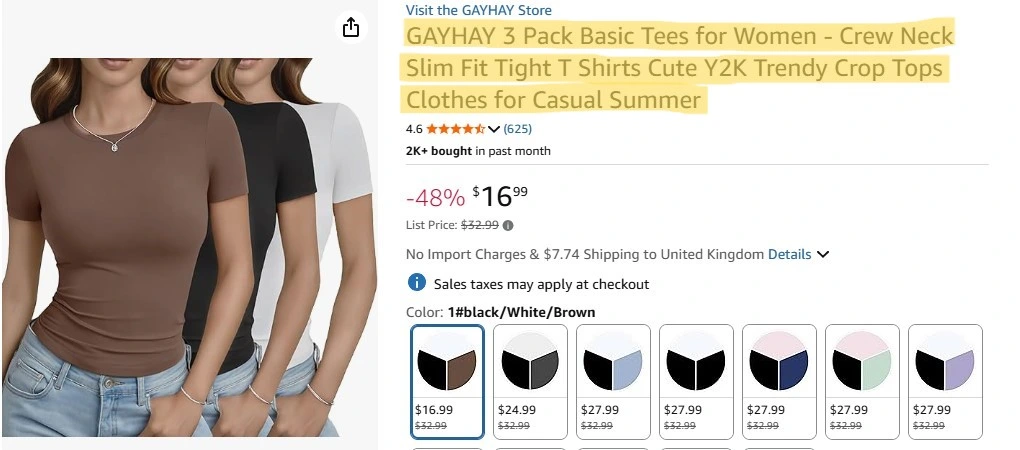
Your product title is the single most important field for Amazon listing SEO. It tells Amazon’s algorithm what your product is and signals relevance for specific search queries. A strong title also influences whether shoppers click on your product.
Best Practices:
-
Put the main keyword (primary product term) at the beginning.
-
Include descriptive attributes like brand, product type, key features, size, color, or material.
-
Avoid keyword stuffing — focus on readability and relevancy.
- Capitalize the first letter of each word, except conjunctions, articles, and prepositions
- Use numerals
- Include the number of items included in a product pack
- Spell out measurements and the word “and”
When it comes to product titles, it can be tempting to add phrases like “free shipping” or other promotional language—but it’s best to avoid doing so. Amazon’s algorithm views this type of wording as spammy, which can hurt your rankings. Instead, focus on clean, accurate, and customer-friendly titles that clearly describe the product without unnecessary hype.
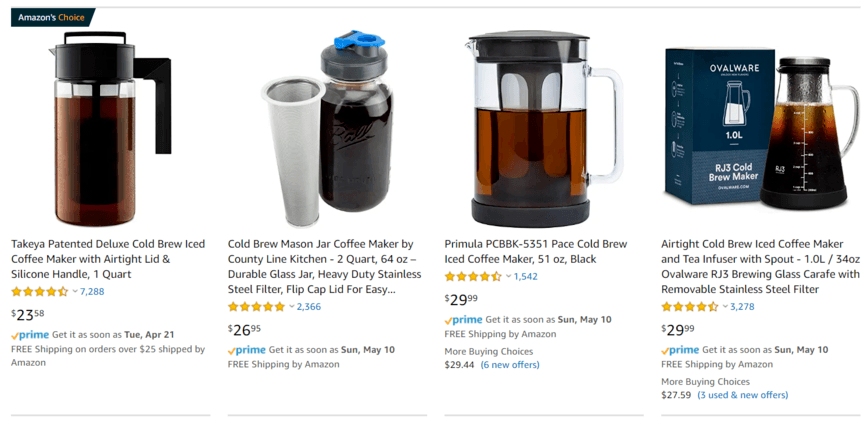
Amazon also enforces a 200-character limit for product titles, and some categories allow even fewer characters. This can make keyword placement tricky, especially when you’re trying to include important search terms. In most cases, your main keyword should appear shortly after the brand or model name. For example, if the brand is Cuppa Joe and the product is a cold brew coffee maker, the keyword would naturally follow the brand or model identifier.
Example:
Instead of “Wireless Earbuds Black,” use a title like:
“SoundPro Wireless Earbuds – Bluetooth 5.2, Noise-Cancelling, Black – 30H Battery”
This title communicates key searchable features while incorporating important terms naturally — helping both SEO and shopper understanding.
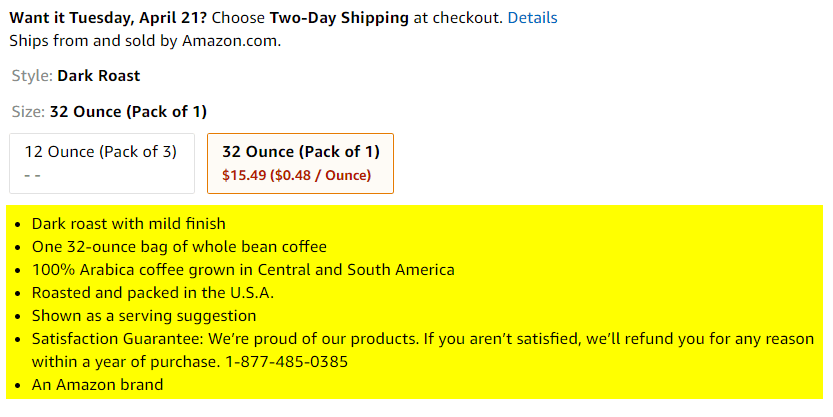

The product description allows you to expand on your bullet points, include additional long-tail keywords, and connect emotionally with potential buyers.
Key Practices:
-
Use a clear structure with short paragraphs that expand on benefits, use cases, and product context.
-
Naturally weave in relevant keywords that haven’t been used in the title or bullets.
-
Address common customer questions or misconceptions.
-
Focus on customer needs and how your product satisfies them.
A strong description not only helps SEO but also reduces buyer hesitation and increases conversion probability.
Use Backend Search Terms to Expand Search Coverage
Amazon provides backend fields (sometimes called “hidden keywords”) where you can include search terms that aren’t visible on the listing but help with indexing.
Best Practices:
-
Include relevant synonyms, alternate spellings, and related phrases not already in your visible content.
-
Avoid repeating words that are already in your title, bullets, or description — Amazon ignores duplicates.
-
Don’t include competitor brands or unrelated terms, as this violates policy and doesn’t help ranking.
-
Use all available space (up to 250 bytes) efficiently.
For example, if your visible content covers the keyword “insulated water bottle,” your backend terms might include “vacuum sealed bottle,” “sports drink bottle,” or “cold hot flask.”
Upload High-Quality Product Images
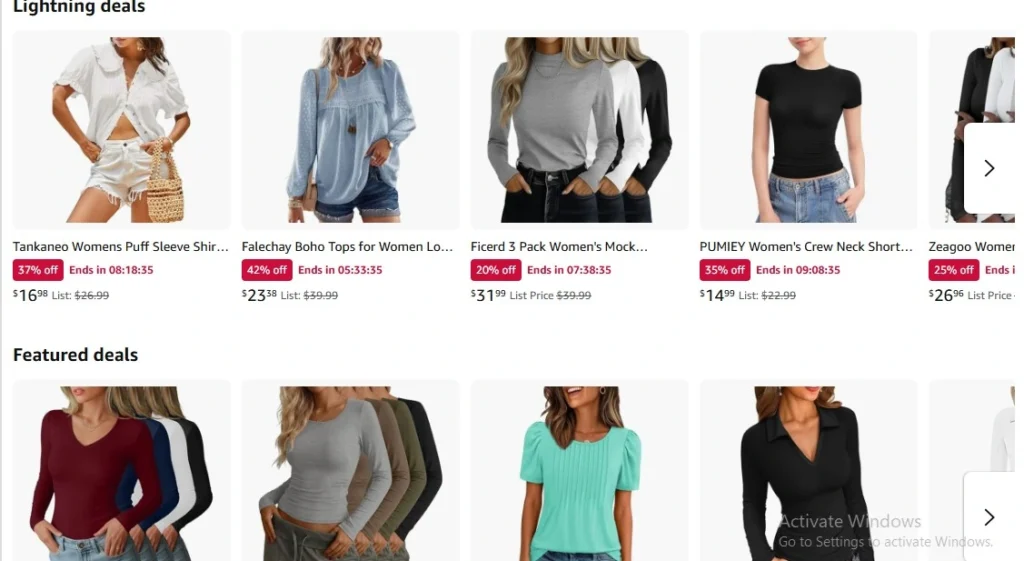
One of the most important factors in ranking higher on Amazon is the quality of your product images. Images directly influence click-through rates and conversions, and both are strong signals for Amazon’s algorithm.
Before anything else, make sure every image you upload meets Amazon’s technical requirements:
-
Accepted formats: JPEG, TIFF, GIF, or PNG
-
Color modes: sRGB or CMYK
-
Image size: At least 1,000 pixels on the height or width (larger is even better for zoom functionality)
Beyond technical standards, Amazon recognizes two main image types, each with its own best practices.
Primary Image
Your primary image is what shoppers see first in search results. It should clearly display the entire product and everything included in the purchase. Use a pure white background and avoid adding text, logos, graphics, badges, or inset images. Clean, professional photos here improve click-through rates and help your listing stand out in crowded search results.
Secondary (Other View) Images
These images appear on your product detail page and help shoppers fully understand what they’re buying. Your product should take up at least 85% of the image. This is where you can add lifestyle shots, size comparisons, close-ups, and use-case visuals to answer common questions and remove buyer hesitation.
Optimizing your images does more than improve rankings—it drives sales. Shoppers rely heavily on visuals when making buying decisions. If your images don’t clearly show the product, its size, or how it’s used, customers are far less likely to convert, no matter how well your listing is written.
Make Use of A+ Content (Enhanced Brand Content)
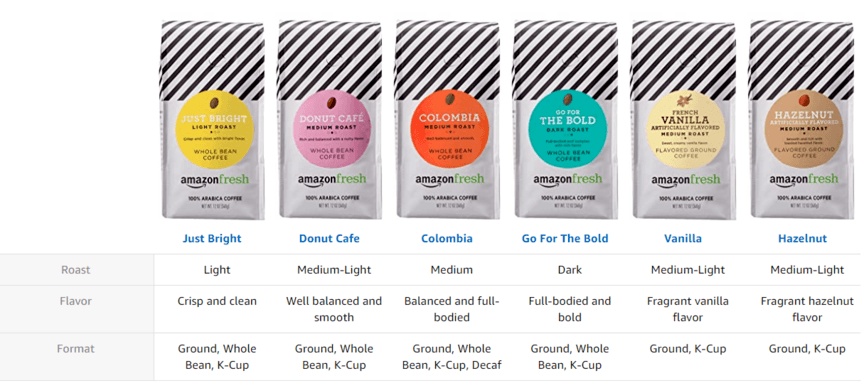
If you’re not a brand owner or enrolled in Amazon’s Brand Registry, you can skip this step. However, if you are part of Brand Registry, A+ Content is a powerful opportunity you shouldn’t ignore.
While A+ Content doesn’t directly affect keyword rankings, it plays an important indirect role in Amazon SEO. By enhancing your product description with high-quality images, comparison charts, videos, and branded visuals, A+ Content keeps shoppers engaged and improves the overall buying experience. Higher engagement and stronger conversion rates lead to increased sales—signals Amazon uses to determine product relevance and visibility.
Because you’ll already be updating your product title, bullet points, and description in the next step, adding A+ Content naturally complements those optimizations. When used effectively, it helps communicate value, reduce buyer hesitation, and encourage confident purchasing decisions.
If you’re eligible, make full use of A+ Content. While keyword placement is still important, A+ Content is more about design, storytelling, and visual clarity. Many sellers choose to work with experienced Amazon SEO agencies to ensure their A+ Content is professionally designed and optimized to maximize both conversions and long-term performance.
Price Competitively and Maintain Inventory Health
Smart pricing and consistent availability influence both click-through rates and conversion rates:
-
Competitive pricing increases the chance shoppers click and buy your product versus others.
-
Avoid stockouts — running out of inventory halts sales velocity and stalls your search ranking momentum.
Although not traditional “content,” these factors directly affect Amazon SEO because the algorithm rewards listings with steady sales and reliability.
Continuously Monitor and Improve
Product listing optimization isn’t a one-time task. Monitor performance metrics like impressions, click-through rates, and conversions within Seller Central and Amazon analytics tools. Based on performance data:
-
Update titles and bullets with rising keywords
-
Refine backend search terms
-
Refresh images or A+ Content
-
Test pricing and promotional strategies
Continuous refinement ensures your listing stays aligned with customer behavior and seasonal trends, helping you maintain or climb rankings.
Pricing isn’t just about margins—it directly affects conversions, sales velocity, and search visibility.
Track and adjust prices consistently
Use automated pricing tools to follow market trends and competitor pricing in real time. Dynamic pricing helps you stay competitive, protect Buy Box ownership, and drive faster sales.
Use promotions strategically
Limited-time deals, coupons, and discounts can spark immediate buying action. These short-term conversion boosts often translate into higher sales velocity and improved rankings.
Conversion Rate Optimization (CRO)
Conversion rate is one of Amazon’s strongest performance signals. The goal is simple: optimize continuously.
Strengthen reviews and ratings
Actively request honest feedback from satisfied customers. Address negative reviews quickly and professionally to show accountability and reinforce trust.
Write copy that converts
Focus on benefit-driven, customer-centric copy that speaks directly to pain points and clearly highlights what makes your product different. Use urgency, exclusivity, and real customer proof to make the purchase decision easy.
Increase sales velocity early
Jumpstart momentum by using programs like Amazon Vine to generate early reviews or by running focused PPC campaigns during high-intent seasons and launches.
Amazon PPC Advertising
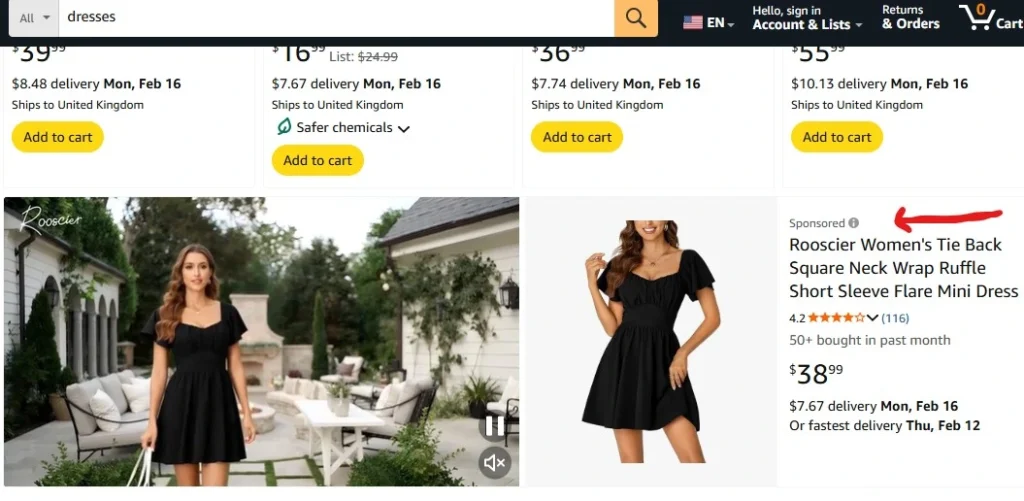
Combine strong organic listings with smart advertising to dominate Amazon search results.
Highly targeted PPC campaigns
Use Sponsored Product ads to quickly gain visibility—especially for new listings. Focus on your most valuable, high-converting keywords instead of spreading your budget too thin.
Sponsored Brands and Brand Ads
Use Sponsored Brand ads to increase awareness and highlight multiple products at the top of search results, strengthening both brand recognition and conversions.
Ongoing campaign optimization
Regularly analyze PPC data to fine-tune bids, pause underperforming keywords, and shift budgets toward what’s delivering the best return.
Align PPC with SEO
Use insights from paid campaigns—such as search term performance—to improve your organic keyword strategy and overall listing optimization.
When executed correctly, these tactics work together to increase visibility, engagement, and competitive dominance.
Advanced Optimization Methods
Take your Amazon SEO strategy beyond the basics with advanced techniques designed for long-term growth and sustained rankings.
Automation and Continuous Testing
Amazon moves fast—standing still isn’t an option.
- Automated pricing strategies
Dynamic pricing tools automatically adjust prices based on competition, demand, and Buy Box conditions. Staying competitively priced improves conversions, sales velocity, and rankings.
- A/B testing with Manage Your Experiments (MYE)
Stop guessing and start testing. Use MYE to run split tests on titles, bullet points, images, descriptions, and A+ Content. Quickly identify top-performing variations and scale what works.
- Ongoing listing optimization
Create a structured testing schedule—biweekly or monthly—to respond to shifts in customer behavior and algorithm updates. Let data guide every optimization decision.
- Voice search optimization
As voice shopping grows through tools like Alexa and other digital assistants, optimizing for conversational search terms is a smart future-proofing move. Use natural language, answer common questions clearly, and reinforce strong SEO fundamentals. Voice assistants typically pull from top-ranking results, giving optimized listings a major advantage.
Fulfillment by Amazon (FBA)
Amazon prioritizes listings that deliver a superior customer experience—and FBA does exactly that.
- Stronger Buy Box eligibility
FBA listings win the Buy Box more often, significantly increasing conversion potential and visibility.
- Prime shipping advantage
Fast, reliable delivery improves customer satisfaction, reduces returns, and minimizes negative feedback—all important ranking signals.
- Boosted ranking performance
Because FBA consistently meets customer expectations, Amazon’s algorithm tends to favor these listings in organic search results.
While Fulfilled by Merchant (FBM) is still an option, FBM sellers must work harder to match FBA’s speed, reliability, and service levels—factors that heavily influence rankings.
Amazon Brand Registry
Brand Registry unlocks powerful tools that directly enhance SEO, conversions, and brand control.
- Advanced A+ Content and analytics
Create premium A+ Content that elevates the shopping experience and drives higher conversion rates. Gain access to Amazon Brand Analytics (ABA) for deep insights into customer search behavior and keyword opportunities.
- Direct engagement with reviews
Brand Registry allows you to respond directly to customer reviews, helping you manage your reputation, resolve issues quickly, and build trust with future buyers.
- Brand protection
Protect your listings by reporting counterfeit products or unauthorized sellers. Safeguarding brand integrity helps maintain ranking strength and customer confidence.