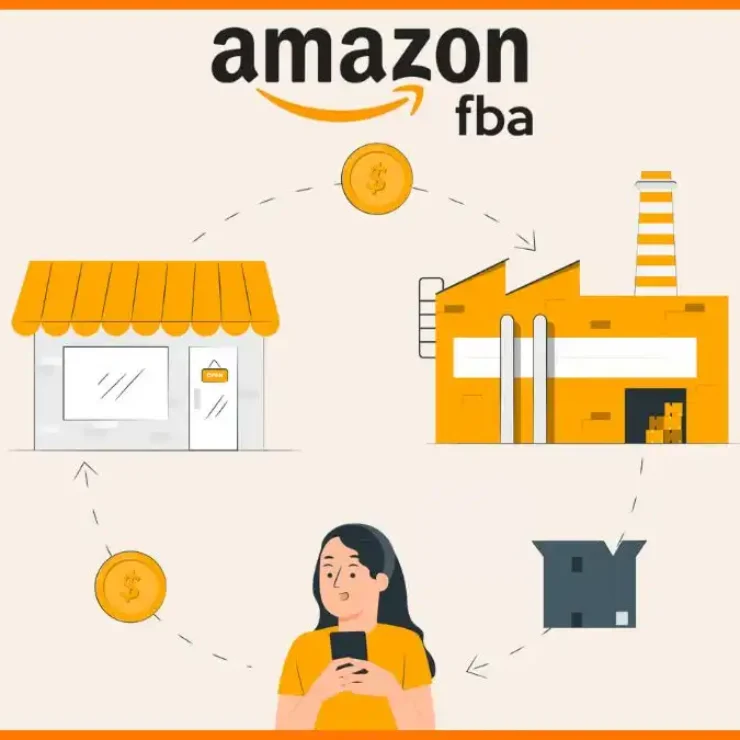


Alibaba to Amazon FBA means sourcing products directly from Alibaba manufacturers, private labeling them, and shipping them into Amazon's fulfillment network to sell under your own brand. The process still works well in 2026, but the cost structure underneath it has moved significantly: import tariffs on Chinese goods remain elevated and continue to shift, and Amazon has discontinued its FBA prep services altogether, meaning your Alibaba supplier's labeling and poly-bagging quality now has zero safety net once inventory ships. A realistic first product needs $2,500–$6,000 in capital, roughly 8–14 weeks from research to first sale, and a minimum 20% net margin after every cost layer — product, tariffs, freight, and Amazon fees — is accounted for.
💡 Key Takeaways
- The effective US tariff on Chinese imports remains elevated in 2026 and continues to shift — treat any published tariff figure as provisional and re-verify it before every reorder, not just your first one.
- Amazon has discontinued its FBA prep services (labeling, poly-bagging) in the US. Every unit you ship must now arrive fully prepped, which raises the stakes on your Alibaba supplier's labeling accuracy dramatically.
- The duty-free exemption that used to apply to small shipments has been eliminated for all countries of origin, including China — every shipment, regardless of value, now requires formal customs entry and duty payment.
- Alibaba's Accio Work AI sourcing agent is a genuinely new tool that has already reached tens of millions of monthly users — most older guides never mention it, and it is worth trying as a supplier shortlisting accelerant.
- The practical fix most sellers skip: build a tariff volatility buffer of several percentage points directly into your margin model, rather than calculating tariffs once and assuming the number holds — rates have shifted multiple times within a single year recently.
- The contrarian insight most sourcing guides get backwards: inspecting your first production run at 80–100% completion is too late to fix systemic defects. A mid-production (DUPRO) inspection at 30–50% completion catches material or construction errors while the factory can still correct the remaining batch.
- Negotiating your case-pack quantity with your supplier before production — not after — can shift your product into Amazon's new "Small Bulky" fee tier (18–37 inches or 20–50 lbs), which carries fees 21–23% lower than Large Standard.
- A realistic net margin target in 2026 is 20–25% after product cost, tariffs, freight, all Amazon fees, and advertising — below 15% leaves no buffer for the fee increases Amazon has introduced every January since 2024.
- If you want the sourcing, tariff calculation, and Amazon account setup handled for you, our Amazon FBA wholesale automation service guarantees a 20–30% profit margin before you commit capital.
📚 Table of Contents
- Is Alibaba to Amazon FBA Still Profitable in 2026?
- What Changed in the Tariff Environment as of July 2026?
- Step 1: Product Research for Amazon FBA
- Step 2: Finding Reliable Suppliers on Alibaba
- Step 3: Ordering and Inspecting Samples
- Step 4: Negotiating Price, MOQ, and Payment Terms
- Step 5: Private Labeling and Customization
- Step 6: Case-Pack Planning for FBA Fee Tiers
- Step 7: Pre-Shipment Inspection Done Right
- Step 8: Shipping from China to Amazon Warehouses
- Step 9: Customs, Duties, and the 2026 Tariff Stack
- Step 10: FBA Prep in the Post-Prep-Service Era
- Step 11: Listing Creation and Launch
- Complete Unit Economics: A Real 2026 Example
- Alternatives to Alibaba for Sourcing
- Frequently Asked Questions
I have sourced products from Alibaba and shipped them into Amazon FBA warehouses across multiple product launches, and I can tell you the strategies that worked in 2023 do not fully translate to 2026. Alibaba to Amazon FBA as a business model still works — it remains one of the most accessible paths to building a real e-commerce brand — but the cost structure underneath it has shifted more in the last twelve months than in the previous four years combined.
This guide walks through every step of how to sell on Amazon from Alibaba in 2026: product research, supplier vetting, sampling, negotiation, private labeling, shipping, customs, and launch. Along the way, I flag the three things most guides get wrong or leave out entirely — the tariff reset that happened days before this article was written, the disappearance of Amazon's FBA prep safety net, and a case-pack negotiation trick that shifts your product into a cheaper Amazon fee tier before you even place your production order.
Is Alibaba to Amazon FBA Still Profitable in 2026?
Yes, but only if you calculate every cost layer before you order inventory, not after. The three forces that have squeezed margins hardest since 2024 are stacking tariffs on Chinese imports, rising Amazon fulfillment fees, and the complete elimination of duty-free small shipments. None of these make the model unprofitable — they make sloppy cost modeling fatal in a way it was not three years ago.
A product that would have cleared 30% net margin in 2023 sourced at the same price today often clears 18–22%, purely from tariff and fee stacking. That is still a workable margin for a well-run FBA business — but it means the sellers who skip the tariff calculation step, or who assume last year's numbers still apply, are the ones who discover a negative-margin product only after their inventory is already sitting in an Amazon warehouse.
The number that separates 2026 from 2023: a product landing at $5.00 FOB from Alibaba effectively cost $5.00–$5.50 landed after duties in 2023. In 2026, the same product with a blended 30–35% tariff rate lands at $6.50–$6.75 before freight is even added. That difference alone can be the gap between a 25% margin product and a 12% margin product on identical unit economics from three years ago.
Before sourcing anything, validate real demand using sold-listing data rather than estimated search volume alone. Our guide on Amazon product research covers the exact process for cross-referencing demand signals, and if you are entirely new to the FBA model, our Amazon FBA for beginners guide is the right starting point before you touch Alibaba at all.
What Changed in the Alibaba to Amazon FBA Tariff Environment in 2026?
Import tariffs on Chinese-origin goods remain significantly elevated compared to a few years ago, and the rate has continued to shift as trade policy evolves — which means any tariff figure you read, including the ranges below, should be treated as a snapshot rather than a fixed number. This volatility is the single biggest reason cost modeling matters more than it used to.
Tariffs on Chinese imports now stack across several layers rather than applying as a single flat rate: a base duty tied to your product's HTS classification, an additional Section 301 tariff that applies broadly to Chinese-origin consumer goods, and in many cases a further trade-policy surcharge layered on top of both. Depending on your product category, these layers combine into a blended effective rate that commonly lands in the 20–40%+ range, with certain strategic categories facing considerably more.
| Tariff Layer | General Rate Range | Notes |
|---|---|---|
| Base import duty | 0–15% | Varies by HTS code classification |
| Section 301 tariff | 7.5–25% | Applies broadly to Chinese-origin consumer and industrial goods |
| Additional trade surcharges | 0–15%+ | Adjusted periodically as trade policy shifts |
| Blended effective rate | 20–40%+ | Varies significantly by product category and current policy |
⚠️ What most guides get wrong: many widely-shared sourcing guides quote a tariff figure once and never revisit it. Because rates on Chinese imports have shifted more than once within recent memory, a tariff number more than a couple of months old should be treated as provisional. Always verify your specific product's current classification and rate at hts.usitc.gov before finalizing a cost projection — and re-check it again before every reorder, not just your first one.
The other major shift worth understanding: the duty-free allowance that used to apply to low-value shipments has been removed. Previously, small parcels under a certain value could enter the US without formal customs processing. That exemption no longer applies, regardless of country of origin, which means even small sample orders now go through full customs entry and incur duty — a cost that used to be effectively invisible to sellers testing products in small batches.
A more resilient way to model cost: rather than calculating tariff cost once and locking in a retail price around it, build a margin buffer of several percentage points specifically to absorb future tariff movement. Sellers who price a product to clear exactly 20% margin at today's rate have no room left if the rate moves against them before their next reorder. Sellers who price in a buffer can absorb a shift without an emergency price change that confuses returning customers.
Step 1: How Do You Research Products for Alibaba to Amazon FBA?
You research Alibaba to Amazon FBA products by validating five criteria simultaneously: retail price range, weight and dimensions, review barrier, regulatory simplicity, and true landed cost as a percentage of retail price. Skipping any one of these is the single most common reason first products fail to reach profitability.
Ideal Product Criteria for 2026
- Retail price between $18 and $50 — high enough for healthy margin after the current tariff stack, low enough to remain an impulse purchase
- Under 2 lbs and under 18 inches on the longest side, or structured to land inside Amazon's new Small Bulky tier (see Step 6)
- Monthly search volume of at least 3,000 for your primary keyword, cross-checked using our guide on the best products to sell on Amazon FBA
- Top 10 competing listings averaging under 500 reviews — a genuine indicator of an accessible entry point rather than an entrenched category
- Low regulatory complexity — avoid FDA-regulated goods, children's products, and complex electronics for your first product
- Landed cost (product + freight + tariffs) under 30% of your target retail price, which is the realistic threshold in 2026's tariff environment, up from the 25% ceiling that applied before this year's tariff changes
Cross-reference demand estimates using at least two independent tools before committing capital — single-source data is frequently wrong, but agreement across multiple platforms meaningfully raises your confidence. Once you have a shortlist, understanding how an Amazon ASIN number reveals a listing's sales history over time helps you separate a genuinely stable seller from a recent, unsustainable spike.
A red flag most beginners miss: if the top 3 organic results for your target keyword are Amazon's own private label brands (Amazon Basics, Amazon Essentials, Solimo), you cannot realistically win the Buy Box against them in a standard pricing scenario. Check this before you source, not after your first shipment lands.
Step 2: How Do You Find Reliable Suppliers on Alibaba?
You find reliable Alibaba suppliers by combining specific search terms with four non-negotiable filters: Trade Assurance, Verified Supplier status, 3+ years on the platform, and an 85%+ response rate. Alibaba.com now hosts over 40 million active international buyers and hundreds of thousands of suppliers, which makes efficient filtering essential rather than optional.
Use precise, descriptive search terms. Searching "double-wall vacuum insulated stainless steel water bottle 500ml BPA-free" returns dramatically more relevant, comparable suppliers than searching "water bottle" alone. After searching, apply these filters before contacting anyone:
- Trade Assurance: Always activate this filter — it provides payment protection and built-in dispute resolution on qualifying orders
- Verified Supplier: Confirms Alibaba has independently audited the company's identity, business registration, and factory capabilities
- Supplier type: Select "Manufacturer" over "Trading Company" for better pricing and direct customization control on most first products
- Years in business: Prioritize 3+ years on the platform
- Response rate: Look for 85%+, a strong indicator of active, reliable communication
What Is Alibaba's Accio Work AI Sourcing Agent, and Should You Use It?
Accio Work is Alibaba's autonomous AI sourcing agent, and it is worth trying for supplier shortlisting even though it should not replace your own vetting process. It has been adopted rapidly since launch, already surpassing tens of millions of monthly active users. It can manage product listings, track supplier performance metrics, and negotiate initial terms with suppliers using natural-language commands — functionally acting as a first-pass filter across thousands of suppliers faster than manual browsing allows.
The realistic use case: let Accio Work narrow 200 potential suppliers down to a shortlist of 10–15 based on your specifications, then apply your own manual vetting — sample orders, video factory tours, and third-party inspection — to that shortlist. Treat it as a research accelerant, not a replacement for direct supplier verification.
Manufacturer vs. Trading Company: Which Should You Choose?
Choose a manufacturer for most first products because it delivers lower unit pricing and direct customization control, even though minimum order quantities are typically higher. Trading companies make sense when you need smaller MOQs, want to source multiple unrelated product types from a single point of contact, or require stronger English-language communication than a factory floor manager typically provides.
| Factor | Manufacturer | Trading Company |
|---|---|---|
| Unit pricing | Lower (factory-direct) | 10–30% higher (markup added) |
| Minimum order quantity | Higher (500–2,000+) | More flexible (100–500) |
| Customization ability | Extensive, direct control | Limited, depends on factory partner |
| Product range | Narrow, specialized | Wide, multi-factory sourcing |
| Quality oversight | Direct factory control | Indirect oversight |
Supplier Verification Checklist
Before any payment leaves your account, confirm each of the following:
- Trade Assurance coverage matches or exceeds your anticipated order value
- Business license and export license copies provided on request
- Real factory photos and video — not stock imagery — or a live video factory tour
- Manufacturing certifications appropriate to your category (ISO 9001, BSCI, or SA8000)
- Product-specific certifications for your target market (FCC, CE, CPSIA, CPSC where applicable)
- Prior experience shipping directly to Amazon FBA warehouses, with references from other Amazon sellers if possible
Step 3: How Do You Order and Evaluate Samples from Alibaba?
You order samples from your top 2–3 candidate suppliers simultaneously so you can compare build quality, packaging, and responsiveness side by side, rather than sequentially evaluating one supplier at a time. Never place a production order without physically evaluating a sample first, regardless of how strong a supplier's ratings or communication appear.
Budget $20–$200 per sample depending on product complexity, plus $30–$80 for express shipping per sample — and remember that with the de minimis exemption fully eliminated, even these small sample shipments now incur formal customs duties, a cost that used to be negligible for test orders under $800.
When your samples arrive, evaluate against this framework:
- Build quality: check for loose components, rough edges, or cheap-feeling materials
- Specification accuracy: verify dimensions, weight, color, and function match the supplier's stated listing
- Packaging durability: will it survive international shipping and Amazon warehouse handling without damage
- Precise measurements: weigh and measure every dimension, since this directly determines your FBA fee tier (see Step 6)
- Competitor comparison: buy 2–3 competing Amazon products and compare them directly against your sample
If a sample falls short, send detailed written feedback with photos and request a revised sample. A quality supplier iterates; one that resists improvement or becomes defensive is a signal to move to another factory before you commit to a production order.
Step 4: How Do You Negotiate Price, MOQ, and Payment Terms on Alibaba?
You negotiate effectively on Alibaba by requesting tiered pricing across multiple quantity breaks, proposing structured payment terms, and framing the relationship as a long-term partnership rather than a single transaction. Alibaba suppliers expect negotiation — their initial quote is rarely their final price.
- Request tiered pricing: ask for price breaks at 500, 1,000, 2,000, and 5,000 unit quantities so you understand your margin curve at scale
- Negotiate payment terms: propose 30% deposit, 70% before shipment as a starting structure; established suppliers may offer net-30 on repeat orders
- Bundle additional value: beyond unit price, negotiate for free samples, reduced first-order MOQ, included custom packaging, or free FNSKU labeling
- Clarify shipping terms: understand FOB (supplier delivers to port, you handle freight onward) versus EXW (you arrange everything from the factory door) — FOB is the standard, more convenient choice for most sellers
Alibaba Payment Methods Compared
| Payment Method | Buyer Protection | Transaction Fee | Best Use Case |
|---|---|---|---|
| Trade Assurance | High — built-in dispute resolution | 0–3% | First orders, new supplier relationships |
| PayPal | High — buyer protection policy | 3–5% | Sample orders, small initial orders |
| Wire Transfer (T/T) | Low — difficult to reverse | $15–$50 flat | Established suppliers with proven track record |
| Letter of Credit | Very high — bank-guaranteed | Varies by bank | Large orders exceeding $10,000 |
Default to Trade Assurance or PayPal for any new supplier relationship. Only transition to wire transfers after 2–3 successful orders with consistent quality. Building your Amazon pricing strategy around the tiered pricing you negotiate here ensures your retail price already accounts for the cost curve as you scale order volume.
Step 5: How Do You Private Label and Customize Products from Alibaba?
You private label an Alibaba product by working with manufacturers offering OEM or ODM services to add your logo, custom packaging, and brand identity to an existing product design — transforming a generic factory item into a listing you own and control. This is what separates brand builders from resellers competing purely on price.
What Can You Customize?
- Logo placement (engraving, printing, embossing)
- Custom color and material options
- Custom retail packaging, including boxes, inserts, and thank-you cards
- Modified dimensions or feature sets
- Bundling multiple items into a single SKU
| Customization Type | Additional Cost/Unit | Perceived Value Impact |
|---|---|---|
| Logo printing/engraving | $0.05–$0.30 | Moderate |
| Custom retail box | $0.30–$1.50 | High |
| Custom color/material | $0.10–$0.50 | Moderate |
| Product insert card | $0.03–$0.10 | Low to moderate |
| Custom product mold | $500–$5,000 one-time | Very high |
Register your brand through Amazon Brand Registry before or shortly after launch. Brand Registry unlocks A+ Content, Sponsored Brand ads, Vine access, and listing hijacker protection — all of which contribute directly to conversion rate and long-term listing defensibility. If your long-term plan includes a standalone brand presence beyond the product listing itself, our guide on creating an Amazon Storefront covers building that out once Brand Registry is approved.
Step 6: How Does Case-Pack Planning Affect Your Amazon FBA Fees?
Case-pack planning affects your Amazon FBA fees because the carton dimensions and per-unit weight you negotiate with your Alibaba supplier before production determines which FBA size tier your product falls into — and that tier decision can shift your fulfillment fee by 20% or more before you have sold a single unit. This is the step nearly every sourcing guide skips entirely, because it treats packaging as a retail-unit concern rather than an Amazon logistics decision.
Amazon's 2026 fee schedule introduced a new "Small Bulky" size tier covering products between 18–37 inches on the longest side or 20–50 lbs — items that previously fell into the more expensive Large Standard or Large Bulky tiers. Products that qualify for Small Bulky see fulfillment fee decreases of roughly 21–23% compared to their previous classification.
The tradeoff most sellers miss: if your product sits close to a size-tier boundary — say, 19 inches on its longest side when Small Standard tops out at 18 — you can often negotiate a molded product redesign or repositioned packaging with your Alibaba supplier at the sampling stage for a few cents per unit, and the resulting fee-tier drop can be worth several times that cost across your first year of sales. Once your mold is finalized and thousands of units are in production, this option disappears. Raise it during sample review, not after your first shipment plan is created.
Practically, this means requesting exact carton and unit dimensions from your supplier at the sample stage, running those measurements through Amazon's fee calculator before finalizing your production order, and adjusting packaging design if you are within a few inches or pounds of a cheaper tier boundary. Reviewing Amazon's FBA packaging requirements alongside your supplier's proposed carton specification catches both compliance issues and fee-tier opportunities in the same review pass.
Step 7: When Should You Schedule Quality Inspection, and Is the Standard Advice Wrong?
Standard advice tells you to schedule inspection when production reaches 80–100% completion — but for a first order with a new, unproven supplier, that timing is often too late to fix anything meaningful. By the time 80% of units are finished, a systemic defect — wrong material grade, incorrect color match, a functional flaw in the assembly process — is already baked into most of your batch, leaving you with rework costs or a batch you cannot sell.
The more defensive approach for a first-time relationship with any factory: schedule a During Production (DUPRO) inspection at 30–50% completion in addition to your final pre-shipment check. A DUPRO inspection catches the same category of defect while the factory can still correct the remaining 50–70% of the run, rather than discovering the problem only after it is uniform across the entire order.
| Inspection Type | Timing | What It Catches | Cost |
|---|---|---|---|
| DUPRO (During Production) | 30–50% completion | Systemic material, color, or construction defects — while correctable | $200–$350 |
| Pre-Shipment Inspection | 80–100% completion | Final quantity, cosmetic defects, packaging integrity, AQL sampling | $200–$400 |
For established suppliers with a proven track record across multiple successful orders, a single pre-shipment inspection is usually sufficient. For any first order with a new factory, the additional $200–$350 for a DUPRO check is inexpensive insurance against discovering a systemic problem only after 100% of your inventory is finished and non-refundable.
What Should a Pre-Shipment Inspection Cover?
- Quantity verification against your purchase order
- Dimensions, weight, color, and material verification against your specification sheet
- Functional testing — does every feature work as specified
- Cosmetic defect check for scratches, dents, discoloration, or uneven finishes
- Packaging integrity and correct FNSKU labeling placement
- AQL (Acceptable Quality Level) sampling at Level II, 2.5 major / 4.0 minor defect rate
Third-party inspection services typically charge $200–$400 per visit, covering China with 24–72 hour report turnaround depending on the provider. Compared to the cost of receiving thousands of defective units into an Amazon warehouse, this is one of the highest-return expenses in the entire sourcing process.
Skip the Sourcing Guesswork Entirely
Our team handles supplier vetting, product analysis, ROI estimation, and order placement for you — with a guaranteed 20–30% profit margin on your wholesale purchases before you commit capital.
Step 8: What Are Your Shipping Options from China to Amazon Warehouses?
Your shipping method from China to Amazon FBA warehouses should match your order size and urgency — sea freight for large, non-urgent orders, air freight or express courier for smaller or time-sensitive shipments. Choosing incorrectly affects landed cost, delivery timeline, and how quickly your capital cycles back into the next order.
| Method | Cost Range | Transit Time | Best For |
|---|---|---|---|
| Sea Freight (FCL) | $2,500–$5,000/container | 20–35 days | Large orders, 500+ bulky units |
| Sea Freight (LCL) | $150–$500/CBM | 25–40 days | Smaller volumes sharing container space |
| Air Freight | $5–$10/kg | 5–10 days | Medium orders needing faster delivery |
| Express Courier | $6–$15/kg | 3–7 days | Samples, small orders, urgent restocks |
FOB vs. DDP: Which Shipping Term Should You Choose?
Choose DDP (Delivered Duty Paid) for your first 1–2 orders, then transition to FOB (Free on Board) once you have an established freight forwarder relationship. DDP means your supplier or their freight forwarder manages everything from factory to Amazon's warehouse door, including customs and duties — simpler, but typically 10–20% more expensive with less cost transparency. FOB means the supplier delivers only to the departure port, and you handle ocean freight, customs clearance, and last-mile delivery yourself — more control over costs and carrier selection, and usually 15–25% cheaper once you have the relationships in place to manage it.
Several cost factors move your total freight bill significantly: product weight versus dimensional weight (carriers charge whichever is higher), your origin port in China, seasonal surcharges of 20–40% from August through October ahead of Q4, and Amazon's inbound placement fee, which now applies whenever Amazon distributes your inventory across multiple fulfillment centers rather than a single location.
Step 9: How Do Tariffs Affect Your Real Alibaba to Amazon FBA Unit Cost?
Tariffs affect your real unit cost by adding a compounding percentage on top of your FOB product price before any freight, customs brokerage, or Amazon fees are even calculated — and in 2026's environment, that addition frequently runs a quarter or more of your base product cost. Here is a worked example showing how the current tariff stack applies to a $5.00 FOB product.
| Cost Component | Amount | Calculation Basis |
|---|---|---|
| Product cost (FOB China) | $5.00 | Supplier quoted price |
| Base import duty (avg) | $0.25 | ~5% HTS-specific rate |
| Section 301 tariff | $0.38 | ~7.5% on consumer goods category |
| Additional trade surcharge | $0.63 | ~12.5%, subject to change with policy |
| Total tariff cost per unit | $1.26 | ~25% added to base product cost |
| Landed product cost (pre-freight) | $6.26+ | Excluding freight and customs brokerage fees |
This example uses a consumer-goods rate profile; products falling under a different Section 301 category can face a substantially higher tariff addition. Always verify your specific HTS code classification at hts.usitc.gov before finalizing your cost model — the wrong classification risks both overpaying and, in the opposite direction, facing penalties for underpayment.
What changed for sample orders specifically: with the duty-free allowance for low-value shipments now removed, even a single $50 sample order from Alibaba requires formal customs entry and duty payment. Budget this into your sampling costs — it used to be effectively free for small test orders.
Step 10: How Do You Handle FBA Prep Now That Amazon No Longer Offers It?
You handle FBA prep in 2026 by ensuring your Alibaba supplier completes FNSKU labeling and poly-bagging correctly before the shipment ever leaves the factory, because Amazon has discontinued its own FBA prep and labeling service in the US. Every unit you send to an Amazon fulfillment center must now arrive fully prepped — there is no longer a fallback option where Amazon fixes labeling errors for a fee.
This is a genuinely significant shift that many sourcing guides have not caught up to, and it changes the calculus of what to negotiate with your supplier. Previously, an imperfectly labeled shipment was an inconvenience — Amazon's prep service could correct it, at a cost. Now, a labeling error discovered after your inventory arrives at an Amazon warehouse can mean your entire shipment is rejected or delayed indefinitely while you arrange third-party correction.
What Every Unit Must Have Before It Ships
- FNSKU barcode label: the unique identifier linking each unit to your seller account, scannable and correctly placed — verify placement position with your supplier explicitly, not just presence
- Poly-bagging: required for items with loose parts, textiles, liquids, or anything that could be contaminated or damaged in transit
- Suffocation warning: mandatory on any poly-bag opening 5 inches or larger
- Bubble wrap or overboxing: required for fragile products
- Carton weight: under 50 lbs per standard shipping box
⚠️ The practical consequence of the prep service removal: your pre-shipment inspection (Step 7) now needs to explicitly verify prep compliance as its own checklist item, not as an afterthought. Many experienced Alibaba suppliers with FBA experience can handle FNSKU labeling and poly-bagging at the factory for $0.10–$0.30 per unit — confirm this capability and inspect it directly during your pre-shipment check, since there is no longer an Amazon-side correction available if it is wrong.
If your supplier cannot reliably handle prep, routing your shipment through a US-based prep center or freight forwarder before it reaches Amazon adds a cost layer but restores the quality checkpoint that Amazon itself used to provide. For sellers managing this at scale, pairing solid inventory management software with a reliable prep workflow prevents the kind of shipment rejection that stalls a launch during its most critical early weeks.
Step 11: How Do You Create a Listing and Launch Your Product on Amazon?
You create a converting Amazon listing by combining a keyword-optimized title, five benefit-driven bullet points, 7–9 professional images, and Brand Registry-enabled A+ Content — then launching with a structured 30–60 day PPC and review-generation plan rather than hoping for organic discovery alone.
Core Listing Elements
- Title: primary keyword placed naturally, followed by brand name, key features, size, and quantity, staying under 200 characters
- Bullet points: five benefit-driven bullets covering primary features, use cases, and differentiators
- Images: 7–9 images including a white-background main photo, lifestyle context shots, and feature infographics — our guide on Amazon image requirements covers the exact technical specifications each image type must meet
- Backend search terms: relevant keywords that do not fit naturally into visible listing copy
For the keyword research and on-page structure behind these elements, our guides on Amazon SEO and how to boost Amazon listings cover the ranking mechanics in depth.
Launch Strategy for New Products in 2026
- Launch Amazon PPC automatic campaigns at $25–$50 daily to collect initial keyword performance data, then build manual campaigns around your top 15–20 converting search terms
- Enroll in Amazon Vine to generate early, credible reviews from verified reviewers
- Use promotional pricing or limited-time coupons to accelerate initial sales velocity during your critical first 30 days
- Drive external traffic through social platforms, tracked using our Amazon Attribution guide to measure which off-Amazon channels actually convert
- Stock enough inventory to survive your launch window without stocking out — running out during the critical ranking period kills momentum that takes months to rebuild
Managing PPC efficiently at this stage matters enormously for margin; using dedicated Amazon PPC software or working with an Amazon marketing service reduces the wasted ad spend that new sellers typically incur during their first 60–90 days of campaign optimization.
Pricing your first listing: set your price based on your full cost model from Steps 1–9, not simply matched to the lowest competitor. Reference tools like our Amazon repricer tools guide once you have multiple SKUs and want to automate competitive pricing without manually monitoring the Buy Box daily.
Complete Unit Economics: A Real 2026 Alibaba to Amazon FBA Example
Understanding your full cost structure before ordering inventory prevents the single most common reason new sellers fail: discovering a negative-margin product only after the inventory is already sitting in an Amazon warehouse. The example below models a $24.99 Amazon selling price, sourced from Alibaba at $4.50 FOB per unit, using the current 2026 tariff and fee environment.
| Cost Component | Amount/Unit | % of Sale Price |
|---|---|---|
| Product cost (Alibaba FOB) | $4.50 | 18.0% |
| Freight (sea, amortized) | $1.00 | 4.0% |
| Customs duties and tariffs (~30% blended) | $1.35 | 5.4% |
| Amazon referral fee (15%) | $3.75 | 15.0% |
| FBA fulfillment fee | $3.80 | 15.2% |
| FBA monthly storage (average) | $0.25 | 1.0% |
| Inbound placement fee | $0.35 | 1.4% |
| PPC advertising (mature listing average) | $2.25 | 9.0% |
| Prep and labeling (post-service elimination) | $0.25 | 1.0% |
| Returns and refunds (5% estimated rate) | $1.25 | 5.0% |
| Total costs | $18.75 | 75.0% |
| Net profit per unit | $6.24 | 25.0% |
This assumes a mature, optimized listing. During your first 60–90 days, expect advertising costs to run 30–50% higher and net margins to be correspondingly thinner while your campaigns and organic ranking are still developing.
Startup Budget for a First-Time Alibaba to Amazon FBA Seller
| Expense Category | Estimated Range |
|---|---|
| Product samples (from 2–3 suppliers, duties included) | $120–$450 |
| First inventory order (200–500 units) | $1,000–$3,000 |
| International shipping (first order) | $300–$800 |
| Customs duties and tariffs | $300–$900 |
| Amazon Professional seller account | $39.99/month |
| Product photography | $150–$500 |
| DUPRO + pre-shipment inspection | $400–$650 |
| UPC/GTIN barcode | $30 |
| PPC launch budget (first 30 days) | $500–$1,500 |
| Brand Registry trademark filing | $250–$350 |
| Total estimated startup investment | $3,090–$8,220 |
Starting at the lower end is possible with fewer units and self-managed photography, but this limits your product options and the sales data you gather during the launch window. Building a full Amazon Seller Central account setup correctly from day one avoids costly configuration mistakes that compound as you scale.
Are There Alternatives to Alibaba for Sourcing Amazon FBA Products?
Yes, several sourcing alternatives exist depending on your product type, volume, and tariff exposure tolerance, and diversifying beyond China-only sourcing has become more relevant as tariff volatility continues into late 2026.
| Platform | Best For | Typical MOQ | Key Advantage |
|---|---|---|---|
| 1688.com | Experienced sellers comfortable with Chinese-language interfaces | 50–100 units | Domestic Chinese pricing, 20–40% below Alibaba |
| GlobalSources | Electronics and tech accessories | 500+ units | Verified manufacturers, higher quality floor |
| IndiaMART | Textiles, leather goods, handicrafts | 100–500 units | Tariff diversification away from China |
| ThomasNet | US-based manufacturing | Varies | Zero China-tariff exposure, faster domestic shipping |
If your model leans toward reselling existing inventory rather than private labeling new products, Amazon retail arbitrage and tools like retail arbitrage apps represent a fundamentally different sourcing model worth understanding before committing fully to the Alibaba private-label path. Similarly, some sellers combine Alibaba sourcing with a parallel Amazon dropshipping suppliers strategy to test demand before committing to bulk inventory, and understanding the distinction between 1P vs 3P selling and Fulfilled by Merchant helps clarify which fulfillment model fits your specific product and cash flow situation.
Frequently Asked Questions About Alibaba to Amazon FBA
How much money do I need to start an Alibaba to Amazon FBA business in 2026?
Most sellers invest between $3,000 and $8,000 to launch their first product in 2026, covering samples, an initial order of 200–500 units, shipping, current tariff duties, product photography, inspection, and a basic PPC launch budget. This range runs higher than in previous years because the current tariff environment and Amazon's recent fee changes both increase landed cost. Starting with less is possible but limits your product selection and marketing runway during the critical first 90 days.
Is private label or wholesale better for sourcing from Alibaba?
Private label is generally the stronger long-term model for Alibaba sourcing because you control the brand, the listing, and the pricing, rather than competing against other sellers on an identical product. Our guide on Amazon FBA private label covers the full comparison against wholesale sourcing, where you sell established third-party brands under their existing listings rather than building your own. Private label requires more upfront customization work; wholesale requires less branding effort but leaves you competing on price against other authorized sellers of the same product.
How long does the entire Alibaba to Amazon FBA process take?
Expect 8–14 weeks total from initial product research to your first Amazon sale in 2026. This typically breaks down as 1–2 weeks for product research, 1–2 weeks for supplier outreach and shortlisting, 1–2 weeks for sample evaluation, 2–4 weeks for production including any DUPRO inspection, 2–5 weeks for shipping depending on method, and 3–7 days for Amazon to receive and activate your inventory. Sea freight shipments during Q3 seasonal surcharge periods (August–October) can extend this timeline further.
What profit margin should I target selling Alibaba products on Amazon in 2026?
Target a minimum net profit margin of 20% after accounting for every cost layer: product, freight, tariffs, Amazon referral fee, FBA fulfillment fee, storage, PPC advertising, and estimated returns. Products clearing below 15% leave almost no buffer against Amazon's annual January fee increases or a competitor price war. Monitoring your Amazon ACoS closely during your launch phase is essential, since advertising cost is typically the single largest variable expense working against your target margin in the first 90 days.
Can my Alibaba supplier ship directly to Amazon FBA warehouses?
Yes, many experienced suppliers ship directly to Amazon fulfillment centers, provided you give them your shipping plan details, FNSKU label files, and Amazon carton ID labels. However, since Amazon no longer offers its own FBA prep services, routing shipments through a freight forwarder or US-based prep center first gives you an additional quality checkpoint before inventory enters Amazon's system — a safeguard that matters more now than it did when Amazon could still correct labeling errors itself.
What is the current tariff rate on products sourced from Alibaba in 2026?
The blended effective US tariff on Chinese-origin goods commonly falls in the 20–40%+ range in 2026, though the exact figure depends heavily on your product's classification and continues to shift as trade policy evolves. Consumer goods generally face a lower base rate than industrial or strategically sensitive categories. Always verify your specific product's classification at hts.usitc.gov rather than relying on a figure from an older article, since this rate has moved more than once and will likely continue to.
What happens if my first Alibaba-sourced product does not sell well on Amazon?
If your first product underperforms, resist the urge to immediately reorder or aggressively discount before diagnosing whether the issue is demand, listing quality, or price competitiveness. Review your keyword ranking data, conversion rate, and PPC performance separately to identify the actual bottleneck. Some sellers use a slow first launch as a signal to diversify into an entirely different, lower-capital niche temporarily — even a niche as different as our guide on selling used books on Amazon illustrates how much lower-capital alternatives exist on Amazon outside the Alibaba sourcing model while you refine your primary product strategy.
Should I use a sourcing agent instead of contacting Alibaba suppliers directly?
Sourcing agents typically add 5–10% to your product cost but provide meaningful value for first-time importers, handling supplier vetting, factory communication, quality monitoring, and shipping coordination. As you gain experience and build direct supplier relationships, managing the process yourself becomes more cost-effective. Alibaba's own Accio Work AI sourcing agent now handles some of this initial shortlisting work at no additional cost, though it should supplement rather than replace direct verification steps like sample review and factory video tours.
Final Verdict: Is Alibaba to Amazon FBA Worth It in 2026?
Alibaba to Amazon FBA remains a genuinely viable path to building an e-commerce brand in 2026, but it now requires more precise cost modeling than it did even eighteen months ago. The sellers who succeed are the ones treating tariff calculation, FBA fee-tier planning, and inspection timing as core parts of product research — not administrative afterthoughts handled after the sourcing decision is already made.
The shifts covered in this guide — the ongoing tariff volatility, Amazon's elimination of FBA prep services, and the case-pack fee-tier opportunity most sellers never think to negotiate — are the details separating a 25% margin product from a 12% margin product on paper-identical unit economics. None of them make the model unworkable. They make disciplined execution the actual competitive advantage in 2026, more so than simply finding a product nobody else has found yet.
The single number worth remembering: a 20% net margin floor, calculated after every cost layer in this guide, is what separates a sustainable Alibaba to Amazon FBA product from one that a single fee increase or tariff adjustment can push into the red. Model that number before you place your first production order, not after.
Let Us Handle Your Alibaba to Amazon FBA Launch
From supplier sourcing and ROI estimation to order placement, prep coordination, and ongoing account management — our team handles the full process with a guaranteed 20–30% profit margin on your wholesale purchases.