
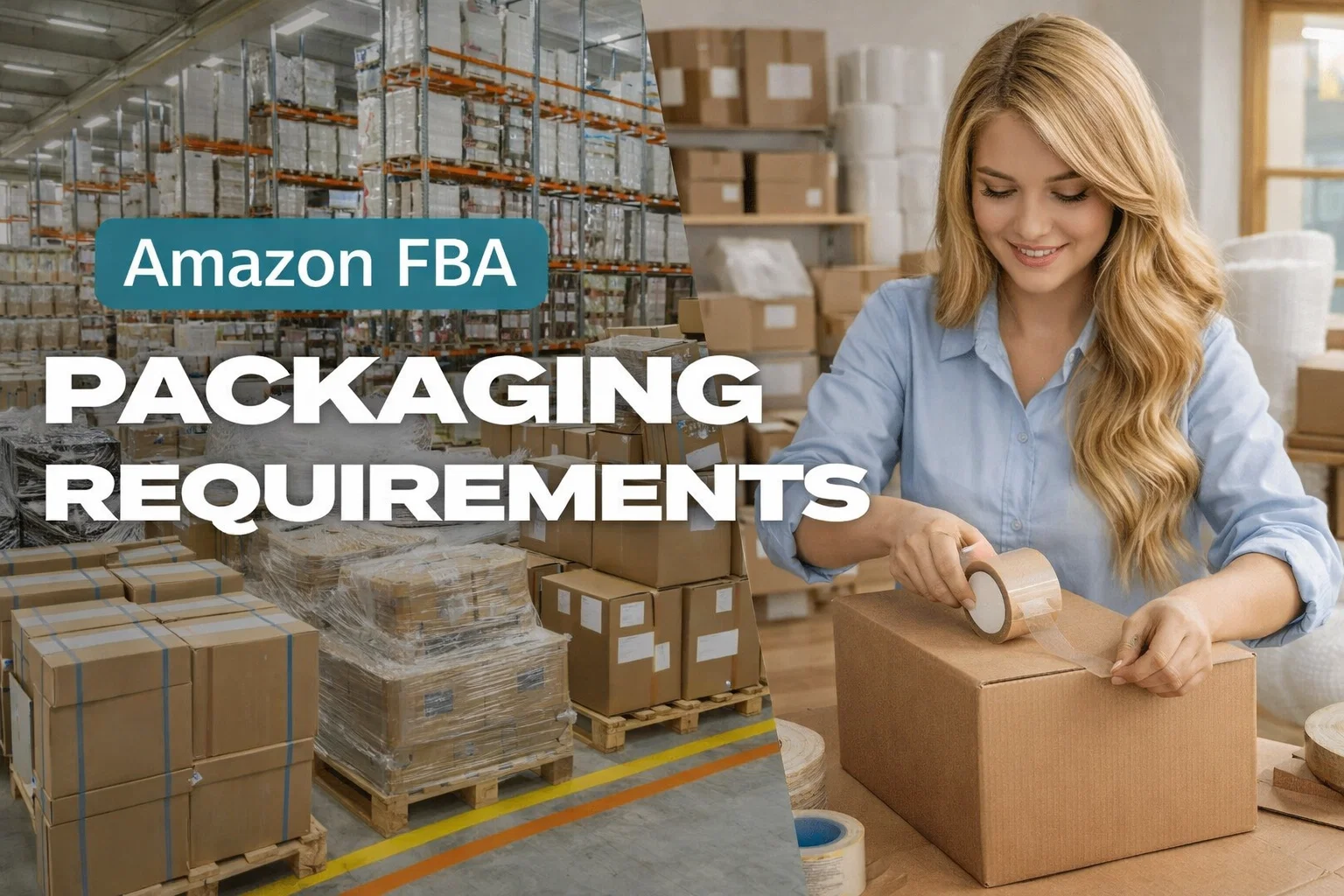
Understanding Amazon FBA packaging requirements is essential for every seller using Fulfillment by Amazon (FBA). Amazon enforces strict packaging and labeling standards to ensure products arrive safely, move efficiently through fulfillment centers, and meet customer safety expectations. Sellers who fail to comply risk inventory rejection, unexpected prep fees, delayed check-ins, or even product disposal.
This guide provides a clear, practical breakdown of how to pack items for Amazon FBA based on current Amazon policies. Each section is structured for fast scanning, factual accuracy, and easy reference—making it useful for day-to-day operations, audits, and training.
If you sell through FBA, understanding and applying Amazon’s packaging requirements is essential to avoiding unnecessary costs and keeping your inventory moving without interruption.
Learn how to list and sell used items effectively on Amazon, reach the right buyers, and maximize your earnings in 2026.
Why Proper FBA Packaging Is Critical for Sellers
Proper packaging is a core operational requirement for sellers using Fulfillment by Amazon. Meeting Amazon FBA packaging requirements directly impacts inventory acceptance, fulfillment speed, seller costs, and account performance. Even small packaging errors can lead to measurable financial and operational consequences.
Prevents Inventory Rejection at Fulfillment Centers
Amazon fulfillment centers inspect inbound inventory upon arrival. If products do not meet packaging or labeling standards, Amazon may:
-
Reject the shipment
-
Place inventory into unplanned prep
-
Return or dispose of non-compliant units
Rejected or delayed inventory results in lost sales opportunities, especially during high-demand periods.
Reduces Unplanned Prep and Penalty Fees
When inventory arrives improperly packaged, Amazon may repackage or relabel products on the seller’s behalf. These services trigger unplanned prep fees, which are significantly higher than planned or seller-prepped costs.
Consistent compliance helps sellers:
-
Avoid unnecessary prep charges
-
Maintain predictable fulfillment costs
-
Improve overall profit margins
Protects Products from Damage During Fulfillment
FBA inventory is handled multiple times—during inbound receiving, storage, picking, packing, and outbound shipping. Packaging that fails to protect products can result in:
-
Breakage or leakage
-
Customer returns
-
Negative product reviews
Amazon’s packaging rules are designed to reduce damage risk throughout this process.
Improves Customer Experience and Return Rates
Proper packaging ensures customers receive products in acceptable condition. Damaged or poorly packaged items lead to:
-
Higher return rates
-
Lower seller ratings
-
Reduced Buy Box competitiveness
Amazon prioritizes customer satisfaction, and packaging quality plays a direct role in post-purchase experience.
Maintains Account Health and Compliance
Repeated violations can negatively affect a seller’s account. Ongoing non-compliance may trigger:
-
Performance notifications
-
Listing suppression
-
Restrictions on FBA privileges
Maintaining proper packaging standards helps sellers remain in good standing and avoid account-level risks.
Supports Faster Inventory Check-In and Availability
Compliant packaging allows Amazon to process inbound shipments efficiently. Correctly packed and labeled inventory moves faster through:
-
Receiving
-
Sorting
-
Storage assignment
Faster check-in means products become available for sale sooner, improving cash flow and inventory turnover.
Discover how to perform Amazon product research in 2026 to identify profitable products and stay ahead of competitors.
Amazon FBA Packaging Requirements
Amazon requires strict compliance with FBA packaging rules to ensure inventory arrives safely and is processed without delay.
-
Products must be individually contained or secured (no loose, unwrapped items) with scannable labels, and protected against damage.
-
Boxes must be rigid six-sided cartons with intact flaps.
-
Each box must bear the correct FBA shipping label(s):
-
one unique FBA Box ID label on each carton
-
(for pallets) four Pallet ID labels on the sides
-
-
Reused boxes should have all old labels/barcodes removed or obscured to avoid scanning errors.
-
Sellers should wrap each item individually with cushioning (e.g. bubble wrap or paper), and leave no void space (Amazon recommends ≥2″ of padding around items).
-
After packing, gently shake the box: contents must not shift.
Barcode & Labels:
-
Every unit must have a unique scannable barcode (FNSKU or manufacturer UPC/EAN) on the exterior of its packaging.
-
Amazon strongly encourages using FNSKU labels (Amazon barcodes) on each item so inventory is uniquely tracked.
-
No package may display more than one visible barcode – cover or remove extra codes on boxes or packaging to prevent mis-scans.
-
For multi-unit “sold as one set” items, mark the unit “Sold as Set” (or similar) so Amazon treats it as a single item.
Box Conditions:
-
Boxes must not collapse under moderate pressure and should survive a 3-foot drop test on all sides.
-
If any box has perforations or openings (such as a window or lid), the item must pass Amazon’s drop test; if it fails, the item must be bagged or over-boxed.
-
Footwear must be boxed or poly-bagged with no shoe material exposed.
-
Clothing and textiles should be sealed in plastic (see below).
-
Toys or sets should stay intact.
-
All hangers must be removed from apparel (except tiny baby hangers) before shipment.
Weight & Dimensions:
-
Each shipping carton must be within Amazon’s size/weight limits:
-
no side longer than 25″ (previously)
-
no more than 50.0 lb per carton for standard-size items
-
-
Update: As of June 20, 2025, the maximum length increased to 36″ (while width and height remain 25″).
-
Oversize items (by themselves) may exceed these limits, but if any box contains an item over 50 lb, it must be labeled “Team Lift” (over 50 lb) or “Mechanical Lift” (over 100 lb) on top and sides.
-
Jewelry/watch cartons have a stricter 40 lb limit.
-
Boxes exceeding size/weight caps can be refused or incur extra fees.
-
For pallet shipments, each pallet must also have the required FBA Pallet ID labels (one per side).
Amazon limits inbound box size and weight to ensure safe handling:
-
standard cartons must be ≤25″ on any side (soon 36″ for one side), and ≤50 lb (with heavier items labeled)
Integrate Shopify with Amazon, sync inventory, automate listings, and boost sales across both platforms with this 2026 guide.
Product-Specific Packaging
Amazon imposes special rules for certain product types to protect items and handlers:
Fragile/Breakable Items:
-
Products that “could be easily damaged during transit” (e.g. glassware, ceramics, ornaments) must be individually bubble-wrapped or contained in a six-sided box.
-
Bubble wrap must tightly cover the item and be taped closed so nothing falls out.
-
The wrapped package needs an exterior barcode and must pass a 3-foot drop test without damage.
-
If a fragile item fails testing, it must be bubble-wrapped and over-boxed (placed inside another box).
-
Sharp items (like knives or pointed tools) must also be bubble-wrapped and/or over-boxed to prevent punctures.
-
Items over 10 lb should use double-wall corrugated boxes for strength.
Liquids:
-
Bottles and liquid containers must be sealed and leak-proof.
-
Amazon recommends cap-sealing liquid products and placing them in a clear poly bag (with suffocation warning) if possible.
-
In particular, hazardous liquids (e.g. flammable or pressurized) or any glass bottles over 4.2 oz must be over-boxed.
-
Label these packages as required by regulations.
-
In short, “cap sealing” is required for liquids to prevent spills.
Polybagged Apparel & Soft Goods:
-
All clothing, textiles, and soft goods (including shoes, socks, etc.) should be individually sealed.
-
Use poly bags to protect them from dirt and damage.
-
Bags must be clear (transparent) and at least 1.5 mil thick.
-
If a bag’s opening is 5″ or larger (measured flat), it must have a suffocation warning printed or attached.
-
The warning text size must meet Amazon’s standards (e.g. ≥10-point font for small bags) as shown in the table below.
-
All baggage/clearance tags must be covered or removed so only one barcode (FNSKU or UPC) is visible.
-
Special: Adult products (e.g. lingerie or adult toys) in poly bags must use opaque black bags.
Sets and Bundles:
-
Items sold as a set or bundle (e.g. a gift set, multi-pack) must be clearly marked “Sold as set” or “This is a set. Do not separate.”
-
The entire set should have one unique FNSKU label on the outside; any individual unit barcodes inside the set must be covered so only the set’s label is scanned.
Over-boxing Requirements:
-
Amazon specifically requires additional boxing (over-boxing) for certain risky items.
-
Over-box the product (place it in a larger box) if it is fragile, sharp, or heavy, or if it cannot pass drop tests.
-
For example, any item over 10 lb should be in a double-wall box.
-
Sharp items (knives, blade tips) and fragile items that failed drop tests must be over-boxed.
-
Hazardous liquids (see above) and vinyl records also must be over-boxed.
-
Over-boxed cartons should carry their own labels and meet all box-sturdiness rules.
Other Special Cases:
-
Mattresses and other large soft furniture items must be boxed in corrugated cartons.
-
Expiration-dated goods (food, medicine) need the expiration printed on each item and packaging in “MM-DD-YYYY” or “MM-YYYY” format.
Learn how Amazon FBM works, step-by-step setup, and tips for managing orders efficiently as a seller in 2026.
Shipment-Level Packaging Standards
For entire shipments, Amazon enforces box content rules and pallet guidelines:
Case-Packed vs. Individual:
-
If shipping a case-packed product, each box must contain the exact same SKU (matching condition) and equal quantity of that product.
-
The quantity in each case cannot exceed 150 units.
-
Case-packs must be at the manufacturer’s level (no mixing or splitting).
-
If a master carton contains multiple case packs, it must be broken into its constituent cases before receiving.
-
Only one unit from each case pack is scanned at intake (since all units are identical).
-
Mixed-SKU boxes are allowed, provided accurate box content information is submitted in Seller Central.
Case-Pack Limits:
-
Amazon limits a case-pack to 150 units per box.
-
All case-packed boxes must be sealed, and the shipment plan must indicate the number of boxes and units per box.
Pallet and Box Labeling:
-
Each pallet must have four Pallet ID labels (top center of each side).
-
Every box (even on a pallet) needs its own FBA Box ID label.
-
In multi-box shipments, ensure each box ID matches your shipment’s box content declaration.
-
Do not reuse old shipment labels: remove or cover any prior shipping or routing labels on reused boxes.
Dimension/Weight Limits:
-
No inbound box may exceed 25.00″ on any side and 50.0 lb total for standard-size items.
-
(From June 2025, one side may be up to 36″ long for US FBA.)
-
If any package exceeds these (due to a single oversized item), it is considered oversize and must bear the appropriate “Team Lift” or “Mechanical Lift” labels.
-
Jewelry and watch boxes are stricter (max 40 lb).
-
Exceeding limits can trigger shipment delays or rejections.
Carton Content Info:
-
When creating your inbound shipment in Seller Central, you must provide box content information (what ASINs and quantities are in each box).
-
Ensure this matches the actual packing.
-
Accurate box contents and packing lists speed up receiving.
Packaging Shipments:
-
Follow Amazon’s Inbound Shipping Guidelines:
-
use heavy-duty tape (minimum 2″),
-
maintain 2″ cushion between items and box walls,
-
pack tightly so no product can shift,
-
and use a single address label per box.
-
-
Always test boxes by shaking them gently; contents should not move.
Learn how Amazon Marketing Services helps sellers boost visibility, run targeted ads, and increase conversions with effective advertising tools.
Labeling and Prep Requirements
Proper labeling and preparation are critical:
FNSKU Labeling:
-
Every unit must be labeled with a unique FNSKU (Amazon barcode) that corresponds to your seller account.
-
Use FNSKU labels on each unit unless you have a GTIN exemption.
-
If using the manufacturer’s UPC, it effectively acts as your FNSKU, but using Amazon’s FNSKU ensures inventory isn’t commingled with other sellers.
-
The barcode must be on the outside of the unit’s packaging and easily scannable without unwrapping.
Existing Barcodes:
-
If your product or box has other barcodes (like a previous UPC), they must be completely covered or marked out to avoid mis-scans.
-
Only the correct FNSKU (or chosen UPC) should be visible.
-
Do not attach anti-theft tags or unnecessary labels to FBA units.
Polybag Requirements:
-
(See Apparel above.)
-
Polybags used to protect items must be completely sealed, clear, and ≥1.5 mil thick.
-
Any bag opening ≥5″ requires a printed suffocation warning.
-
The warning (e.g. “WARNING: To avoid danger of suffocation…”) should be in a prominent, legible size as per Amazon’s guidelines (10–24 point font depending on bag size).
-
If a bag lacks a warning, items may be repackaged by Amazon.
-
Bags must have a scannable barcode either visible through the plastic or on the outside.
Bubble Wrap Use:
-
Bubble wrap should be applied only when needed (fragile or heavy items).
-
Bubble-wrapped items must have the bubble layer taped securely (no loose ends) and the exterior labeled with a barcode.
Tape:
-
Use high-quality packing tape (at least 2″ wide) to seal cartons and wrap polybags.
-
Any package that could open, spill, or have parts fall out must be taped shut.
-
For example, tape the lids of cartons with no glue or the tops of polybags.
Adult/Hazard Packaging:
-
Adult products (PG-13 or above) must be obscured: use black opaque bags for polybagging or shrink-wrap.
-
This ensures discretion and compliance.
“Sold as Set” Labeling:
-
As noted, multiple pieces sold together must carry a “Set” label.
-
Similarly, bundled kits (multi-SKU kits) need a unique FNSKU for the bundle and all individual labels covered.
Expiration Dates:
-
For expiration-dated goods (e.g. perishables, cosmetics), the expiration (MM-YYYY or MM-DD-YYYY) must be visible on the individual units and on the outer packaging.
-
The date should be in 36-point font or larger.
Amazon’s official prep checklist includes:
-
labeling each unit with its FNSKU,
-
polybagging and bubble-wrapping as needed,
-
and cap-sealing liquids.
-
Products in poly bags must meet Amazon’s thickness and suffocation-warning criteria.
Understand key differences between Amazon 1P and 3P selling models to choose the best approach for profitability and business control.
Materials Allowed or Prohibited
Amazon specifies what packing materials are acceptable in inbound FBA shipments:
Allowed Materials:
-
Use only clean, new packaging materials to protect your products.
-
Acceptable cushioning/void-fill includes bubble wrap, air pillows, kraft paper sheets, and polyethylene foam sheeting.
-
Corrugated cardboard boxes (single or double-wall) are recommended; Amazon suggests 200# test corrugate for strength.
-
High-density mailers or rigid plastic containers are allowed if strong and unbreakable.
Prohibited Materials:
-
Do not use loose-fill materials that can clog machinery or leave residue.
-
Packing peanuts, crinkle-paper, shredded paper, Styrofoam/thermocol chips, foam strips, and similar loose material are banned.
-
Also avoid excessive filler that makes unpacking difficult.
-
Do not use metallic paper, tissue paper (except wrapping goods internally), or any perishable/food-based packing.
Polybag Materials:
-
Bags must be made of polyethylene or polypropylene.
-
Do not use PVC bags (they can cause print issues).
-
Bags should be new and free of logos or dye bleed.
-
Specifically, Amazon requires a minimum 1.5 mil thickness for FBA-use poly bags (thinner bags are subject to rejection).
Box & Tape:
-
Do not use envelopes or padded mailers (except exempt small items).
-
Boxes should be corrugated, six-sided.
-
Scotch-brand or similar water-activated Kraft tape is fine, but do not use string/cloth tape.
-
Staples (if any) must be fully embedded.
-
Avoid recycled boxes with soft corrugate.
Labels & Tags:
-
Only use approved labeling (FNSKU, shipping labels).
-
Do not affix home-printed labels on inner packaging (stick to outside).
-
Remove all “Fulfillment by Amazon” library tags, price tags, or inventory labels when prepping for FBA.
For safety:
-
Amazon forbids packing peanuts, loose crinkle, shredded paper, and Styrofoam.
-
All FBA polybags must be ≥1.5 mil thick and transparent.
Discover Amazon Attribution, track ad performance, measure conversions, and optimize your marketing strategy for better ROI in 2026.
Common Packaging Mistakes and How to Avoid Them
Even experienced FBA sellers can fall prey to packaging errors. Recognizing and avoiding these common mistakes can save you time, money, and potential account issues.
Insufficient Protection for Items
Mistake: Using flimsy packaging materials or inadequate cushioning.
How to Avoid:
-
Use sturdy corrugated cardboard boxes that can withstand the 3-foot drop test.
-
Ensure at least 2 inches of cushioning material between the product and all interior box walls.
-
For fragile items, use bubble wrap, foam inserts, or custom packaging solutions.
Real-world impact: Insufficient protection often leads to damaged products, resulting in returns, negative reviews, and potential account penalties.
Over-Packaging and Its Consequences
Mistake: Using excessively large boxes or too much void fill.
How to Avoid:
-
Choose boxes that provide adequate protection without excess empty space.
-
Use appropriate void-fill materials (air pillows, kraft paper, or bubble wrap) to prevent movement.
-
Consider Amazon’s sustainability initiatives and aim for efficient, eco-friendly packaging.
Real-world impact: Over-packaging increases shipping costs, reduces efficiency, and may negatively impact your compliance and environmental rating.
Incorrect Labeling or Missing Information
Mistake: Improper placement of barcodes, missing FNSKU labels, or inadequate polybag warnings.
How to Avoid:
-
Ensure each product has a scannable FNSKU or manufacturer barcode.
-
Place FBA Box ID labels correctly on each shipping carton.
-
Include suffocation warnings on polybags with openings ≥5 inches.
-
For multi-item sets or bundles, label each piece individually or apply a “Sold as Set” label.
Real-world impact: Incorrect labeling can cause processing delays at fulfillment centers, resulting in stock-outs, lost sales, or unplanned prep fees.
Non-Compliance with Amazon’s Requirements
Mistake: Using prohibited materials, ignoring product-specific rules, or failing to meet packaging standards.
How to Avoid:
-
Familiarize yourself with Amazon’s list of prohibited materials, including packing peanuts, shredded paper, and Styrofoam chips.
-
Follow product-specific packaging rules, especially for liquids, fragile items, sharp objects, or regulated goods.
-
Regularly review Amazon’s official packaging and prep guidelines for updates.
Real-world impact: Non-compliance may result in rejected shipments, additional fees, or suspension of selling privileges.
Incorrect Box Size or Weight
Mistake: Shipping cartons that exceed Amazon’s size or weight limits.
How to Avoid:
-
Keep cartons under 50 lb for standard-size items (label heavier boxes as “Team Lift”).
-
Ensure box dimensions comply with Amazon’s requirements (no side exceeding 36″).
-
Verify measurements and weights before creating the shipment plan in Seller Central.
Real-world impact: Oversized or overweight boxes can be refused, delayed, or incur additional handling fees, slowing down inventory availability.
Improper Handling of Bundles or Sets
Mistake: Failing to label multi-item sets correctly, causing Amazon to separate items during fulfillment.
How to Avoid:
-
Label bundles with “Sold as Set – Do Not Separate.”
-
Use a single FNSKU for the bundle and cover individual item barcodes inside the set.
-
Ensure packaging keeps all items together securely.
Real-world impact:
Mismanaged bundles can lead to broken sets, missing items, or negative customer experiences.
Failing to Update Packaging Knowledge
Mistake: Relying on outdated packaging practices.
How to Avoid:
-
Regularly check Amazon Seller Central for updated packaging guidelines.
-
Update your internal SOPs whenever Amazon revises its requirements.
-
Train staff or 3PL partners on current compliance standards.
Real-world impact: Using outdated packaging methods can result in shipment delays, rejection, and unplanned fees, even for experienced sellers.
Discover how Amazon Merch on Demand in 2026 empowers creators to monetize designs without upfront inventory costs.
How to Make Your Packaging Stand Out
While following amazon fba packaging requirements and rules and is vital, this doesn’t mean your packaging has to be boring. Well-designed packaging not only protects your product but also creates a memorable first impression, turning a one-time buyer into a loyal customer. Here are some tips to elevate your packaging:
Branded Packaging
If you’re selling a private label product, your packaging should reflect your brand identity. Consistent colors, logos, fonts, and design elements make your brand instantly recognizable and help build trust and loyalty with customers.
-
Include your brand logo on boxes, polybags, and inserts.
-
Use a consistent color palette and typography that aligns with your product niche.
-
Incorporate subtle touches like branded tape, seals, or stickers.
Attractive Design and Quality Materials
Packaging is not just about looks—it’s also about quality. Durable, well-designed packaging enhances perceived value and shows that your brand cares about the customer experience.
-
Place a test order to verify materials used by your manufacturer.
-
Use sturdy corrugated boxes, thick polybags, or protective inserts.
-
Work with a designer to create packaging that is both functional and visually appealing.
Thoughtful Extras
While Amazon prohibits surprise gifts, there are creative ways to add value and engage customers:
-
Include a thank-you card with a QR code linking to your social media, website, or review page.
-
Mention any legally included free items in your product listing.
-
Add small, thoughtful touches that improve the unboxing experience without violating Amazon’s policies.
Packaging and Customer Perception
Packaging directly affects how customers perceive your product. Items that arrive damaged or poorly packed often result in negative reviews and lower ratings, whereas standout packaging creates a premium, professional impression. Remember, this is your first touchpoint with the buyer and an opportunity to set your brand apart.
-
Analyze product reviews for your items and similar products to identify pain points related to packaging.
-
Use this feedback to improve durability, design, and customer experience.
Key Takeaway:
Amazon-compliant packaging doesn’t have to be plain or forgettable. By focusing on branding, quality materials, design, and thoughtful extras, you can protect your products while leaving a lasting positive impression that encourages repeat purchases and builds customer loyalty.
Discover how to sell on Amazon without holding inventory, and start your business in 2026.
Cost-Effective Packaging Strategies
Packaging isn’t just about meeting Amazon fba packaging requirements — it’s a significant driver of FBA costs and overall profitability. Smart packaging strategies can reduce fulfillment fees, lower dimensional weight charges, minimize handling costs, and protect products without unnecessary expense. Below are tested, cost‑focused approaches that help sellers stay compliant while trimming costs.
Optimize Box Size and Reduce Dimensional Weight
Strategy: Use packaging that fits your product as precisely as possible.
-
Smaller, appropriately sized boxes reduce dimensional weight fees, which are based on both size and weight.
-
For flexible or soft goods, consider poly mailers or shrink wrap instead of rigid boxes, as they reduce volume and cost.
-
Even small reductions — for example, trimming half an inch in one dimension — can move a product into a lower fee tier and save money per unit.
Impact: Smaller packaging often lowers per‑unit FBA fees significantly while still protecting the product through fulfillment and delivery.
Reduce Packaging Weight Without Sacrificing Protection
Strategy: Choose lighter materials that still meet Amazon FBA standards.
-
Lightweight cushioning like air pillows or kraft paper provides protection without adding unnecessary weight.
-
For non‑fragile items, poly bags or shrink wrap can be a cost‑effective alternative to heavy boxes.
-
Avoid over‑padding; instead, focus cushioning where it matters most while eliminating excess.
Impact: Reducing weight often reduces fulfillment and storage costs. Lighter packages help avoid bulkier fee tiers that apply to oversized or heavy shipments.
Buy Packaging Materials in Bulk
Strategy: Purchase boxes, poly bags, tape, and cushioning materials in high quantities.
-
Bulk orders typically come with discounted pricing, lowering your cost per unit.
-
Work with suppliers that specialize in Amazon‑compliant packaging for pre‑approved materials.
Impact: Over time, bulk purchasing can reduce overall packaging spend — especially for high‑volume sellers.
Consolidate Shipments and Bundling
Strategy: Reduce the number of individual shipments and use smart packaging to consolidate products.
-
Send inventory to Amazon fulfillment centers in larger consolidated batches to reduce inbound shipping costs
-
Bundle complementary products into a single FNSKU or package to reduce fees on multiple individual shipments and potentially increase average order value (AOV).
Impact: Consolidation spreads packaging and shipment costs across more units, reducing per‑unit expenses and improving operational efficiency.
Use Efficient Cushioning Alternatives
Strategy: Replace heavy or bulky packing materials with lighter, compliant alternatives.
-
Switch from traditional foam peanuts or thick bubble wrap to air pillows, honeycomb paper, or recyclable kraft paper.
-
Air pillows and modern cushioning solutions add protection while keeping bulk and weight low.
Impact: Lighter void fill and protective materials help keep dimensional and weight fees down without risking product integrity.
Test Packaging Before Scaling
Strategy: Conduct small‑batch tests when experimenting with new materials or sizes.
-
Before committing to new packaging designs, test them through rough handling and drop tests to ensure they meet Amazon’s protection standards.
-
Gather customer feedback on packaging durability and unboxing experience.
Impact: Testing prevents costly returns and damage fees while confirming that cost‑saving changes do not increase risk.
Align Packaging Strategy With Amazon Programs
Strategy: Consider enrollment in Amazon’s Ships in Product Packaging (SIPP) or Frustration‑Free Packaging (FFP) programs when eligible.
-
SIPP allows products to be shipped in their own retail packaging, eliminating extra materials and lowering fulfillment fees.
-
FFP encourages simplified and recyclable packaging, which may reduce prep needs and enhance the customer experience.
Impact: Program participation can translate into lower fees and a more sustainable, customer‑friendly packaging approach.
Continuously Monitor Fees and Packaging Impact
Strategy: Regularly review fulfillment fee changes and packaging dimensional boundaries.
-
Tools like the FBA Revenue Calculator or fee monitoring software help identify where packaging changes could move products into lower fee tiers.
-
Periodic audits ensure that packaging decisions are still optimal as Amazon’s fee structures evolve.
Impact: Staying updated helps maintain cost efficiency and prevents outdated packaging from increasing fees.
Learn proven strategies to optimize your Amazon listings, improve visibility, and increase conversions for long-term sales growth.
Conclusion: Amazon FBA Packaging Requirements
Proper packaging is a critical component of a successful Amazon FBA business. It ensures your products arrive safely, remain compliant with Amazon’s strict guidelines, and leave a positive impression on your customers. From selecting the right materials and labels to optimizing size and cost-efficiency, every detail matters. By understanding amazon FBA packaging requirements, avoiding common mistakes, and implementing strategies to stand out, sellers can protect their inventory, reduce fees, and enhance the customer experience.
Investing time in packaging compliance and smart strategies not only prevents costly errors but also contributes to your brand reputation, repeat sales, and long-term profitability on Amazon.
FAQs: Amazon FBA Packaging Requirements
Can I use my own branded packaging for FBA orders?
Yes, you can use your own branded packaging as long as it meets Amazon FBA packaging requirements, including scannable FNSKU barcodes, adequate protection, and proper labeling. Branded packaging is a great way to enhance customer experience and brand recognition.
Does Amazon provide packaging materials, or do I need to source my own?
Amazon does not provide packaging materials for standard FBA shipments. Sellers must source their own boxes, polybags, cushioning, and labels. Using approved and high-quality materials ensures compliance and reduces the risk of damage or additional fees.
What size is Amazon FBA packaging?
There is no single size, as packaging depends on your product’s dimensions. Amazon provides maximum carton size limits (no side exceeding 36 inches for standard-size items) and weight limits (typically ≤50 lb). Choosing appropriately sized boxes helps reduce dimensional weight fees and prevents damage.
What is Amazon’s standard packaging?
Standard Amazon FBA packaging uses sturdy, six-sided corrugated cartons sealed securely (such as with an H-pattern), or approved polybags or shrink wrap for eligible items. Packaging must adequately protect the product, display a clear, externally scannable barcode, and comply with Amazon’s requirements for fillers, sealing methods, and labeling.
What is the difference between prep category and packaging requirements?
-
Prep category: Refers to the type of preparation your product requires for FBA (e.g., polybagging, bubble wrapping, taping, or labeling).
-
Packaging requirements: Refer to general rules that all products must follow, including box strength, labeling, and material compliance.
In other words, prep category is specific to the product, while packaging requirements are universal rules applied across all products.
What happens if I don’t follow Amazon FBA packaging requirements?
Failure to comply can result in:
-
Rejected shipments at the fulfillment center
-
Additional prep or relabeling fees
-
Inventory delays, preventing your product from being available for sale
-
Negative customer experience and higher return rates
-
In severe or repeated cases, it can impact your account health or lead to selling restrictions
Following Amazon’s packaging requirements is essential for smooth operations, cost efficiency, and maintaining a positive seller reputation.
Power Your Brand. Automate Your Growth. Win on Amazon — with Stores Automation
At Stores Automation, we specialize in automating every aspect of your Amazon store, from inventory management to marketing strategies, so you can focus on scaling your business. Our Done-For You Amazon Store service takes the guesswork out of e-commerce by providing expert solutions tailored to your store’s needs.
Whether you’re a seasoned seller or just getting started, we provide personalized automation that works for you — driving sales and freeing up your time.
Call us at 302-204-8244
Email: info@storesautomation.com
Sign Up to get started.
Let’s turn your Amazon store into a sales powerhouse. Book your free consultation today — and unlock your brand’s full potential with Stores Automation.