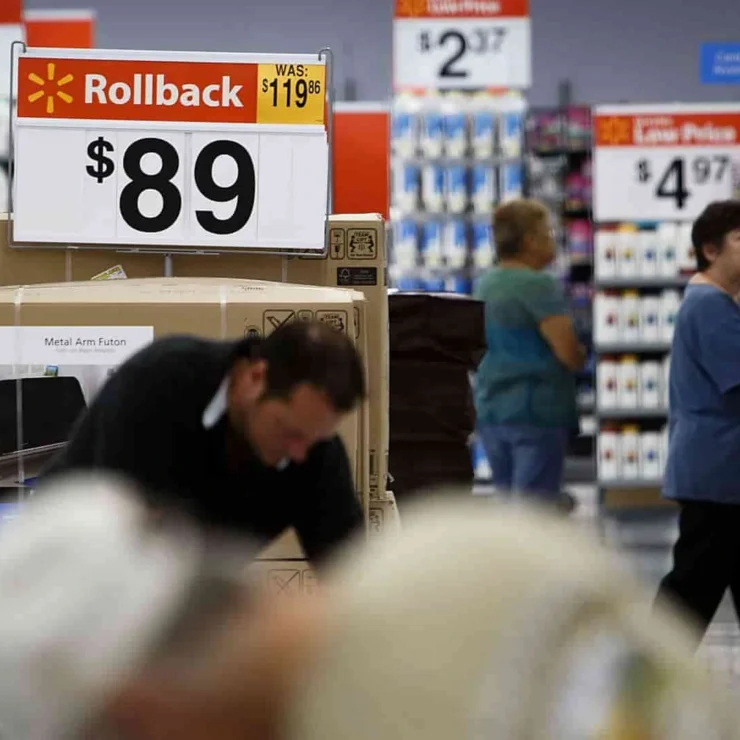


Walmart doesn't run on a fixed "restock day." It uses a perpetual inventory system that fires a replenishment order the moment a register scan drops stock below a reorder point, so shelves refill continuously rather than on a calendar. The one pattern you can count on: in-store shelves get touched overnight and in the early morning (roughly 4 AM–7 AM local time at most stores), while Walmart.com stock can flip to "in stock" at any hour because it draws from a separate pool across store-fulfillment, regional warehouses, and the Walmart Marketplace. For when does Walmart restock Needohs specifically: the viral squishy fidget sells out within hours of every drop because the shelf allocation per store is small and demand is driven by social media spikes, not steady retail demand. Checking the Walmart app first thing in the morning and turning on Walmart's free native "Notify Me" alert gives you a real shot — no paid bot tool required.
🔑 Key Takeaways
- Walmart has no fixed restock schedule — it runs a perpetual inventory system that triggers automatic replenishment orders in real time whenever a sale drops stock below a store-specific reorder point.
- In-store shelf restocking overwhelmingly happens overnight and in the early morning, typically between 4 AM and 7 AM, before store traffic picks up — this is a labor-scheduling pattern, not a published policy.
- Walmart.com and in-store inventory are separate pools. An item showing "out of stock" online can be sitting on a shelf 2 miles away, and vice versa.
- Viral items like Needohs sell out in hours, not days, because store-level allocation is deliberately kept small while demand is amplified by TikTok and Instagram — this is a supply-discipline problem, not a "secret restock day."
- Walmart's free, native "Notify Me" in-stock alert (inside the Walmart app and on Walmart.com) performs close to paid third-party monitoring tools for most shoppers, which most "restock tracker" blogs don't tell you.
- If you're a seller rather than a shopper, chronic stockouts on trending items like Needohs point to a Walmart Marketplace opportunity in similar or adjacent product categories — not a bot-based race to buy out a competitor's retail shelf.
📋 Table of Contents
- How Does Walmart's Restocking System Actually Work?
- What Time Does Walmart Restock Shelves In-Store?
- Does Walmart Restock Online Inventory Differently Than In-Store?
- When Does Walmart Restock Needohs?
- Why Do Walmart Items Keep Selling Out So Fast?
- Is Walmart's Free "Notify Me" Alert Actually Worth Using?
- Are Paid Restock-Tracking Tools and Bots Worth It?
- What Does Constant Walmart Stockouts Mean If You're a Seller, Not a Shopper?
- Frequently Asked Questions
If you've typed "when does Walmart restock" into Google at 11 PM hoping for a straight answer, here's the short version: there isn't a universal restock day, and almost every blog chasing this keyword either guesses or copies the same vague "early morning" line without explaining why. I went deeper — into how Walmart's actual inventory and replenishment systems work, how store-level allocation decisions get made, and why specific viral items like Needohs behave so differently from everyday staples. This is the breakdown nobody else in the top results for "when does Walmart restock" is giving you.
I'll say this upfront because it matters: Walmart does not publish a restock schedule, and no third-party tool — paid or free — has secret access to Walmart's internal replenishment data. What these tools actually do, and whether that's worth paying for, is covered honestly further down. For now, let's get into the mechanics.
How Does Walmart's Restocking System Actually Work?
Walmart restocks using a perpetual inventory system, meaning stock counts update in real time with every register scan rather than through scheduled manual counts. The moment a sale pulls a SKU's on-hand quantity below a pre-set reorder point at that specific store, the system automatically generates a replenishment order — no human has to notice the shelf is getting empty and manually request more stock.
Here's the tradeoff most explainer articles skip entirely: this system is built for efficiency and shelf-space optimization, not for guaranteeing availability of any single item. Walmart's reorder points are calculated per store, per SKU, based on that location's historical sell-through rate. A suburban Supercenter that moves 40 units of a toy per week gets a very different reorder point than a smaller-format store that moves 4. That's why the same product can be fully stocked at one Walmart and sold out at another one ten minutes away — they're not running the same restock clock.
- Register scan → inventory update: Every checkout scan subtracts from that store's real-time on-hand count, visible internally within seconds.
- Reorder point triggers an order: Once on-hand quantity crosses the threshold, Walmart's systems — not a store manager — automatically generate a replenishment order.
- Routing through the network: The order routes to the nearest distribution center or, for items under Vendor Managed Inventory (VMI) agreements, directly to the supplier/vendor, who manages replenishment on Walmart's behalf.
- Delivery and overnight stocking: Trucks typically arrive at stores in the evening or overnight, and staff shelve the new stock before the store gets busy the next day.
Most "when does Walmart restock" articles describe this as if every store runs on the same cycle. It doesn't. Walmart's own supply chain investments — including RFID tagging rollouts and AI-assisted demand forecasting across its distribution network — exist specifically because store-level demand is wildly uneven. Treating "Walmart restocks on Tuesdays" or any single day as a rule is the single biggest myth in this space, and it's one every competing article still leans on.
Walmart has also been expanding its use of RFID (radio-frequency identification) tagging and AI/machine-learning-based demand forecasting to tighten this loop further — catching understocks faster and reducing the lag between a sale and a replenishment order reaching a distribution center. None of this produces a predictable "restock day." If anything, it makes restocking less predictable from the outside, because the system reacts to real demand instead of following a calendar. If you're a seller trying to replicate this kind of real-time visibility for your own catalog, our roundup of the top Walmart inventory management software for 2026 breaks down the tools that do it.
What Time Does Walmart Restock Shelves In-Store?
Most Walmart stores stock new shelf inventory overnight into the early morning, generally between 4 AM and 7 AM local time, so shelves look fullest right when the store opens. This isn't a published corporate policy — it's a labor-scheduling pattern that shows up consistently across store reviews, employee discussions, and shift-posting patterns, because stocking aisles while customer traffic is lowest is simply more efficient for staff and forklifts.
That said, this window isn't universal. Some Supercenters run a secondary midday or early-afternoon truck for high-velocity categories like groceries and seasonal items, and 24-hour locations (a shrinking but still real category) may stock in smaller, more frequent waves throughout the day instead of one big overnight push. If you're chasing a specific item, the most reliable move isn't memorizing a time — it's checking the app first thing when the store opens and again in the early afternoon.
| Store Type | Typical Stocking Window | Best Time to Check |
|---|---|---|
| Standard Supercenter | 4 AM – 7 AM | Store opening (usually 6 AM) |
| Neighborhood Market | 5 AM – 8 AM | Store opening |
| 24-Hour Location | Rolling, multiple small waves | Early morning + early afternoon |
| High seasonal demand | Overnight + midday secondary truck | Opening and again around 1-2 PM |
One nuance worth flagging: truck delivery schedules and stocking windows are set at the distribution-center-to-store level and can shift during peak seasons (back-to-school, holiday) when Walmart runs additional trucks to high-velocity stores. There's no single number that's accurate for all 4,600+ Walmart locations — treat any blog that gives you one exact time as giving you a regional average dressed up as a fact.
Does Walmart Restock Online Inventory Differently Than In-Store?
Yes — Walmart.com inventory draws from a separate pool than individual store shelves, which is exactly why an item can be "sold out" on the app while physically sitting on a shelf nearby, or available to ship online while a nearby store shows zero stock. Online availability pulls from several different channels depending on the specific listing, and they don't restock on the same clock as your local Supercenter.
- Store-fulfilled online orders: Pulled from the same inventory as in-store shelves at a nearby store — if the shelf is empty, this option disappears too.
- Warehouse/fulfillment-center shipping: A completely separate inventory pool held at regional fulfillment centers, restocked on its own supplier-driven schedule independent of any single store.
- Walmart Marketplace listings: Third-party sellers fulfilling the item themselves — restock timing depends entirely on that seller's own supply chain, not Walmart's internal systems at all.
This is why refreshing Walmart.com at a fixed time every day is a weaker strategy than it sounds. Since online stock can technically update any hour — it's not tied to an overnight truck schedule the way shelf stock is — a "best time to check online" is really just "check more often," ideally paired with an automated alert rather than manual refreshing. For sellers weighing whether to list on that third pool, our guide to Walmart Marketplace seller fees covers what it actually costs to keep a listing stocked and competitive there.
Because these pools are separate, "in stock online" and "in stock in my store" are two different questions with two different answers — and most restock-tracking content treats them as one. If a tracker tool only monitors the Walmart.com listing page, it can completely miss the fact that your local store already restocked on the shelf, and vice versa. Check both, not just one.
When Does Walmart Restock Needohs?
Walmart restocks Needohs on an unpredictable, demand-driven cycle with no fixed day, and in-store allocations frequently sell out within hours of hitting the shelf because the per-store quantity is small relative to how fast social-media-driven demand hits. Needohs — the stretchy, squishy sensory fidget toy that exploded across TikTok — is a textbook case of a viral product running straight into Walmart's store-level reorder-point system described above, and losing.
Here's the mechanic: a store's reorder point for a toy like this gets set based on historical sell-through for that category, not on a viral spike nobody forecasted. When a TikTok trend sends foot traffic and search volume up 10x in a week, the shelf allocation doesn't scale with it — it just empties faster, and the automatic reorder still takes its normal day(s) to arrive and get stocked. That gap between "demand spike" and "replenishment lag" is exactly why Needohs look perpetually out of stock even though Walmart is actively restocking them.
Three things make Needohs restocks specifically harder to predict than a normal item:
- Small store-level allocation: Fidget toys typically get a modest shelf-facing count per store, not large pallet quantities, so even a modest sales spike clears it fast.
- Color and variant splitting: Needohs come in multiple colors/characters, and a store can be "in stock" on the overall SKU family while being sold out of the exact variant someone wants.
- Resale demand layered on top: Some of the sellout speed isn't organic kid-and-parent demand at all — it's resellers buying multiples to relist elsewhere at a markup, which thins real stock even faster than social virality alone would.
Most advice says "check your store every morning." The better move is checking the Walmart app's aisle-level inventory for your exact store before driving anywhere, because Needohs sellouts are hyper-local — one Supercenter ten minutes away can be fully stocked while your nearest store has been empty for a week. Driving based on a general "restock day" guess wastes more time than checking per-store inventory data the app already gives you for free.
For when does Walmart restock Needohs in practical terms: there's no better answer than checking your specific store's live inventory through the Walmart app (not the general website, which can show broader "ship to home" availability instead of your local shelf count) first thing in the morning, and setting a free in-stock alert so you're not refreshing manually all day.
Selling on Walmart Instead of Chasing Shelf Stock?
If you're on this page as a seller rather than a shopper, the real opportunity isn't racing shoppers for a sold-out toy — it's building a Walmart Marketplace presence that profits from exactly this kind of demand volatility without the stockout headaches. Stores Automation builds, stocks, and manages done-for-you Walmart stores engineered around products with reliable supply chains and strong sell-through, so you're never the one stuck explaining a stockout to a customer.
- Full Walmart Marketplace store setup, done for you
- Product research built around stable, scalable supply — not viral gambles
- Ongoing inventory, pricing, and listing management handled for you
Why Do Walmart Items Keep Selling Out So Fast?
Walmart items sell out fast when demand outpaces a store's historical reorder point faster than the automatic replenishment cycle can respond, and this happens most often with seasonal goods, viral social-media products, and limited-run collaborations. It's rarely a sign that Walmart is "bad at inventory" — it's usually a sign the forecasting model hasn't caught up to a demand spike yet.
Four separate forces tend to stack on top of each other, and most articles only mention one:
| Cause | What's Actually Happening | How Fast It Clears Shelves |
|---|---|---|
| Seasonal demand | Reorder points are set higher ahead of known seasons (holidays, back-to-school), but still finite | Days to weeks |
| Viral/social spike | Demand forecasting hasn't adjusted yet; allocation is based on pre-trend sell-through | Hours to days |
| Limited-run/exclusive items | Deliberately low production run; no amount of "restocking" fixes a capped supply | Often permanent — never restocks |
| Reseller/bot buying | Automated or bulk purchasing clears stock faster than organic demand alone would | Minutes to hours |
The distinction that matters most for shoppers: a viral spike (like Needohs) will eventually restock as the system catches up, while a limited-run exclusive simply will not come back once it's gone, no matter how many times you check the app. Knowing which category an item falls into saves you from checking obsessively for something that was never going to restock in the first place.
Is Walmart's Free "Notify Me" Alert Actually Worth Using?
Yes — Walmart's free native "Notify Me" in-stock alert, built directly into the Walmart app and website, is genuinely worth using and performs close to what most paid third-party monitoring tools offer for a typical shopper. You tap "Notify Me" on a sold-out product page, and Walmart sends an email and/or push notification the moment that specific item is back in stock online.
Here's the honest comparison most "best restock tracker" articles won't give you, because several of them are built by companies selling the paid alternative:
- What the free native alert does well: Monitors Walmart.com stock directly from the source, costs nothing, requires no account outside your existing Walmart login, and triggers reliably for most mainstream product restocks.
- Where it falls short: It typically tracks online/ship availability rather than a specific store's shelf stock, can lag by minutes to hours behind the actual inventory update, and doesn't monitor multiple retailers or variants at once.
- Where a paid tool earns its cost: If you're tracking dozens of SKUs across multiple retailers (not just Walmart), need sub-minute alert speed for highly competitive drops, or want SMS/Discord alerts layered on top of email.
A lot of restock-tracking content frames the free Walmart alert as a weak fallback and pushes you straight to a paid subscription. For the overwhelming majority of shoppers checking on one or two items — Needohs included — the free alert does the job. Paying monthly to track a single toy you want to buy once rarely pencils out.
Are Paid Restock-Tracking Tools and Bots Worth It?
Paid restock-tracking tools are worth it only for a narrow use case — tracking many SKUs across multiple retailers at once or needing faster-than-email alert speed — and are overkill for the average shopper chasing one or two items like Needohs. It's worth being direct about what these tools actually do under the hood, since the marketing around them tends to overstate it.
Most third-party restock-alert services work by repeatedly checking a product page's public stock status (through the storefront or its public APIs) and pinging you faster or across more retailers than you'd check manually. They are not tapping into Walmart's internal inventory system — no legitimate third party has that access. The value they sell is speed and coverage, not secret information.
- Reasonable use: A multi-retailer alert service that watches Walmart, Target, and a specialty retailer simultaneously for one hard-to-find item, with SMS alerts faster than Walmart's own email notification.
- Overkill for most people: Paying monthly for a dedicated tracker to catch one toy restock when Walmart's own free "Notify Me" button does effectively the same job for that single item.
- What to avoid entirely: Any tool or "bot" marketed specifically to auto-purchase items faster than other shoppers or to bypass a retailer's purchase limits and bot-detection systems. Beyond the fact that this routinely violates retailer terms of service, it's the exact behavior driving the reseller-driven sellouts described earlier — it makes the problem worse for everyone else, including you next time.
If you decide a paid tracker fits your situation, treat it as a convenience layer on top of the free alert, not a replacement for it — stacking both costs nothing and covers the gap where one tool might lag.
What Does Constant Walmart Stockouts Mean If You're a Seller, Not a Shopper?
For sellers, Walmart's chronic stockouts on viral items like Needohs signal unmet demand in adjacent categories that Walmart Marketplace sellers can legitimately fill with their own reliable supply chain, rather than a signal to compete for the same depleted retail shelf. This is the angle almost every "when does Walmart restock" article completely ignores, because they're written for shoppers, not for the seller side of this question.
When a product category goes viral and the dominant retail allocation can't keep up, that unmet demand doesn't disappear — it spills over to marketplace listings, adjacent product variations, and complementary accessories. A Walmart Marketplace seller with a properly sourced, in-stock supply of a similar sensory-toy product, a Needohs-adjacent accessory, or even just a reliably available alternative is positioned to capture buyers who gave up waiting on the sold-out original. That said, going in without a plan is how new sellers get burned — our breakdown of common Walmart seller challenges covers the pitfalls worth knowing before you list your first product.
Chasing the exact viral SKU as a seller means fighting the same allocation and supply constraints Walmart itself is dealing with — you inherit the stockout problem, not an opportunity. The sellers who actually profit from a trend like Needohs are the ones who move fast on reliably-supplied adjacent products while demand is hot, instead of trying to out-stock a retailer with more buying power than they have.
This is exactly where a managed Walmart Marketplace operation earns its keep: spotting the trend, sourcing a product with real supply depth behind it, and getting it listed and selling before the trend cools — without ever being the one apologizing to a customer for a stockout. Pairing the right supply with the right tools matters too; our picks for the best Walmart seller tools for 2026 cover what actually helps sellers stay ahead of demand swings like this one.
Turn Stockout Demand Into Your Own Walmart Sales
Stores Automation runs fully managed, done-for-you Walmart Marketplace stores — from product research and listing optimization to pricing and order management — built around products with supply chains that can actually keep up with demand. You get the upside of trending categories without the stockout risk shoppers are fighting through on this very page.
- Hands-off Walmart Marketplace store setup and management
- Product sourcing vetted for consistent, scalable supply
- Done-for-you listing optimization, pricing, and order fulfillment support
Frequently Asked Questions
What day of the week does Walmart restock? +
Walmart doesn't restock on one fixed day — it uses a perpetual inventory system that generates replenishment orders continuously, any day a store's stock drops below its reorder point. Trucks commonly arrive several times a week at busy Supercenters, so a "restock day" is really an ongoing cycle rather than a single scheduled date.
What time does Walmart restock shelves in the morning? +
Most Walmart stores stock shelves overnight into early morning, generally between 4 AM and 7 AM local time, so inventory looks fullest at store opening. Some 24-hour locations and high-volume departments like groceries run additional smaller stocking waves later in the day.
When does Walmart restock Needohs specifically? +
There's no fixed restock day for Needohs — allocations arrive on Walmart's normal replenishment cycle but sell out within hours because store-level quantities are small relative to viral, TikTok-driven demand. Your best move is checking your specific store's live inventory in the Walmart app each morning and turning on a free in-stock alert for the exact variant you want.
Why is Walmart always out of stock on trending items? +
Trending items sell out fast because Walmart's reorder points are calculated from historical sell-through data, which doesn't anticipate a sudden social-media-driven demand spike. The automatic replenishment system still works — it just takes time to catch up to demand that jumped overnight, and resale buying can thin remaining stock even faster.
Does Walmart restock online inventory at a different time than in-store? +
Yes. Walmart.com draws from store-fulfillment, regional warehouse, and Marketplace-seller inventory pools that are separate from an individual store's shelf stock, so online restocks can happen at any hour rather than following the overnight in-store stocking window. Checking both the app's local-store inventory and the website separately gives you the most accurate picture.
Is there a free way to get notified when a Walmart item restocks? +
Yes — Walmart's built-in "Notify Me" feature on the app and website is free and sends an email or push notification when a specific sold-out item becomes available again online. For most single-item restocks, including Needohs, this free alert performs close to what paid third-party monitoring tools offer.
Will a Needohs restock tracker bot actually help me buy one faster? +
A legitimate stock-alert tool can notify you faster than manually refreshing, but no tool has secret access to Walmart's internal inventory system, and tools marketed to auto-purchase or bypass Walmart's limits violate its terms of service. Stick to monitoring tools, not automated-purchasing bots, and pair a fast alert with checking your exact store's live inventory in the app.
- Walmart Listing Optimization in 2026: Best Practices Guide
- Walmart DropShipping: How to Sell on Walmart Marketplace (2026)
- Selling on Walmart vs. eBay: Which Platform is Better?
- Selling on Walmart vs. Amazon: Which Marketplace is Better?
- What is Walmart Rollback and Why It Matters for Marketplace Sellers?
- Walmart Seller Key Event Dates in 2026
- What Is a Walmart DSV? How to Become a DropShip Vendor in 2026
- Walmart Acronyms Cheat Sheet: Guide for Suppliers and Partners
- Walmart Liquidation Pallets: How to Make Money Guide 2026
The Bottom Line on Walmart Restocking
There's no secret restock day hiding behind Walmart's inventory system — just a real-time, store-by-store replenishment engine that reacts to actual sales rather than a calendar. For everyday items, that means shelves refill continuously, with the overnight-to-early-morning window being your best general bet. For viral items like Needohs, it means short, unpredictable windows of availability that reward checking your exact store's live inventory and using Walmart's free native alert rather than chasing myths about a fixed restock day.
If you're reading this as a seller rather than a shopper, the takeaway flips: chronic stockouts on trending products are a demand signal, not a target to chase with the same supply constraints Walmart itself is working around. Building a Walmart Marketplace business around products with real supply depth — rather than racing shoppers for a sold-out toy — is the more durable way to capture that same demand wave.
Ready to Build a Walmart Store That Doesn't Fight Stockouts?
Stores Automation handles the entire Walmart Marketplace journey for you — product research, store setup, listings, pricing, and ongoing management — so you can capture demand trends without ever being the one explaining an empty shelf to a customer. It's a done-for-you path to Walmart selling, built around supply you can actually count on.
- End-to-end, done-for-you Walmart Marketplace management
- Supply-vetted product selection, not viral guesswork
- Ongoing support so you're never managing stockouts alone
Contact Us for Tailored Solutions – Stores Automation:
Ready to transform your Ebay store and achieve big wins? Contact us at Stores Automation for personalized solutions that leverage the power of automation for your business. Reach out to us at 302-204-8244 or via email at info@storesautomation.com. For more information, Sign up for Ebay Store Automation. Embark on the path to e-commerce success with Stores Automation – where small changes lead to big wins!