

Katana Cloud Inventory is a cloud-based inventory and operations platform designed primarily for brands that need real-time stock control, production planning, and multi-channel order management. While traditionally focused on manufacturing and small-to-medium businesses, it also integrates with marketplace platforms — including through third-party connectors — enabling Walmart sellers to sync inventory and sales data across channels and maintain accurate stock levels.
Key Features
Real-time inventory tracking across multiple channels and locations
Sales and purchase order management centralized in a single dashboard
Batch and serial number tracking for quality control and traceability
Barcode scanning support for faster warehouse operations
Multi-warehouse stock visibility and allocation
Integrations with ecommerce platforms and accounting tools (e.g., Shopify, QuickBooks, Xero)
Forecasting and replenishment planning tools
API access for custom workflow automation and integrations
Walmart Seller Benefits
For Walmart Marketplace sellers — especially those balancing multiple sales channels — Katana helps prevent overselling and stockouts by syncing inventory levels in real time across platforms. Its order management and forecasting capabilities empower sellers to stay ahead of demand, schedule replenishment intelligently, and manage complex workflows without manual updates. Multi-warehouse support also lets sellers allocate stock strategically to improve fulfillment speed and reduce logistics costs.
Pros & Cons
Pros
Provides real-time visibility into inventory and orders
Centralizes inventory, order, and production workflows in one system
Supports multiple sales channels and warehouses
Barcode scanning and traceability improve efficiency
API access enables custom integrations for advanced workflows
Cons
Pricing structure can be complex and expensive for smaller sellers — including fees for add-ons or higher tiers as sales volume increases
Some advanced automation and reporting features may require additional configuration
Not all native marketplace connectors may be available without third-party tools (e.g., Extensiv)
Initial setup and learning curve can be challenging for beginners (especially non-manufacturing sellers)
Best For (Use Case)
Walmart sellers with medium to high SKU volume who also sell on other platforms
Brands that require integrated production planning or inventory control
Multi-warehouse and multi-location operations
Sellers who plan to scale and automate workflows with API integrations
Pricing / Plans (Range if Available)
Katana’s pricing varies based on usage and features:
Free Plan: Limited access for up to 30 SKUs — ideal for evaluating basics
Core Plan: Starts at around $299/month for essential inventory and order management with unlimited SKUs and users
Additional modules (e.g., manufacturing planning or warehouse management) may incur extra monthly fees on top of the base plan
Custom enterprise-level pricing is available for larger operations needing advanced configurations
MindCloud is a flexible integration and automation platform that connects ecommerce systems — including marketplaces like Walmart Marketplace — with backend tools such as order management systems, ERPs, CRMs, and accounting software. While it’s not a traditional inventory management system in the standalone sense, MindCloud’s strength lies in synchronizing inventory, orders, and fulfillment events across platforms, reducing manual data entry and keeping stock quantities accurate across all connected systems.
Key Features
Direct integration with Walmart Marketplace APIs for real-time inventory updates and order retrieval.
Automated stock synchronization to ensure available inventory on Walmart reflects actual quantities.
Automatic updating of shipping status back to Walmart once orders ship.
Centralized data integrations across ERP, CRM, WMS, and other tools to eliminate duplicate entry and data silos.
Support for custom workflows and connectors via a low-code integration layer.
Real-time bi-directional data flows, enabling updates from your internal systems to every sales channel.
Walmart Seller Benefits
For Walmart sellers who rely on multiple systems (such as ERP or custom databases) alongside their marketplace operations, MindCloud automates the exchange of inventory and order data. Sellers no longer need to manually import or export CSV files or manage stock levels across disconnected platforms — real-time updates ensure Walmart inventory mirrors your actual backend data, reducing overselling and improving fulfillment reliability.
MindCloud also handles shipping updates automatically, ensuring that tracking and fulfillment statuses are relayed efficiently back to Walmart, improving customer experience and maintaining performance metrics.
Pros & Cons
Pros
Integrates deeply with Walmart APIs for inventory and order synchronization.
Automates multi-system data flows, reducing manual intervention and errors.
Scales with business operations and supports custom workflows.
Supports connections between ERPs, CRMs, WMS, and ecommerce platforms.
Cons
Not a traditional inventory dashboard — its core value is integration rather than standalone stock reporting.
Pricing is not transparent publicly and typically requires consultation and customized quoting.
May require implementation support for complex or highly customized setups.
Best For (Use Case)
Sellers with complex backend systems (ERP, CRM, WMS) seeking unified inventory and order data flow.
Multi-channel sellers who need consistent stock quantities across Shopify, Amazon, Walmart, and other marketplaces.
Enterprises aiming to automate data workflows without building custom integration pipelines from scratch.
Businesses that prioritize automation and accuracy over standalone inventory dashboards.
Pricing / Plans (Range if Available)
MindCloud does not publicly list fixed subscription tiers. Instead, it offers:
Standard Integration Plan: Includes a full set of connectors, setup support, and ongoing maintenance.
Professional Plan: Mid-tier with more optimized workflows and performance options.
Enterprise Plan: Customized integration architecture for large, complex operations.
Pricing is typically provided through consultation and varies based on the number of systems connected, data flows, custom connectors, and business requirements.
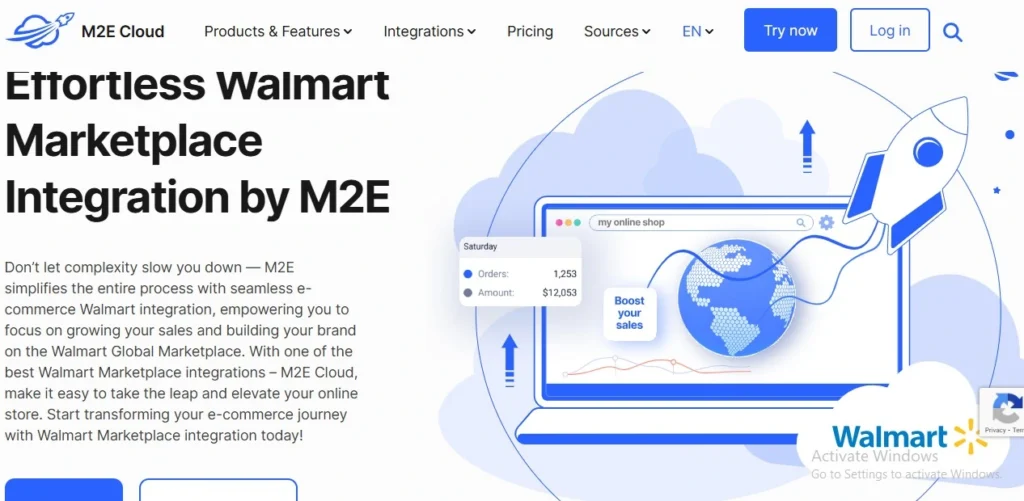
M2E Cloud is a cloud-based multichannel ecommerce platform that streamlines inventory, order, and listing management across a wide range of marketplaces — including Walmart Marketplace, Amazon, eBay and more — directly from a single interface. Built as the next generation of the long-standing M2E Pro solution, M2E Cloud automates inventory synchronization, pricing controls, and order processing while reducing manual workflows and data inconsistencies. It is designed for sellers who want centralized control over their multichannel operations while avoiding stockouts or overselling.
Key Features
Automated inventory synchronization across all connected marketplaces and store platforms, ensuring accurate stock levels at all times.
Real-time order management and fulfillment tracking.
Centralized multichannel listing workflows to publish and update products quickly.
Advanced pricing rules and automation for dynamic price adjustments across channels.
Unified dashboard for inventory, orders, and listings, reducing dependency on multiple tools.
Support for 450+ marketplace integrations and integration with ecommerce platforms like Shopify, WooCommerce, BigCommerce, and more.
Data insights and analytics to identify slow-moving stock, forecast demand, and optimize restocking.
Walmart Seller Benefits
For Walmart sellers, M2E Cloud provides real-time inventory updates, ensuring stock quantities listed on Walmart are always accurate and aligned with sales happening elsewhere. This minimizes the risk of overselling and helps maintain strong seller performance metrics. The platform’s unified approach lets sellers manage listings, orders, and pricing logic all in one place — eliminating the need to switch between tools and reducing operational friction. M2E Cloud can also automate order routing and fulfillment tracking back to Walmart, improving customer satisfaction and compliance with marketplace performance standards.
Pros & Cons
Pros
Seamless multichannel inventory synchronization prevents stock discrepancies across channels.
Centralized platform consolidates listings, orders, and inventory control.
Supports connections with a wide range of ecommerce platforms.
Analytics and forecasting tools help optimize stock levels and demand planning.
Flexible automation settings reduce manual effort and errors.
Cons
Mainly focused on integration and multichannel management — standalone inventory features may not be as robust as full warehouse management systems.
Pricing is based on GMV (Gross Merchandise Volume), which can become costly as sales scale.
Some sellers may require onboarding support to configure automation rules and advanced workflows.
Best For (Use Case)
M2E Cloud is ideal for Walmart sellers who:
Operate across multiple sales channels and need unified inventory control.
Want to manage listings and orders from a single platform.
Are scaling their business and require automation to reduce manual data handling.
Sell through external ecommerce platforms (like Shopify or WooCommerce) and marketplaces simultaneously.
Pricing / Plans (Range if Available)
M2E Cloud pricing is tiered based on monthly sales volume (GMV) and includes a 30-day free trial to explore features.
Starter (Free): Up to $1,000 monthly GMV with 1 integration and 1 seller account.
Starter 10K: $39/month for up to $10,000 GMV with 2 integrations and 2 seller accounts.
Business 40K: $159/month with up to $40,000 GMV and expanded listings.
Business 100K: $399/month for larger sellers, unlimited integrations, and 100,000 listings.
Enterprise Plans: Up to $1,199/month (or custom pricing), supporting high-volume sellers with higher GMV and unlimited features.
Plans scale in GMV allowance and seller account limits, making M2E Cloud suitable for both small sellers beginning on Walmart and enterprise operations with extensive catalogs.
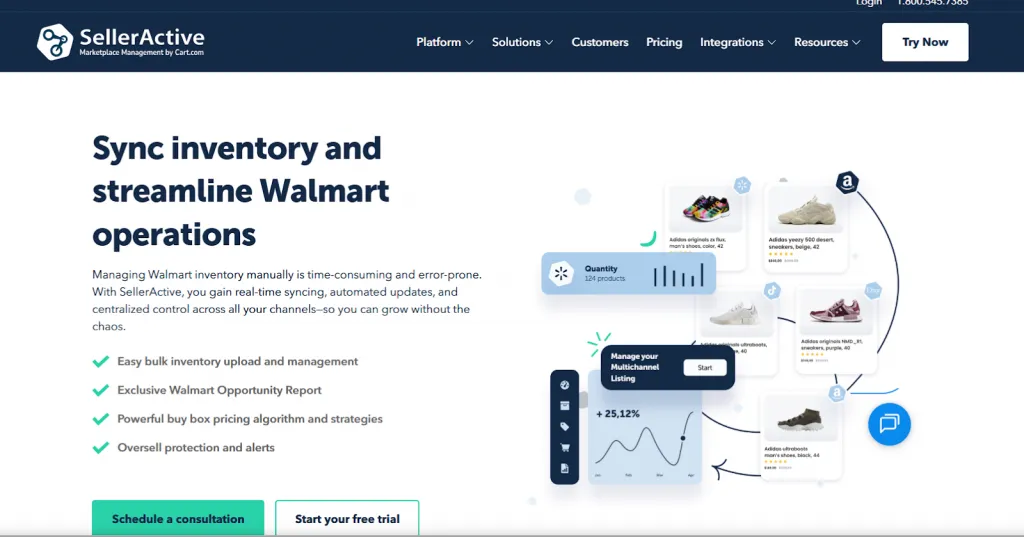
SellerActive is a multichannel ecommerce management platform that helps online sellers streamline inventory, listing, order, and pricing workflows across major marketplaces — including Walmart Marketplace, Amazon, and eBay. The platform offers centralized control of inventory synchronization, automated repricing, bulk uploads, and multichannel order consolidation from a single dashboard, reducing manual effort and improving operational accuracy. SellerActive was acquired by Cart.com, allowing it to scale its capabilities within a broader ecommerce solutions ecosystem.
Key Features
Real‑time multichannel inventory syncing to prevent overselling and stockouts across Walmart and other marketplaces.
Automated repricing and buy box capture features to stay competitive and adjust prices dynamically.
Centralized order management consolidating orders from all connected channels into one workflow.
Listing creation and bulk upload tools for faster Walmart onboarding and SKU publishing.
AI‑assisted listing automation and product data mapping for efficient catalog management.
Inventory min/max buffering to maintain safe thresholds and protect performance metrics.
Integration with fulfillment services like Walmart WFS, Amazon FBA, and third‑party logistics.
API access and support for custom workflows.
Walmart Seller Benefits
SellerActive helps Walmart sellers maintain accurate inventory levels in real time, reducing overselling risk and protecting seller performance metrics tied to on‑time fulfillment and order accuracy — essential elements for competitiveness on Walmart Marketplace.
The platform’s bulk upload and listing tools simplify publishing across channels, while automated repricing enhances competitiveness for the Walmart Buy Box. Centralized order management also reduces operational overhead by consolidating orders from every marketplace into one workflow.
SellerActive’s multichannel focus ensures that when a sale happens on one channel, inventory adjusts across all others immediately, helping maintain synchronization and avoiding stockouts.
Pros & Cons
Pros
Centralized dashboard for inventory, orders, and listings across multiple marketplaces, including Walmart.
Real‑time inventory sync helps prevent stockouts and overselling.
Automated repricing can improve competitiveness and buy box performance.
Bulk listing and automated upload tools reduce manual work.
Supports fulfillment routing with services like Walmart WFS and Amazon FBA.
Cons
Some advanced automation and repricing features require add‑ons, increasing total cost.
Pricing may become less cost‑effective at higher sales volumes, especially if extensive automation features are needed.
Implementation may require time and training for teams unfamiliar with multichannel tools. (Typical of systems of this complexity)
Best For (Use Case)
Walmart sellers who sell on multiple marketplaces and need unified inventory and order control.
Medium to large sellers with growing catalogs seeking automation to reduce manual workflows.
Operations that need centralized repricing and multichannel publishing tools.
Businesses using or planning to use Walmart WFS or other fulfillment services.
Pricing / Plans (Range if Available)
SellerActive offers tiered pricing based on monthly sales volume (GMV) and feature needs:
Basic: ~$99/month (up to ~$10k GMV; core multichannel tools).
Premium: ~$209/month (up to ~$25k GMV; expanded sync and automation).
Plus: ~$349/month (up to ~$100k GMV).
Custom/Enterprise: Pricing varies for GMV over ~$250k with tailored solutions.
Repricing add‑ons (for advanced buy box and pricing strategies) may incur additional monthly costs depending on the plan selected.
SumTracker is a cloud‑based inventory management platform built for ecommerce brands selling across multiple channels — including Walmart Marketplace, Amazon, eBay, Shopify, Etsy and more. It provides centralized inventory visibility, automatic stock syncing, purchase order management, bundling support, and demand forecasting — all via a unified dashboard designed to reduce manual work and prevent overselling across marketplaces and stores.
Key Features
SumTracker offers a suite of tools that help sellers manage complex inventory challenges:
Multi‑channel inventory sync: Fast, real‑time syncing of stock across Walmart and other channels, keeping inventory counts accurate.
Bundles and kit management: Track components and product bundles automatically, adjusting stock as sales occur.
Inventory tracking and location management: See physical, booked, available, and incoming stock, including multi‑location support.
Purchase order tools: Generate and manage POs, track lead times, and plan restocks.
Reporting and forecasting: Inventory reports, demand planning insights, and alerts to help sellers make restocking decisions.
Order syncing: Synchronizes Walmart orders and fulfillment statuses in real time.
API access: Available on select plans for custom integrations and workflow automation.
These features help sellers maintain stock accuracy even with high SKU counts or multiple marketplaces and stores connected.
Walmart Seller Benefits
SumTracker’s integration with Walmart Marketplace enables sellers to keep their Walmart inventory synchronized with other channels, reducing the risk of stockouts and overselling — issues that can damage seller performance metrics and rankings.
Sellers can connect multiple Walmart stores and manage stock levels, bundles, and variants from one interface, saving time and minimizing manual updates. The platform also supports buying and forecasting tools that help Walmart sellers plan replenishment and avoid costly stock imbalances.
With accurate order syncing, sellers get detailed records of Walmart transactions, including cancellations and fulfillment statuses, helping maintain customer service quality and compliance.
Pros & Cons
Pros
Reliable real‑time inventory sync across multiple channels, including Walmart.
Bundle and kit management that automatically adjusts inventory.
Purchase order tools and forecasting to optimize restocking.
Central dashboard simplifies multichannel inventory workflows.
Supports multi‑location stock and detailed reporting.
Cons
Some users report that advanced features can take time to learn and set up.
Real‑time updates may occasionally lag on very high volume operations, impacting accuracy if not monitored.
Pricing tiers based on order counts rather than features can become less cost‑effective as business scales.
Best For (Use Case)
SumTracker is particularly effective for:
Walmart sellers operating on multiple channels who need consolidated inventory control.
Businesses selling bundles, kits, or custom product combinations.
Mid‑sized sellers scaling SKU counts and seeking automation beyond basic stock updates.
Sellers who want built‑in purchasing and forecasting tools alongside inventory tracking.
Pricing / Plans (Range if Available)
SumTracker’s pricing is tiered based on monthly order volume, offering flexibility for different business sizes:
$49/month: Entry level (approx. 200 orders/month) — basic inventory sync and management.
$99/month: Mid tier (approx. 1,000 orders/month) — added multi‑store and automation features.
$199/month: Higher tier (approx. 5,000 orders/month) — broader automation and integration support.
SumTracker usually offers a free trial to test functionality before committing
Ordoro is a robust cloud‑based ecommerce operations platform that centralizes inventory, order, shipping, and dropshipping workflows — all from a single dashboard. It’s designed for multichannel sellers, helping them maintain accurate stock counts, sync inventory across Walmart Marketplace and other channels, and automate fulfillment processes. With integrations spanning major platforms such as Walmart, Amazon, Shopify, eBay, and more, Ordoro gives sellers the visibility and control needed to scale operations without the chaos of manual updates or siloed systems.
Key Features
Real‑time inventory sync: Stock levels automatically update across Walmart and all connected sales channels, preventing overselling and stockouts.
Centralized order management: Consolidates orders from multiple marketplaces into one dashboard for faster processing and fulfillment.
Automated replenishment: Smart reorder points and automated purchase order generation help maintain optimal inventory levels.
Barcode scanning & warehouse tools: Supports barcode‑based receiving, cycle‑counting, and warehouse transfers.
Kitting & bundling: Tracks stock for product bundles and components, ensuring accurate inventory adjustments.
Dropshipping support: Routes orders to suppliers automatically while tracking fulfillment and inventory adjustments.
Multichannel integrations & analytics: Links to marketplaces and ecommerce platforms and provides actionable reporting across sales channels and warehouses.
Walmart Seller Benefits
For sellers on Walmart Marketplace, Ordoro’s real‑time inventory synchronization ensures that stock changes from Walmart orders are reflected instantly across other channels like Amazon, Shopify, and eBay. This reduces the risk of overselling, which can negatively impact seller performance metrics and buyer satisfaction.
Ordoro’s centralized order management simplifies fulfillment workflows — especially for sellers juggling Walmart orders alongside those from other marketplaces. Consolidating orders in one place reduces manual processing time and helps ensure reliable delivery and tracking updates.
The platform’s automated replenishment and purchase order tools help Walmart sellers maintain stock without manually tracking reorder points, which is critical for avoiding stockouts during peak selling periods.
Pros & Cons
Pros
Seamless inventory syncing across Walmart and multiple marketplaces.
Unified order and fulfillment workflows reduce manual effort.
Smart replenishment and analytics help optimize restocking.
Barcode & warehouse tools support efficient stock operations.
Dropshipping support adds automation for supplier‑based models.
Cons
Pricing can be higher than entry‑level tools, especially for larger order volumes.
Some advanced features (like certain automation or vendor portal tools) may require higher‑tier plans.
Implementation may take time for sellers new to multichannel systems. (General user experience)
Best For (Use Case)
Ordoro is particularly effective for:
Walmart sellers managing multiple sales channels who need central inventory control.
Mid‑sized to larger ecommerce operations with high SKU counts.
Sellers who want automated reorder and dropshipping workflows.
Teams that need integrated shipping, inventory, and order processing in one platform.
Pricing / Plans (Range if Available)
Ordoro offers a 15‑day free trial, making it easy to evaluate features before committing.
For inventory management specifically, plans generally include:
Inventory Advanced: ~$349/month — covers up to 1,000 orders, unlimited warehouses, multichannel sync, and core inventory tools.
Inventory Premium: ~$499/month — adds enhanced automation, advanced reporting, purchase orders, and stocktakes.
Additional charges may apply if order volumes exceed plan limits (e.g., $100 per additional 1,000 orders).
Plans can be customized or bundled with dropshipping or shipping apps to create an all‑in‑one ecommerce operations suite.
Jazva is an all‑in‑one multichannel ecommerce management platform designed to help online retailers centralize inventory control, order processing, listing automation, and fulfillment workflows across marketplaces such as Walmart Marketplace, Amazon, eBay, Shopify, and others. It supports real‑time stock synchronization and advanced inventory workflows, allowing sellers to view and manage their total inventory from a single dashboard and reduce manual operational tasks.
Key Features
Multi‑channel inventory sync: Automatic real‑time inventory updates across Walmart and all connected sales channels to prevent overselling and maintain stock accuracy.
Multi‑warehouse support: Track stock across multiple warehouse locations, including integrations with fulfillment partners and FBA/MCF.
Order consolidation and automation: Centralized order processing across channels with automatic status updates and routing.
Listing automation: Bulk product imports, SKU management, and listing deployment across marketplaces from one interface.
Forecasting & purchase orders: Tools to help anticipate demand and create purchase orders to replenish inventory.
Bundles and kits: Support for bundled products and composite SKUs to help sellers manage complex product structures.
Reporting and analytics: Performance reports and insights to support decision‑making around inventory levels and sales trends.
Walmart Seller Benefits
For Walmart sellers, Jazva’s inventory synchronization ensures that stock levels listed on Walmart are accurate and reflect actual available stock across all channels, helping to minimize overselling and stockouts — two key factors that influence seller performance on the marketplace.
By combining inventory, orders, and listing management in one system, sellers gain a centralized workflow that cuts down on manual updates and reduces the risk of human error. Features such as bundled SKU support and multi‑warehouse tracking help sellers manage complex catalogs and distribution networks with more control.
Pros & Cons
Pros
Centralizes multichannel inventory and order management into one platform, simplifying operations.
Real‑time inventory sync across Walmart and other marketplaces helps prevent overselling.
Advanced features like forecasting and purchase order tools support smarter replenishment decisions.
Bulk listing and SKU tools streamline product publishing.
Cons
User reviews on software review sites show mixed experiences, with some reviewers reporting challenges with usability, support responsiveness, and feature implementation.
The platform’s learning curve can be steep for less technically experienced sellers due to its wide range of features.
Some users have noted that customer service quality and onboarding experiences can vary, especially for complex setups.
Best For (Use Case)
Walmart sellers managing multiple sales channels who want a centralized platform to control inventory and order workflows.
Medium to larger ecommerce businesses with extensive SKU catalogs and multi‑warehouse operations.
Sellers who require product listing automation, bundled SKU tracking, and forecasting tools.
Operations that want advanced reporting alongside core inventory control.
Pricing / Plans (Range if Available)
Jazva offers tiered subscription plans starting at around $199/month for its Starter tier, which includes multichannel integrations, inventory control, order management, and basic automation features. Higher‑tier plans include additional advanced capabilities such as forecasting, vendor management, and expanded reporting.
A 30‑day free trial is typically available, allowing sellers to test features before committing.
Linnworks is a comprehensive connected commerce operations platform designed for multichannel ecommerce sellers. It centralizes inventory management, order processing, warehouse workflows, listings, and fulfillment under one interface, enabling sellers to scale operations while minimizing manual tasks. The platform integrates with over 100 marketplaces and ecommerce channels — including Walmart Marketplace — making it a strong choice for sellers managing diverse sales channels and large SKU catalogs.
Key Features
Linnworks delivers a broad set of capabilities essential for complex ecommerce operations:
Real‑time multichannel inventory synchronization: Accurate stock levels across all connected marketplaces and platforms.
Centralized order management: Consolidated order workflows and fulfillment processes in one dashboard.
Automated workflows and routing: Rule‑based automation for order sorting, fulfillment, and shipping tasks.
Warehouse management tools: Support for warehouse configurations, bin tracking, stock transfers, and quality control.
Sales and inventory analytics: SKU‑level reporting, forecast data, and performance insights.
Listing management across channels: Bulk listing creation and updates across marketplaces from a unified interface.
Purchase order and replenishment support: Automate stock reordering and supplier communications.
Walmart Seller Benefits
For Walmart sellers, Linnworks offers real‑time inventory synchronization that ensures stock quantities on Walmart Marketplace reflect actual availability, helping avoid overselling and stockouts — both of which can hurt seller performance.
The platform’s multichannel nature means that a sale on one channel automatically updates stock across all others, maintaining consistency and reducing manual updates. This is especially valuable for sellers with large catalogs or those using multiple marketplaces and ecommerce platforms.
With built‑in automation tools, sellers can streamline order routing and fulfillment while reducing errors — critical for maintaining fast delivery and positive customer experiences on Walmart.
Pros & Cons
Pros
Powerful multichannel inventory sync that prevents discrepancies across marketplaces.
Comprehensive platform that blends inventory, orders, listings, and fulfillment.
Robust automation tools that reduce manual work and errors.
Deep warehouse management features support complex operations.
Scalable architecture suitable for growing ecommerce businesses.
Cons
Pricing isn’t transparent and requires a custom quote based on order volume and add‑ons, which can be costly for smaller sellers.
Steeper learning curve compared with simpler standalone inventory tools.
Some users report slower performance or higher operational complexity for very large SKU volumes. (Some community feedback)
Best For (Use Case)
Linnworks is best suited for:
Walmart sellers operating with multiple sales channels and large SKU catalogs.
Businesses that need a central hub for inventory, orders, and fulfillment together.
Operations seeking workflow automation and advanced warehouse management.
Sellers planning to scale aggressively across marketplaces and ecommerce platforms.
Pricing / Plans (Range if Available)
Linnworks pricing is customized and based primarily on monthly order volume, with no fixed public plans.
Pricing depends on the number of orders processed and selected modules (e.g., inventory, listings, warehouse management, forecasting).
Add‑ons (such as listing management, warehouse tools, or forecasting) are priced separately.
Sellers typically request a tailored quote to determine exact costs.
Because pricing is customized and designed for scalable operations, costs can range widely — from a few hundred to several thousand dollars per month, depending on volume and required functionality.
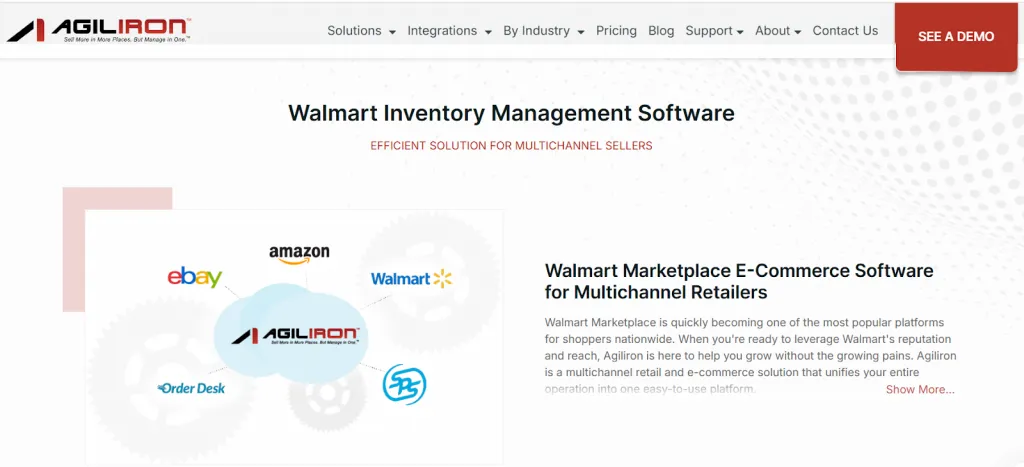
Agiliron is a full‑featured cloud‑based omnichannel commerce and inventory management platform designed to unify retail, wholesale, and ecommerce operations — including Walmart Marketplace — into a single system. Rather than acting strictly as a standalone inventory tool, Agiliron blends inventory, order management, POS, warehouse, CRM, and multichannel selling into one centralized backend. This end‑to‑end approach helps sellers avoid data silos, sync stock in real time, and streamline fulfillment across all channels.
Key Features
Agiliron’s inventory and commerce suite includes:
Real‑time inventory sync across sales channels and marketplaces, including Walmart Marketplace.
Centralized product database that ensures consistency in listings and stock levels.
Purchase order management and warehouse receiving tools with barcode scanning.
Order capture and fulfillment workflows consolidated in one system.
Multi‑location and multi‑warehouse stock tracking.
Support for inventory structures such as lot tracking, serialized items, kits, bundles, and drop‑ship inventory.
Integrations with marketplaces and platforms such as Walmart, Amazon, eBay, Shopify, BigCommerce, and QuickBooks.
CRM, POS, and business insights to support broader retail operations.
Walmart Seller Benefits
Agiliron helps Walmart sellers maintain accurate inventory levels across all connected channels, so stock counts on Walmart reflect real‑time availability — a key factor in preventing oversells and inventory conflicts.
Because Agiliron centralizes orders, inventory, and fulfillment, sellers save time and reduce manual reconciliation between systems. It can also propagate shipment information and tracking back to Walmart automatically once orders are fulfilled, improving customer experience and maintaining marketplace performance standards.
For sellers operating multi‑warehouse setups or using POS alongside online sales, Agiliron provides a unified operational view, helping reduce errors and improve decision‑making.
Pros & Cons
Pros
Unified system that combines inventory, orders, POS, and CRM into one platform.
Real‑time inventory updates across channels to reduce stock conflicts and overselling.
Multi‑warehouse, lot, and serialized inventory support.
Integrates with major ecommerce marketplaces and business tools like QuickBooks.
Mobile warehouse tools for receiving, picking, and cycle counts.
Cons
Because it offers broad ERP‑style capabilities, the platform can be more complex to set up compared with simpler inventory‑only tools. (Typical, inferred)
Advanced features like multi‑location support or international capabilities may require higher plan tiers.
Some sellers find the interface less modern relative to more recent standalone inventory tools.
Best For (Use Case)
Agiliron is ideal for:
Walmart sellers looking for a comprehensive omnichannel ERP rather than a basic inventory tool.
Businesses that operate retail, wholesale, ecommerce, and marketplaces together.
Sellers with multiple warehouses or complex inventories (serialized, kits, drop‑ship models).
Brands needing deeper integrations with accounting, POS, and CRM systems.
Pricing / Plans (Range if Available)
Agiliron’s pricing is tiered and typically includes a free trial:
Premier: Around $99/month — foundational tools for multichannel selling.
Enterprise: About $199/month — increased inventory, analytics, and business capabilities.
Global Enterprise: Around $299/month — full suite with advanced features.
Plans and pricing may vary based on channel count, features enabled, and business size. A free trial is often available to evaluate platform fit before committing.
Logiwa is a cloud‑based warehouse and fulfillment management platform that combines advanced inventory tracking with order management automation, real‑time stock visibility, and efficient fulfillment workflows. Designed for high‑volume ecommerce sellers, direct‑to‑consumer (DTC) brands, 3PL providers, and multichannel operations, Logiwa helps integrate backend warehouse processes with marketplace sales channels—including Walmart Marketplace—to ensure accurate inventory syncing and streamlined fulfillment execution.
Key Features
Real‑time inventory synchronization: Logiwa updates stock counts across connected channels and warehouses instantly, helping maintain consistent availability across Walmart and other marketplaces.
Smart order routing: Orders are auto‑assigned to the optimal fulfillment locations based on inventory levels, proximity, and business priorities.
Centralized order processing: All orders from connected sales channels are visible and manageable within one interface, reducing operational fragmentation.
Warehouse automation: Tools for batching, directed picking, putaway optimization, barcode scanning, and mobile device support improve efficiency and reduce errors.
Reporting and analytics: Inventory performance insights, demand trends, and safety stock alerts help sellers plan replenishment and avoid stockouts.
Multi‑warehouse control: View and allocate stock across multiple fulfillment centers, improving fulfillment speed and flexibility.
API integrations: Connects with major ecommerce platforms, accounting systems, and shipping partners to automate workflows end‑to‑end.
Walmart Seller Benefits
For Walmart sellers, Logiwa’s integrated approach ensures that quantities listed on Walmart Marketplace always reflect actual available inventory, preventing overselling and maintaining performance metrics tied to order accuracy and fulfillment reliability.
Because it centralizes orders and inventory across channels, sellers spend less time reconciling stock manually and more time focusing on growth and strategy. Smart routing and mobile workflow capabilities also help speed up fulfillment operations, reducing fulfillment delays and improving delivery performance—two critical Walmart seller KPIs.
Pros & Cons
Pros
Powerful real‑time inventory sync ensures stock accuracy across all connected marketplaces, including Walmart.
Warehouse automation tools significantly improve picking, packing, and shipping efficiency, reducing manual labor.
Centralized dashboard unifies inventory, orders, and fulfillment workflows, reducing errors.
Scalable for both high‑volume brands and 3PL operations with multi‑warehouse support.
Integration‑ready with ecommerce, marketplaces, and shipping systems via API.
Cons
Pricing requires a custom quote based on fulfillment complexity and order volume, making it hard to benchmark without consultation.
Primarily designed as a warehouse management system (WMS), which may be more complex than needed for very small sellers.
Implementation can be involved for first‑time users without dedicated operations support. (Common characteristic of full WMS systems)
Best For (Use Case)
Walmart sellers with high order volumes and complex fulfillment processes.
Brands and 3PLs needing warehouse automation and centralized inventory visibility.
Sellers operating multiple warehouses or fulfillment centers.
Businesses that require real‑time stock accuracy across Walmart and other marketplaces.
Pricing / Plans (Range if Available)
Logiwa does not publish fixed pricing tiers on its website. Instead, pricing is customized based on fulfillment volume, the number of integrations, and operational complexity. Quotes are provided after a discovery call to ensure sellers pay for features aligned with their workflows. Logiwa’s pricing includes unlimited users and core system functionality, with no hidden per‑seat fees.